

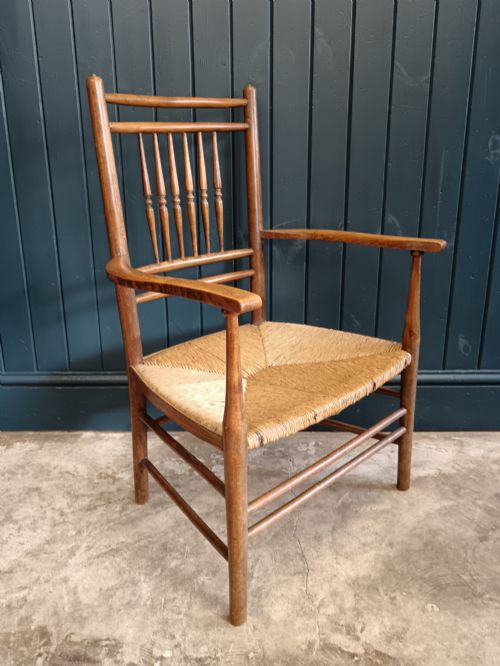


Beech Rush Seat Chairs
Beech rush seat chairs bring sturdy rural tradition and honest craft into daily use.
Beech Rush Seat Chairs
When you search for beech rush seat chairs, you enter a world of practical vernacular seating shaped by utility and tradition. These chairs combine resilient native timber frames with woven seating materials designed for everyday service.
You are most likely to meet nineteenth-century examples and Edwardian interpretations on this page, ranging from simple ladderback dining chairs to Arts and Crafts armchairs. Country houses, farmhouses and town kitchens provided the original homes for these functional forms.
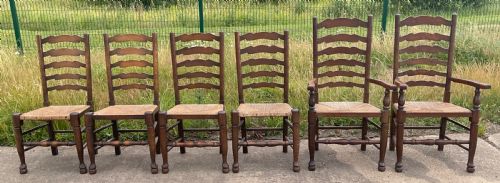
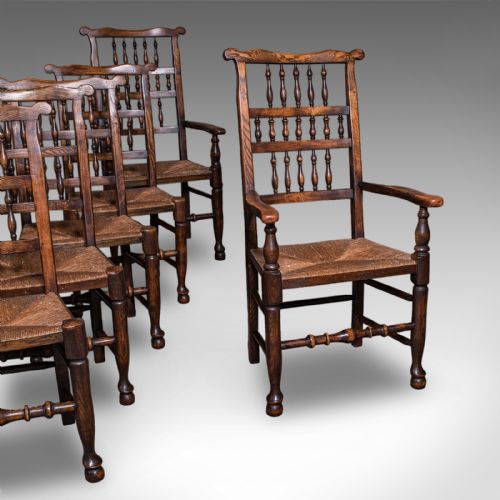
The selection moves from pairs of side chairs to harlequin sets and large dining sets suitable for communal tables. Regional types such as Lancashire chairs and Sussex designs appear alongside bamboo-effect painted frames.
How they were made
Turned and bent beech forms the primary framework for the vast majority of these seats, often paired with elm for seats or reinforcement. Craftsmen selected beech for its reliable turning properties, allowing spindles and uprights to be shaped with precision.
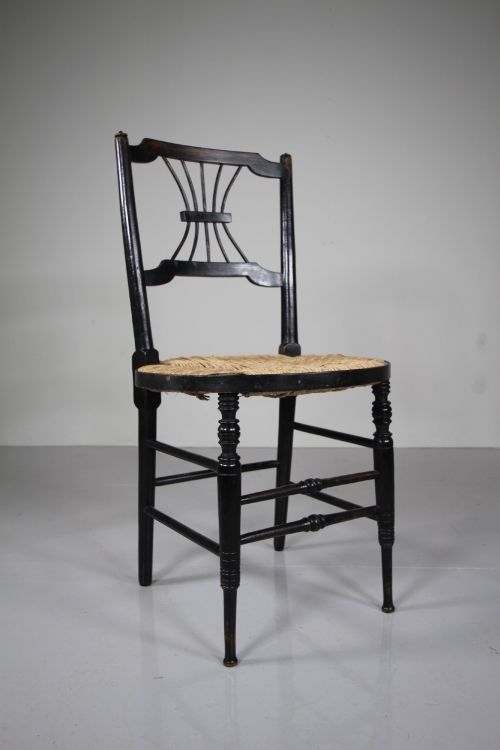
Rush and seagrass provide the woven seating surfaces, wound tightly around the structural rails to create durable support. Some pieces show painted or ebonised surface treatments applied over the bare wood to mimic more expensive materials or alter the tone.
Listings feature beech combined with elm, oak, paint, and ebonised finishes across nineteenth-century and Edwardian periods.
What varies in quality
Quality in these chairs rests upon the integrity of the timber framing and the tightness of the woven seat. Tightly wrapped rush yields a firm, resilient surface that shows the hand of a skilled weaver.
Proportion and turning detail separate standard utility seating from finer workshop pieces designed by notable makers. The crispness of spindle turnings and the balance of the ladderback rails dictate the visual authority of the piece.
William Morris·Rossetti·Philip Webb
The Beech Rush Seat Chairs Glossary
- Rush seat
- A seating surface woven from dried marsh grass twisted into cord. This traditional material offers natural flexibility and strength.
- Ladderback
- A chair back featuring multiple horizontal arched slats between the upright posts. This form has roots in vernacular furniture design.
- Carver
- An armchair, typically designed for the head of a dining table or for fireside use. These pieces often match a set of smaller side chairs.
- Spindle back
- A chair back constructed from a series of slender turned wooden uprights. It lightens the visual weight of the frame while maintaining structural support.
- Ebonised
- Wood finished with a dark stain or black paint to imitate ebony. This treatment was popular during the nineteenth century for formal and artistic interiors.
Beech Rush Seat Chairs: Frequently Asked Questions
Are beech rush seat chairs comfortable?
The woven rush conforms slightly to the sitter, providing a supportive surface without requiring loose cushions.
Their upright proportions make them well-suited for dining tables or desk use rather than deep lounging.
How do I care for a rush seat?
Keep the woven material dry and clean it gently with a soft brush to remove dust from the crevices.
Avoid excessive moisture, which can cause the natural fibres to weaken over time.
Can I mix different chairs around a table?
Harlequin sets and matched groups show that combining similar vernacular forms creates a relaxed, collected appearance.
Matching the wood tone or chair height helps unify disparate pieces in a dining setting.
What is a Sussex chair?
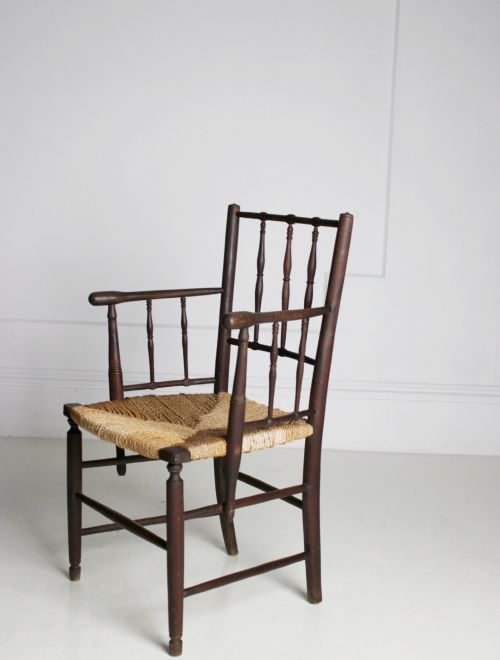
A lightweight nineteenth-century seating design inspired by traditional vernacular models found in rural cottages.
These chairs typically feature slender turned members and rush seats associated with the Arts and Crafts movement.