


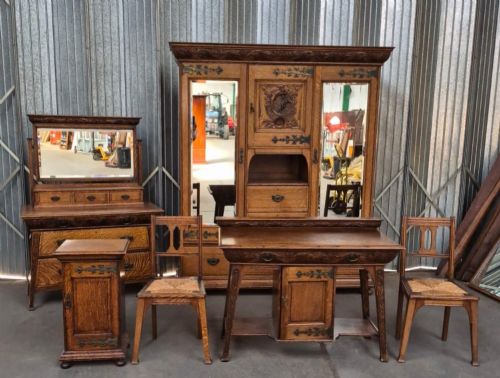
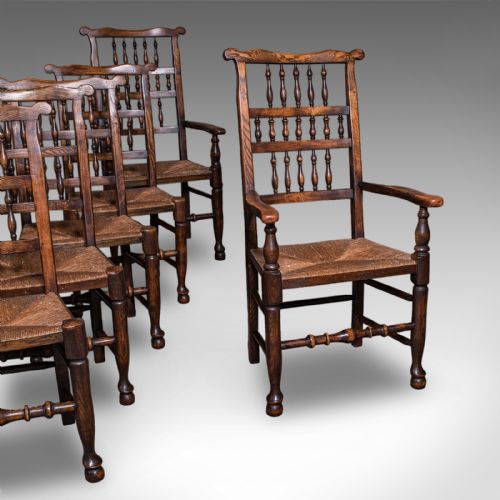


Edwardian Rush Seat Chairs
Edwardian rush seat chairs bring sturdy craftsmanship and natural texture into a room, offering honest vernacular seating for daily use.
Edwardian Rush Seat Chairs
Edwardian rush seat chairs encompass dining chairs, armchairs, side chairs, and corner chairs produced around the turn of the twentieth century. These pieces reflect vernacular traditions, often carrying the aesthetic influence of the Arts and Crafts movement.
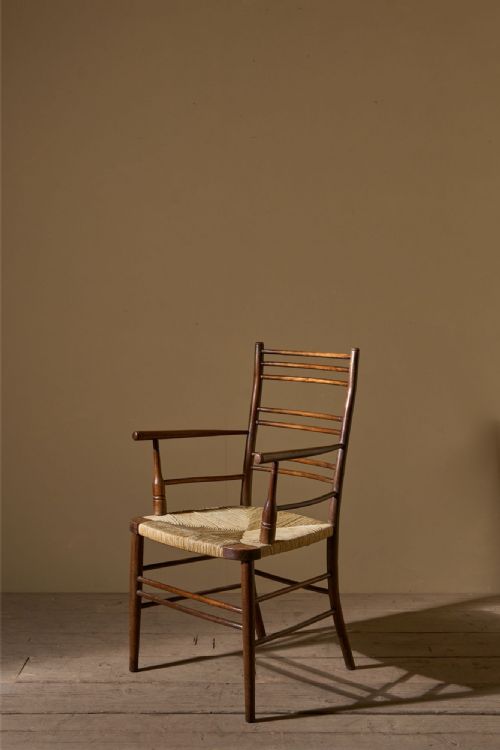
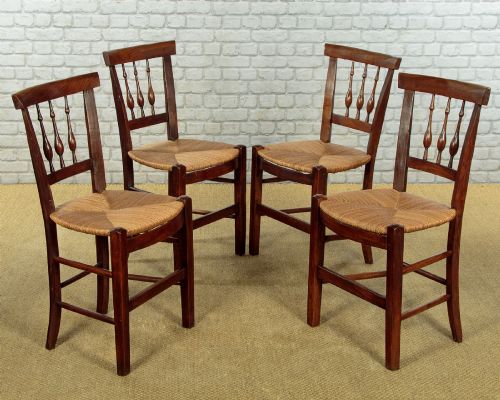
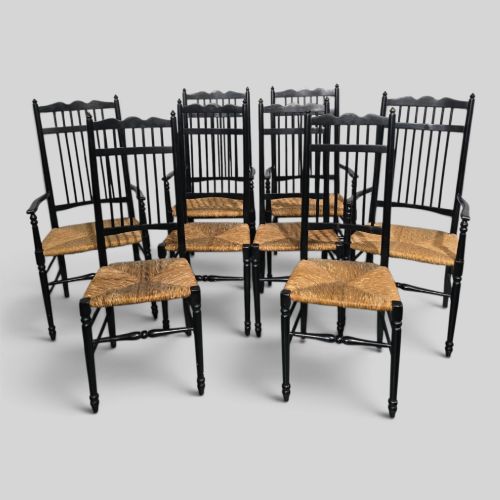
Buyers will frequently encounter oak and beech frames paired with woven rush seats, ranging from simple ladder-back country forms to branded workshop productions. Sets of dining chairs appear alongside individual carvers and bedroom chairs.
The aesthetic bridges rural practicality and artistic reform, drawing on nineteenth-century design ideals while serving everyday domestic needs in Edwardian homes.
Construction and Materials
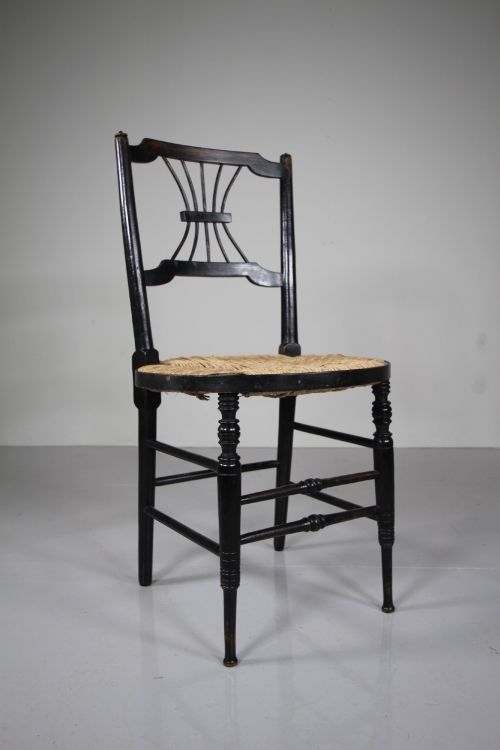
Frames are constructed predominantly from native timbers such as oak and beech, occasionally utilising ebonised finishes for a striking contrast. Woodworkers turned spindles and shaped ladder backs by hand or with simple lathe machinery.
Seats are tightly woven using natural rush, secured across wooden seat rails to provide a resilient and supportive surface. Some examples incorporate marquetry inlay into mahogany or oak structures for decorative effect.
Several ladder backs still bear the subtle dents of long-ago elbows leaning back during spirited Edwardian supper table debates.
Quality and Distinction
The distinction between standard vernacular pieces and higher-tier examples often lies in the origin of the maker, such as pieces associated with Liberty, Morris and Co, or Heal's. Subtleties in frame turning, timber selection, and the tightness of the rush weave elevate certain chairs above basic country furniture.
Proportion and structural integrity define the enduring appeal of these seats. Refined joinery and well-preserved original rush work distinguish pieces that have survived with integrity intact from those requiring extensive intervention.
William Morris·Rossetti·Liberty·Morris and Co·Heals
The Edwardian Rush Seat Chairs Glossary
- Rush
- A marsh plant woven tightly to form resilient, tactile chair seats. It yields a light golden tone that darkens gracefully over decades of use.
- Ladder-back
- A chair back featuring horizontal slats between the upright posts. This traditional vernacular form provides robust ergonomic support.
- Carver
- An armchair, typically designed for the head of a dining table or as a fireside seat. These pieces feature integrated armrests for added comfort.
- Ebonised
- Wood treated with a chemical stain or finish to imitate ebony. This dark, formal treatment appeared frequently on nineteenth-century aesthetic furniture.
- Vernacular
- Architecture and furniture built by local craftsmen to traditional designs using regional materials. These objects prioritize utility and local character over high-style fashion.
Edwardian Rush Seat Chairs: Frequently Asked Questions
How do I care for a rush seat?
Keep natural rush seats away from excessive moisture and direct heat sources to prevent the material from becoming brittle. Regular gentle dusting preserves the natural fibres without damaging the tight weave.
Avoid sitting on rush seats with sharp objects or uneven loads that might strain individual strands. Placing the chair in a stable indoor climate ensures the organic material retains its flexibility over time.
Are these chairs suitable for daily dining?
Most of these chairs were built for practical domestic use and function well for everyday dining when structurally sound. Oak and beech frames offer the necessary rigidity for regular sitting.
Buyers should verify that the frame joints remain tight and the rush seating shows no signs of fraying before putting them into heavy daily service.
How can I tell an Arts and Crafts chair apart?
Arts and Crafts pieces emphasise visible construction methods, honest materials, and unpretentious vernacular forms like ladder backs. They often reject excessive factory ornamentation in favor of clean structural lines.
Makers associated with this movement, such as Liberty or Morris, frequently utilised oak and natural rush to highlight traditional handcraft techniques.
What is the difference between a side chair and a carver?
A side chair is built without armrests, designed primarily to slide neatly beneath a dining table or sit against a wall. Its compact footprint makes it versatile for various rooms.
A carver includes integrated armrests, providing a more substantial seating experience typically reserved for the ends of a dining table or a fireside setting.