
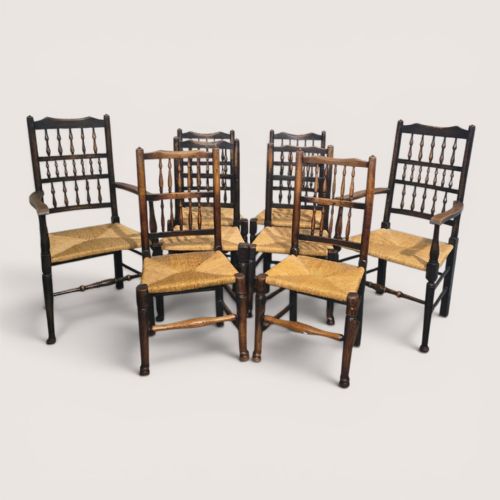
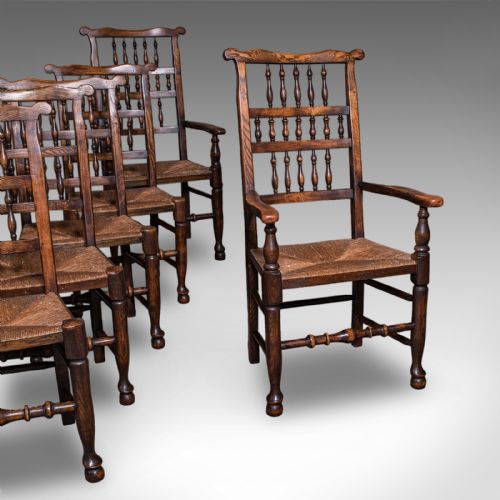


Vintage Rush Bottom Chairs
These vintage rush bottom chairs offer rustic charm and traditional seating, built from solid woods and woven natural fibres for everyday use.
Vintage Rush Bottom Chairs
When you search for vintage rush bottom chairs, you are looking at utilitarian seating spanning the eighteenth century to the early twentieth century. These pieces encompass dining chairs, carvers, armchairs, rocking chairs, and side chairs shaped by country traditions.
The selections available here range from eighteenth-century elm examples and Georgian side chairs to Victorian ladderbacks and Edwardian beech sets. You will frequently encounter sets of dining chairs alongside single armchairs and rocking chairs.
Makers across different regions produced these utilitarian forms for everyday domestic life rather than formal display. Their enduring appeal lies in the honest construction and the textured contrast between wooden frames and woven seats.
Materials and Construction
The frames of these chairs rely on native hardwoods such as elm, oak, beech, fruitwood, and mahogany, shaped into ladderbacks, spindlebacks, and solid wooden structures. Artisans turned spindles and carved rails to build robust seating that endured decades of daily use.
Seats are woven tightly from natural rush, creating a durable and slightly flexible surface held within the wooden rails. Some examples also incorporate painted finishes or retain the natural grain of the timber.
Several chairs come in harlequin sets, proving that mismatched dining companions have bickered happily over breakfast for over a century.
Judging Quality and Character
Quality in these pieces rests upon the integrity of the wooden frame and the tightness of the woven rush seat. Heavier timber framing and well-preserved joinery separate robust examples from simpler variants.
The visual appeal depends on the warmth of the wood, whether elm, beech, or fruitwood, and the uniformity of the rush weave. Uniform sets of dining chairs carry greater architectural presence than mismatched single items.
The Vintage Rush Bottom Chairs Glossary
- Rush
- A marsh plant used for centuries to weave durable, textured seats for traditional seating. It yields a characteristic golden-brown hue as it ages.
- Ladderback
- A chair design featuring multiple horizontal wooden slats or rails between the upright posts. This form is common in country vernacular seating.
- Spindleback
- A style incorporating thin turned wooden vertical rods in the backrest. These members provide support while maintaining a lighter visual weight.
- Carver
- An armchair, traditionally placed at the head of a dining table, featuring supportive armrests. These pieces match or complement the side chairs in a dining set.
Vintage Rush Bottom Chairs: Frequently Asked Questions
How were these chairs used?
Households utilised them daily around dining tables, in kitchens, and beside hearths as functional seating. Armchairs and rockers provided added comfort for resting.
Because they were built for utility, they moved easily between different rooms according to the household needs.
How do I live with rush bottom chairs?
Integrating these pieces into a modern interior brings warmth and texture through natural wood and woven fibres. They suit rustic, traditional, and transitional dining spaces.
Keep them away from excessive moisture to protect the natural rush seat from deterioration over time.
How can I tell different periods apart?
Earlier examples from the eighteenth century or the Georgian era display hand-turned details and deep patination on timbers like elm and oak. Later Victorian and Edwardian pieces often utilise beech and feature more standardised turning.
Design styles such as ladderbacks or shaker-influenced rocking chairs also provide clues to the era of manufacture.