
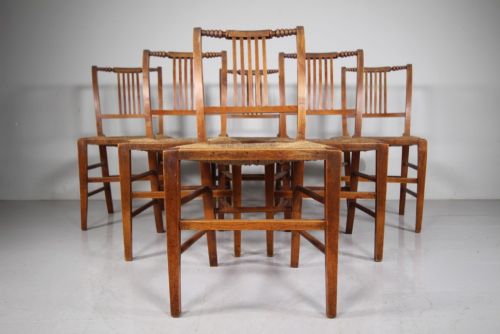
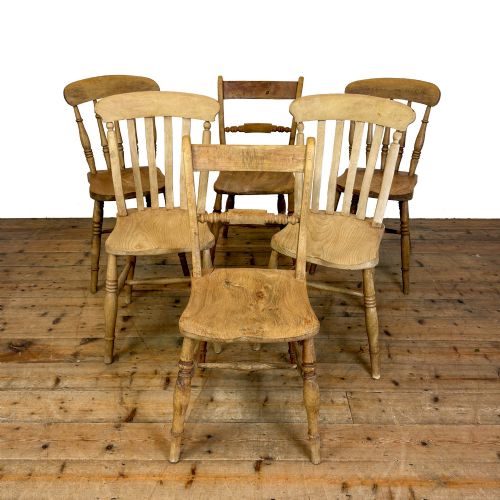
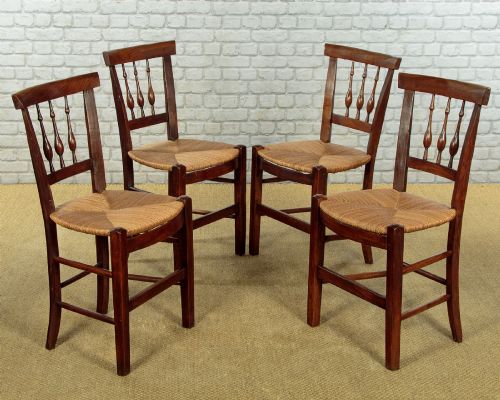
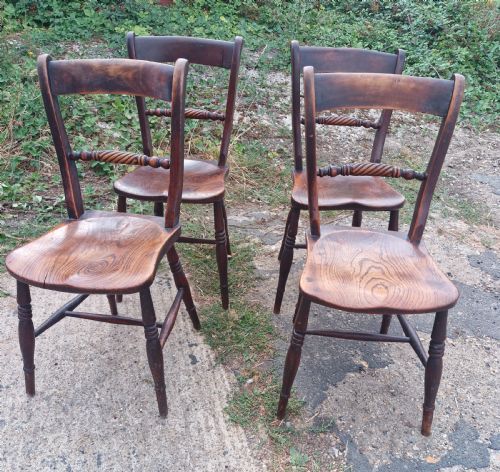
Farmhouse Kitchen Dining Chairs
Farmhouse kitchen dining chairs bring honest vernacular character to a room, offering sturdy utility shaped by generations of domestic use.
Identifying farmhouse kitchen dining chairs
When you search for farmhouse kitchen dining chairs, you encounter robust seating shaped by English country vernacular traditions. The pieces span the nineteenth century and the early decades of the twentieth, reflecting practical domestic manufacture.
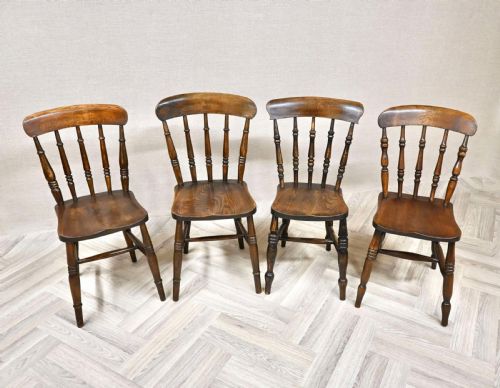
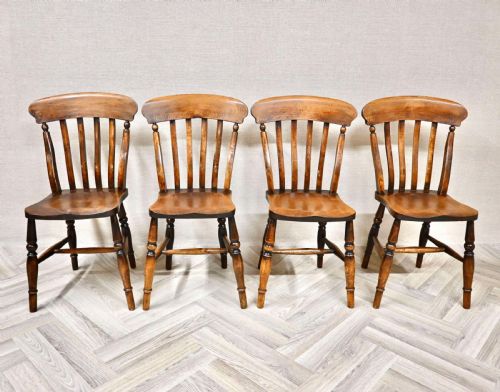
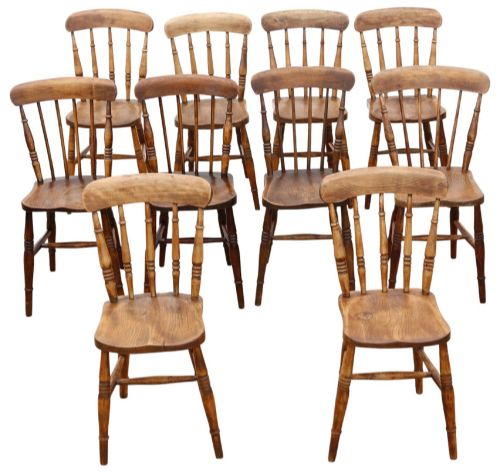
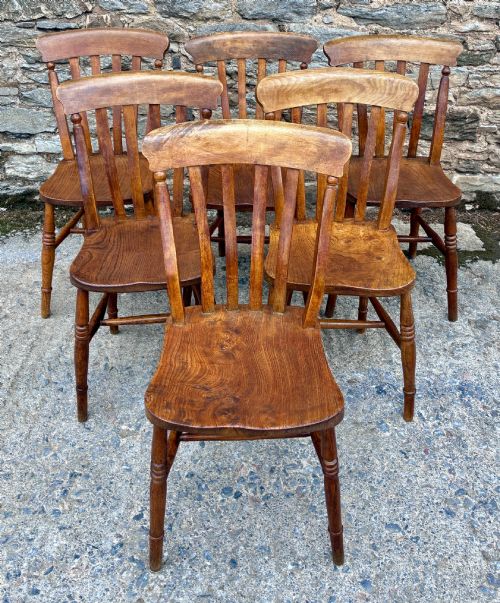
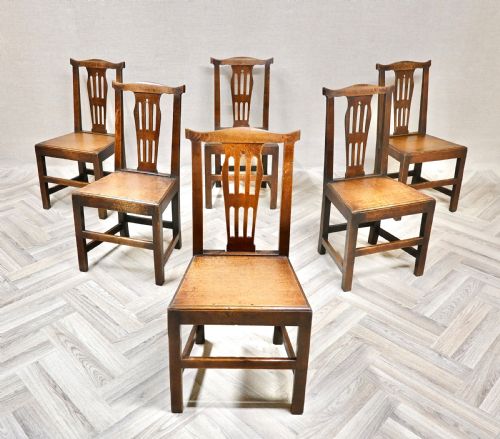
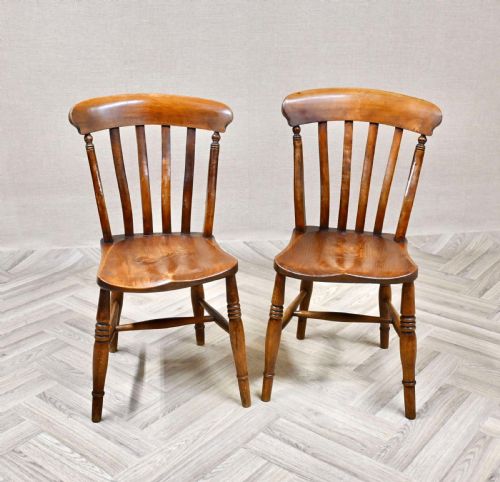
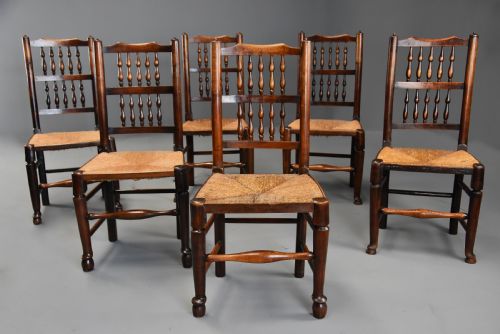
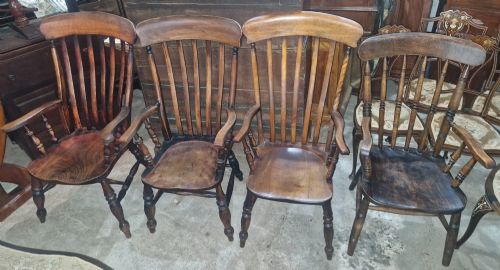
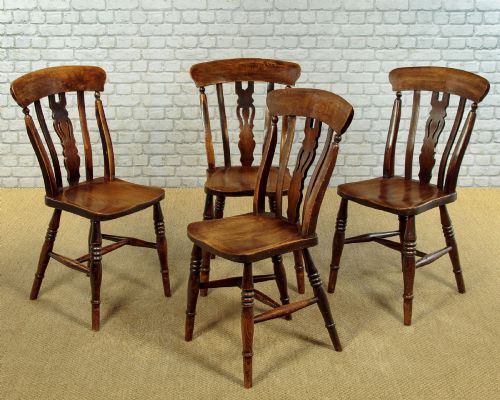
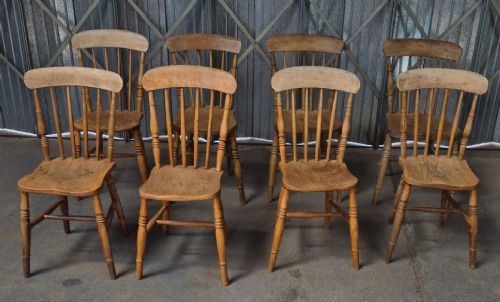
You meet various traditional forms on this page, most notably spindle backs, ladder backs, and Windsor designs. These chairs originate primarily from English country workshops, with occasional Welsh examples appearing.
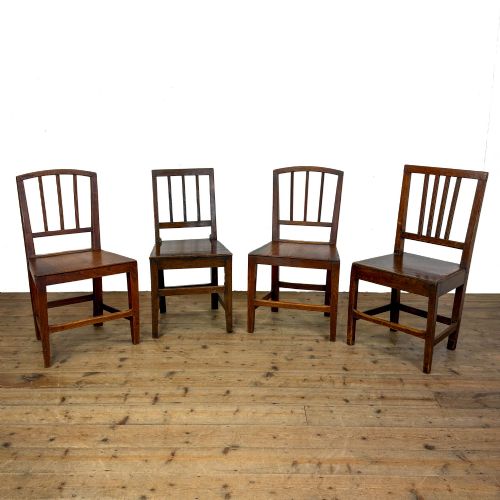
Sets frequently appear in matching numbers of four, six, or eight, alongside smaller pairs and individual carvers. Harlequin sets also emerge from past and present stock, uniting similar vernacular styles.
Materials and construction
Maker workshops utilised native timbers available in the countryside, most commonly combining elm, ash, oak, beech, and fruitwood. Rush seats also provide woven texture alongside solid timber panels.
Construction relies on traditional joinery methods such as turned spindles, steam-bent components, and sturdy ladder backs. These techniques ensured structural endurance for heavy daily use in busy domestic kitchens.
Retail Price Guide 2026
Typical UK retail prices for farmhouse kitchen dining chairs, calculated from the Sellingantiques database of over a million retail prices indexed since 2003. This retail price guide relies exclusively on Sellingantiques data; no external sources or auction records are used, so the figures do not describe the wider market.
Assessing quality in country seating
Quality rests upon the integrity of the timber and the depth of patina developed through long-term use. Original surface finishes and honest wear distinguish superior vernacular examples from later reproductions.
Proportion and the complexity of turnings dictate the refinement of a set. Well-balanced Windsor hoops or crisply shaped ladder backs demonstrate greater craftsmanship than utilitarian equivalents.
The Farmhouse Kitchen Dining Chairs Glossary
- Spindle back
- A chair design featuring a series of vertical turned wooden rods supporting the backrest. These members are tenoned directly into the seat and top rail.
- Ladder back
- A vernacular chair style incorporating horizontal arched slats between the rear uprights. This form offers strong lower back support.
- Windsor
- A traditional chair constructed with a solid wooden seat into which the legs and back spindles are socketed directly. They often feature bentwood hoops and armbows.
- Rush seat
- A seating surface woven from dried marsh grass or rushes. This traditional method creates a durable and flexible base.
- Patina
- The surface sheen and colour acquired by timber over decades of handling and polishing. It serves as a visual indicator of age.
Frequently Asked Questions
Are these chairs comfortable for daily dining?
Most country dining chairs offer supportive upright seating shaped to the body through traditional timber contours.
Solid elm seats and shaped ladder backs distribute weight evenly for regular meal times.
How do I care for rush and timber seats?
Keep wooden surfaces nourished with appropriate beeswax and avoid placing rush seats near excessive heat sources.
Gentle dusting preserves the natural fibres and protects the aged timber finish from drying out.
Can I mix different chair styles together?
Harlequin sets demonstrate that mixing related vernacular forms is a historically appropriate approach to country seating.
Matching timber tones or similar spindle motifs help unify disparate chairs around a central table.
What defines a country vernacular style?
Vernacular furniture reflects regional building traditions and available local materials rather than strict academic design rules.
Local chairmakers adapted established forms to suit practical domestic needs without following metropolitan fashions.