




Nineteenth Century Country Chairs
Nineteenth century country chairs bring everyday historical utility to modern interiors through honest regional craftsmanship and hardy local timbers.
Nineteenth Century Country Chairs
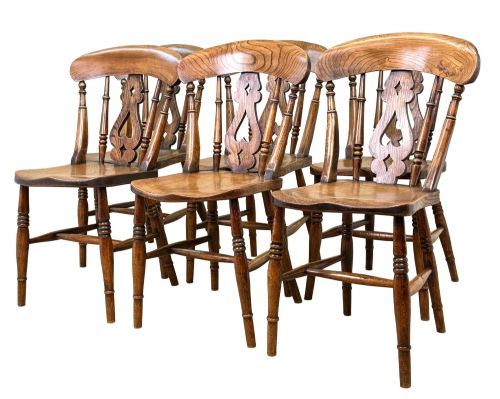
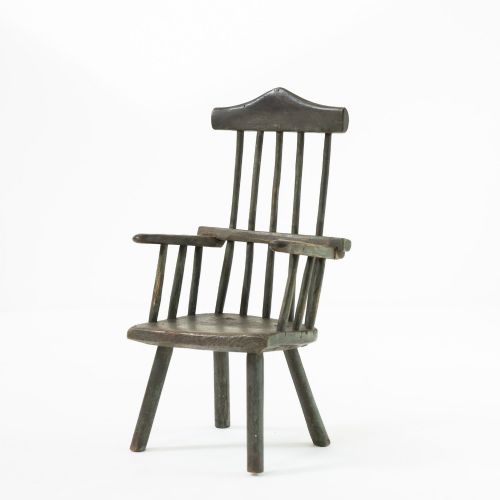
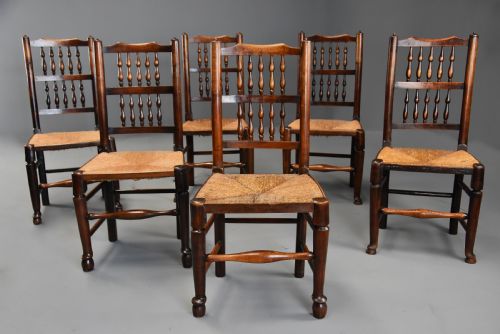
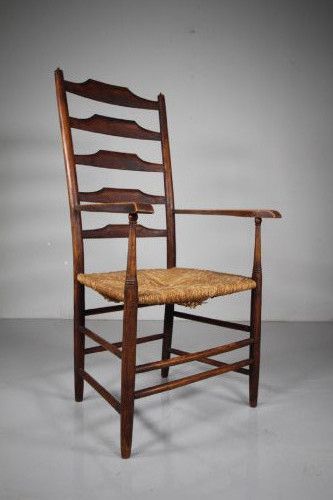
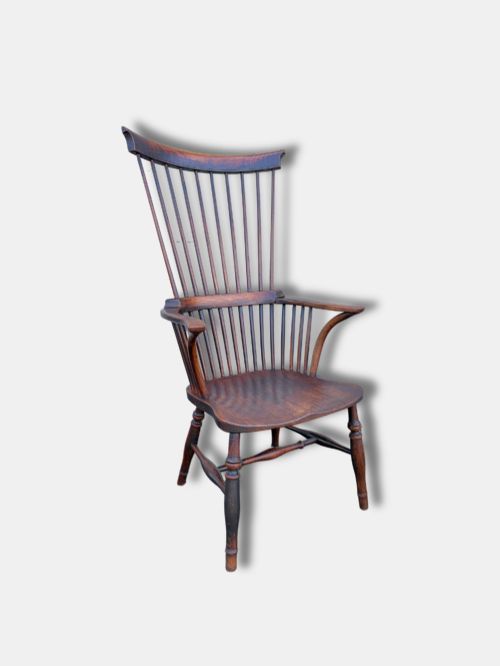
Nineteenth century country chairs encompass a diverse range of vernacular seating made for daily domestic use outside major urban centres. Buyers searching for nineteenth century country chairs typically encounter robust spindle backs, low and high comb Windsor designs, and sturdy farmhouse dining sets. These pieces reflect regional British and European traditions, spanning simple rush-seated ladder backs to sculptural yew-wood armchairs.
The selection frequently includes Windsor chairs in various regional configurations alongside matching dining sets and children's seating. Makers adapted traditional regional patterns to suit local materials, resulting in distinctive variations from Scottish workshops down to English provincial shires. Dining chairs and smokers bows predominate among the available forms.
Materials and Construction Techniques
Constructors relied on a combination of resilient native timbers, pairing flexible ash or fruitwood stems for spindles and bows with thick elm for sculpted seats. Beech, oak, and yew also appear regularly, providing structural integrity and contrasting grain patterns across armchairs and side chairs. Craftsmen utilised steam-bending techniques to shape wooden bows and backs while turning legs on bodging lathes in woodland clearings.
Seats were typically carved from a single slab of solid elm to resist splitting under heavy daily use. Joinery relied on wedged through-tenons and peg fastenings rather than metal fixings, ensuring the framework remained tight despite shifting household temperatures.
Listings feature elm, ash, beech, and yew wood combined with rush seating and original painted finishes across nineteenth century country chairs.
Distinctions in Quality
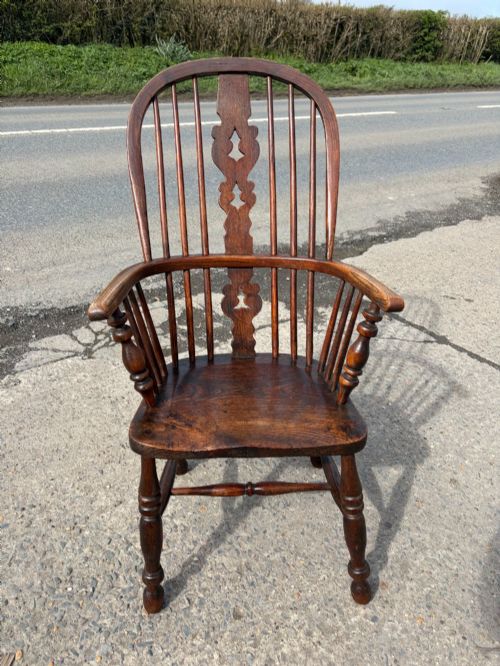
Quality rests on the integrity of the timber selection, the grace of the spindle turnings, and the depth of the sculpted seat saddle. Superior examples display balanced proportions with well-defined comb backs or horseshoe arm rails that show careful hand-shaping rather than mechanical uniformity.
Surface wear and the retention of original finish or early paint layers heavily influence desirability. Chairs that retain their original timber colour and patination without excessive replacement parts stand clearly apart from heavily restored or mismatched examples.
Philip Clissett·Howard and Sons·E W Godwin·Duncan McKellar·JAMES SHOOLBRED·Gabbitass of Worksop
The Nineteenth Century Country Chairs Glossary
- Windsor
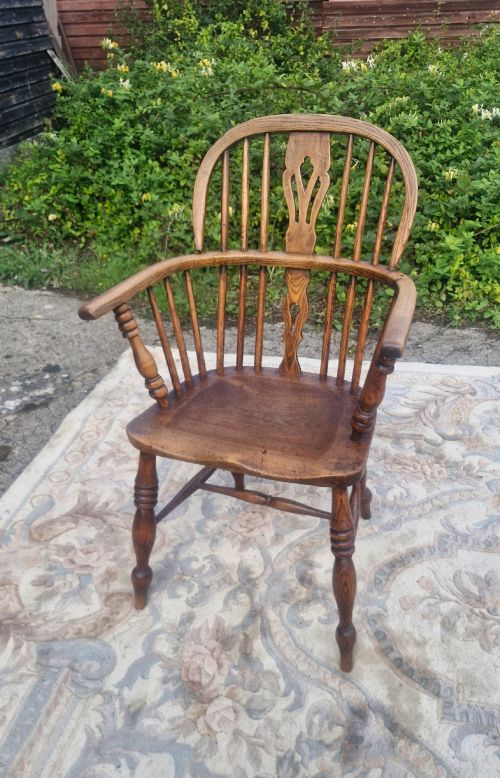
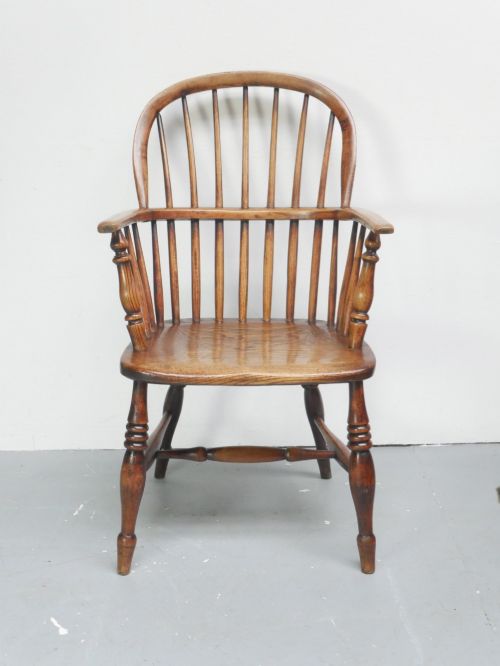
- A traditional wooden chair built with a heavy solid wooden seat into which the legs, back and arms are separately tenoned. These chairs often feature bentwood bows and sculpted arm rails.
- Smokers bow
- A low-backed Windsor armchair featuring a continuous curved arm rail and spindle array, frequently used in nineteenth century domestic and institutional settings. It is also commonly known as a captain's chair.
- Vernacular
- Objects designed by regional makers using local traditions and available materials rather than following rigid high-style academic pattern books. These pieces serve immediate practical functions.
- Spindle back
- A chair back constructed from multiple slender turned uprights positioned between the seat and the top rail. This construction provides flexible strength with minimal weight.
Nineteenth Century Country Chairs: Frequently Asked Questions
How do I identify a regional Windsor style?
Regional Windsor styles are distinguished by the turning patterns of their legs, the shape of the back splat, and the choice of local timber such as ash or yew. Local makers adapted designs to suit the strengths of specific regional woods.
Examining the saddle shape of the elm seat and the curve of the arm bow helps pinpoint the geographic origin of the workshop.
Were these chairs used at dining tables?
Many nineteenth century country chairs were made in matching sets specifically for farmhouse kitchens and dining rooms. These sturdy sets included spindle backs and simpler side chairs designed for daily family meals.
Individual armchairs often served as carvers placed at the head of the dining table or as fireside seating.
How should I care for antique rush and wooden seats?
Wooden elements benefit from occasional treatment with appropriate wax to maintain the natural moisture and rich patination of the timber. Keeping seats away from direct heat sources prevents the wood from drying and splitting.
Rush seating requires dry conditions and gentle dusting to preserve the natural plant fibres over decades of domestic use.
What is the difference between a smokers bow and a captain's chair?
The terms are often used interchangeably to describe low-backed Windsor armchairs with continuous curved arm rails and turned spindles. Both forms were popular in nineteenth century domestic and commercial settings.
Slight variations in the height of the back rail and the shaping of the arm terminals usually account for the differing names.