



Traditional Rush Bottom Chairs
Traditional rush bottom chairs bring enduring rustic character and woven texture into a room, offering genuine historical comfort.
Traditional Rush Bottom Chairs
Traditional rush bottom chairs encompass seating designed with woven seats and vernacular frames, spanning the eighteenth, nineteenth, and early twentieth centuries. These pieces emerge from English country and French provincial traditions, serving practical domestic roles from kitchens to parlours.
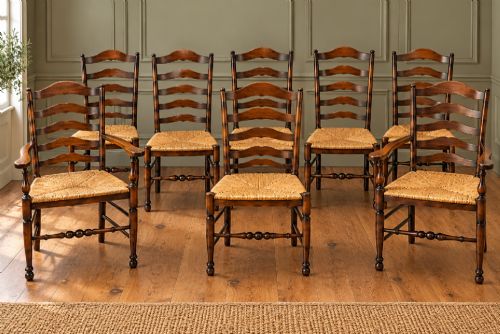
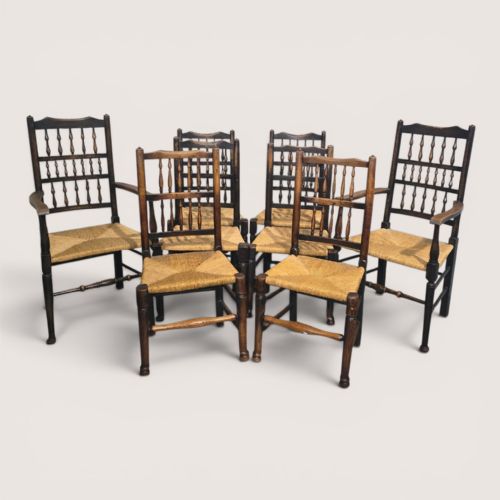
The inventory on this page contains dining chairs, armchairs, benches, rocking chairs, and side chairs. Examples range from harlequin sets of kitchen dining chairs and ladder back designs to sturdy elm armchairs and French fruitwood seating.
Pieces hail from varied eras, including Georgian, Victorian, and Edwardian periods, alongside specific nineteenth-century workshops. Buyers encounter single items, pairs, and larger sets suitable for daily dining or occasional seating.
How traditional rush bottom chairs were made
Frameworks rely on native timbers including elm, fruitwood, oak, beech, ash, alder, and mahogany, shaped into spindlebacks, ladder backs, and solid seat rails. Makers selected these woods for local availability and structural strength, turning or carving uprights and stretchers by hand.
Seats are constructed from twisted natural rush, woven tightly across the frame to create a resilient and supportive surface. This traditional seating material provides flexibility while maintaining a firm platform for regular use.
Traditional Rush Bottom Chairs Retail Price Guide 2026
Typical asking prices for traditional rush bottom chairs among the pieces listed under this phrase on Sellingantiques today, from the lower quarter to the upper quarter. They describe what is for sale here now, not the wider market.
Periods represented span eighteenth-century items, nineteenth-century examples, and Edwardian vernacular pieces.
What varies in quality in traditional rush bottom chairs
The integrity of the woven rush surface dictates much of the physical quality, alongside the tightness and evenness of the strands. Original or well-maintained historical weaving demonstrates superior durability compared to loose or deteriorated recent repairs.
Timber selection and frame construction also separate regional vernacular pieces from standard production. Well-turned spindles, solid joints in woods like elm or fruitwood, and balanced proportions across sets indicate skilled rural craftsmanship.
The Traditional Rush Bottom Chairs Glossary
- Rush
- Dried marsh grass or sedge twisted into cords and woven to form flexible, supportive seats. It provides a traditional tactile surface found across country furniture.
- Ladder back
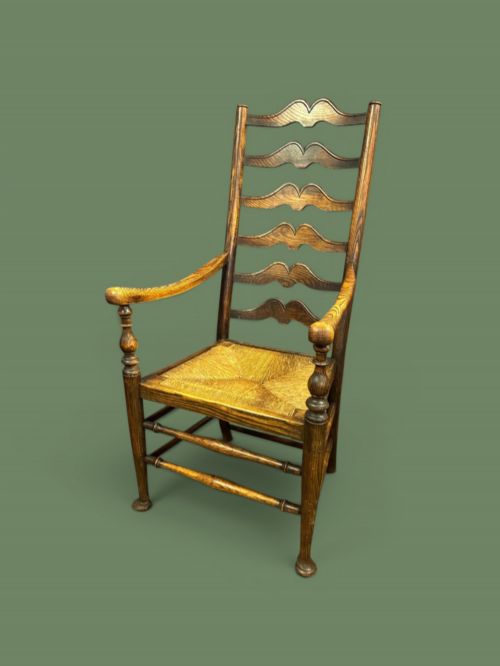
- A chair back featuring several horizontal arched wooden slats between the upright posts. This form is common in vernacular dining and armchair designs.
- Spindleback
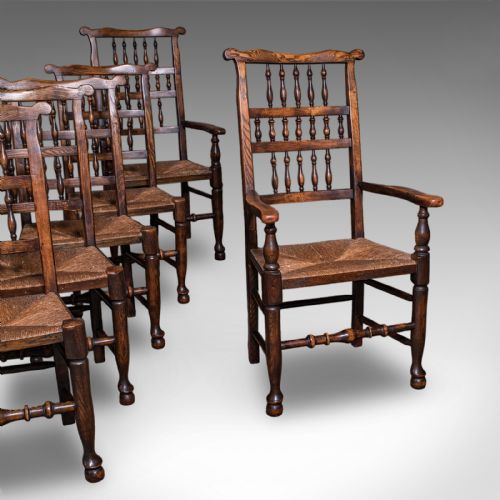
- A chair back constructed with multiple thin turned vertical wooden rods between the top rail and seat. These turnings lighten the visual weight of the frame.
- Carver
- An armchair, traditionally placed at the head of a dining table or used as an occasional fireside seat. The term distinguishes armed versions from standard side chairs.
- Vernacular
- Furniture made by local tradesmen for everyday domestic use, following regional traditions rather than formal academic design rules. These pieces utilise locally sourced timbers.
Traditional Rush Bottom Chairs: Frequently Asked Questions
How do I clean a rush seat?
Dust the woven surface gently with a soft brush or vacuum attachment on a low setting. Avoid soaking natural rush with water, as moisture causes the dried plant fibres to rot.
For minor marks, wipe lightly with a barely damp cloth and dry immediately. Keeping the room humidity stable prevents the rush from becoming brittle over time.
Can I use these chairs daily?
Most traditional rush bottom chairs were built for hard domestic service in kitchens and dining rooms. Sturdy frames made of elm, ash, or fruitwood handle everyday sitting comfortably.
Check that the joints remain firm and the woven rush shows no major breaks before heavy daily use. Lighter decorative side chairs suit occasional seating better than robust armchairs.
How do I spot a harlequin set?
A harlequin set consists of chairs that match in style, period, or material but were not originally made together as a single batch. These groupings were assembled later by collectors or dealers to create a matching dining set.
Look closely at slight variations in turning details, timber grain, or seat dimensions across the chairs. Such differences reveal the individual origin of each piece within the group.
What is French provincial style?
French provincial furniture reflects the domestic designs created in the regions of France outside Paris during the eighteenth and nineteenth centuries. Local craftsmen adapted urban fashions using regional fruitwoods and simpler construction methods.
These pieces prioritise practical utility and regional character over elaborate ornamentation. They pair well with English country furniture due to their shared rural origins.