


Victorian Country Dining Chairs
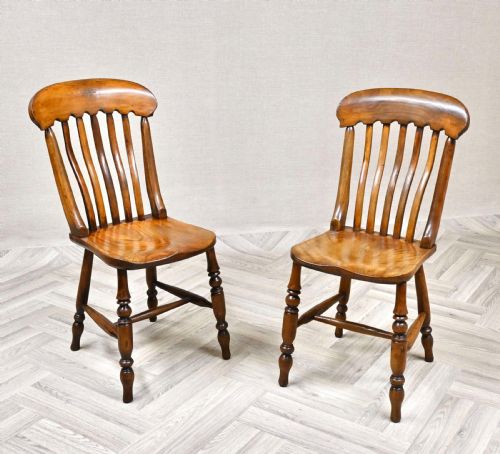
Victorian country dining chairs bring sturdy vernacular character to the table, offering robust regional forms built for everyday domestic life.
Victorian Country Dining Chairs
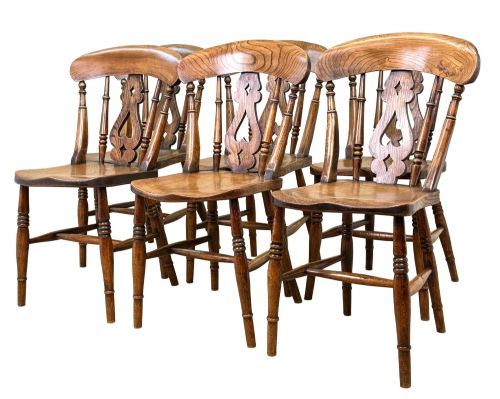
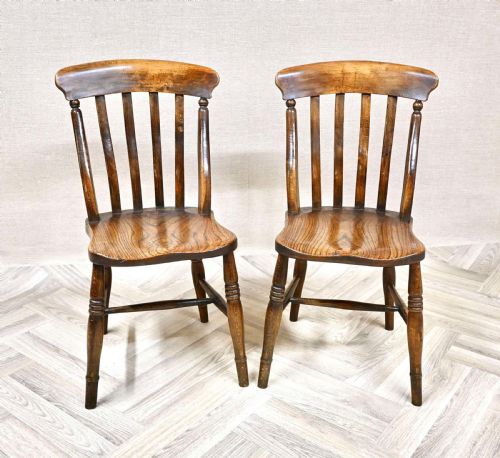
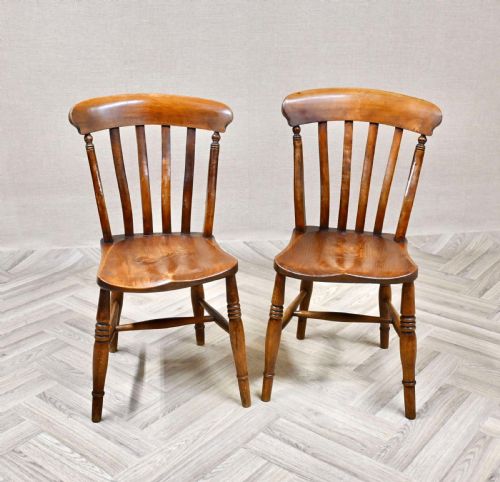
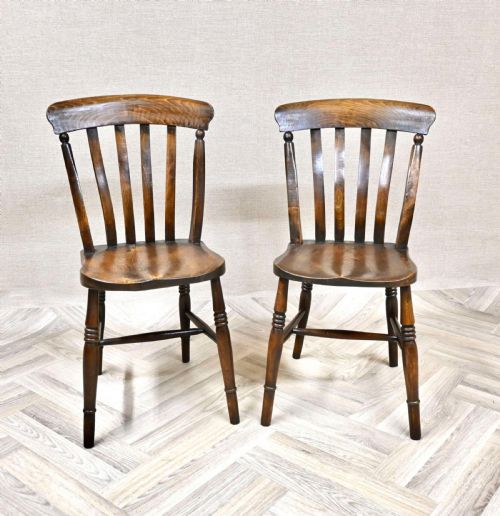
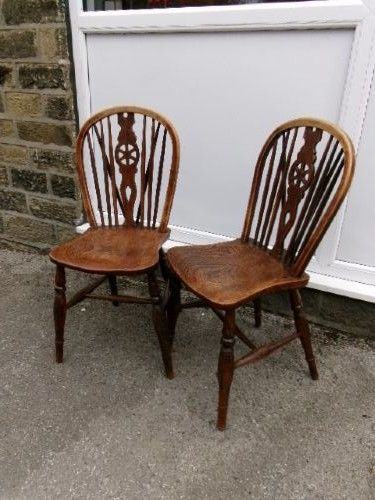
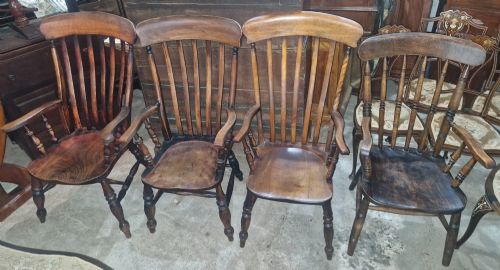
Victorian country dining chairs encompass practical vernacular seating produced across British provinces during the nineteenth century, ranging from simple kitchen singles to substantial carver armchairs. Buyers seeking these pieces will encounter sturdy oak ladder backs alongside robust Windsor designs shaped for everyday use around farmhouse tables.
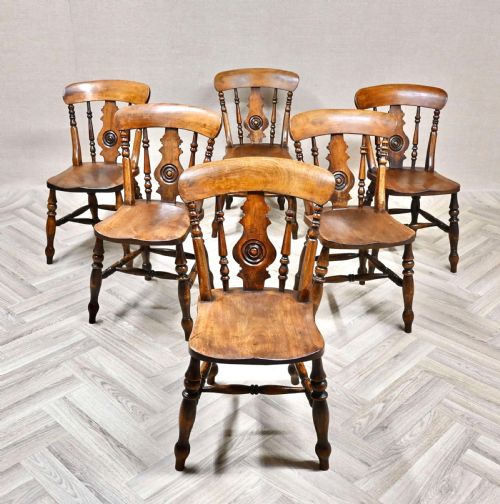
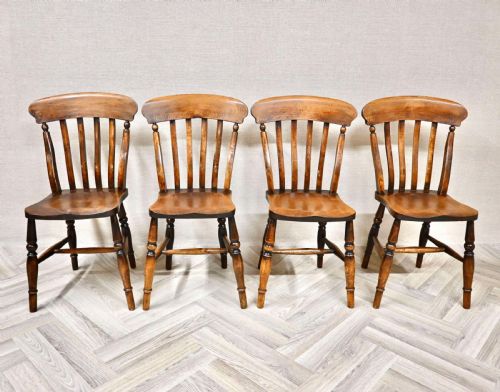
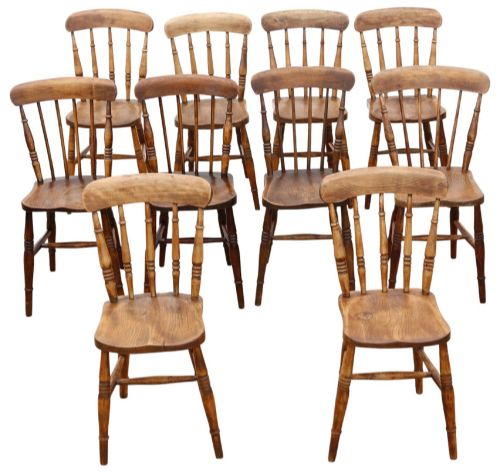
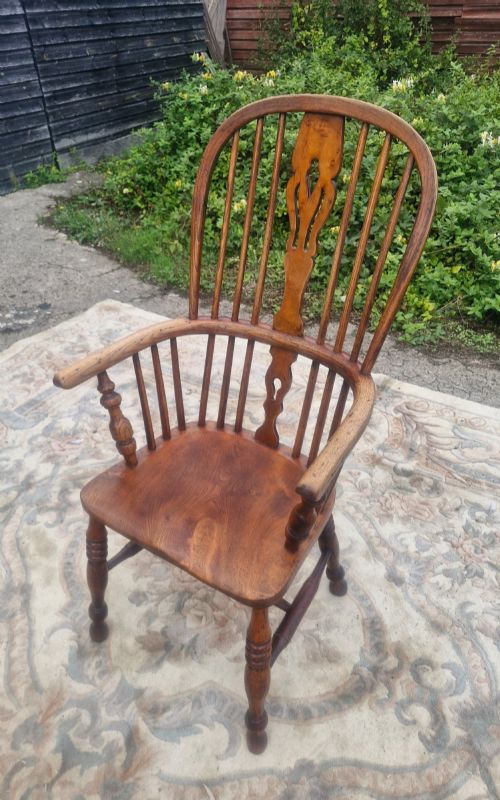
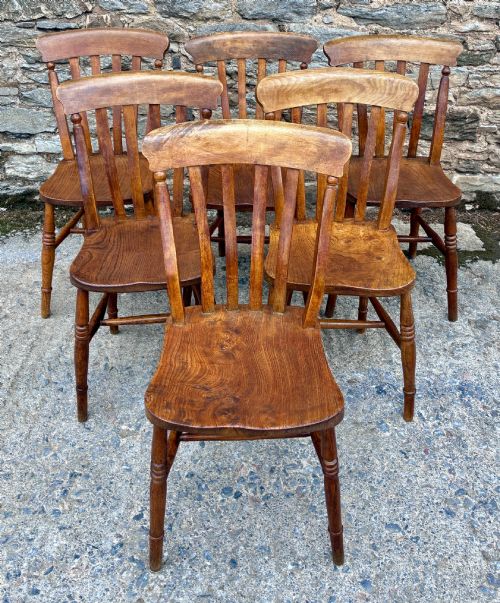
The most common examples on this page are Windsor chairs featuring distinctive wooden seats combined with elm and beech components, frequently found in matched sets or assembled harlequin groups. These domestic forms reflect regional traditions spanning Thames Valley workshops and northern farmhouse kitchens.
Construction and Materials
Local timber selection defined provincial chair making, relying on native hardwoods chosen for specific structural demands. Elm provided thick, stable seats resistant to splitting under pressure, while beech and ash supplied the strength needed for slender spindles and steam-bent components.
Joinery methods combined traditional pegged framing with turned members driven directly into sculpted wooden bases. Frameworks often utilised sturdy stretchers, such as crinoline braces, to reinforce the legs against daily movement.
Many surviving kitchen chairs retain small ink stamps or maker marks hidden beneath their thick elm seats.
Assessing Quality and Character
Quality in these chairs rests upon the integrity of the timber and the depth of the seat carving, where thick, deeply dished elm demonstrates superior craftsmanship. Uniformity within larger assembled sets also dictates desirability, particularly when individual chairs retain matching proportions and original surface patination.
Structural honesty separates everyday workshop output from finer regional production. Examples retaining crisp turnings, tight joints, and minimal historical timber replacement command greater appreciation among collectors.
James Winter and Sons
The Victorian Country Dining Chairs Glossary
- Windsor chair
- A wooden chair built with a thick solid seat into which the back and legs are directly wedged. These chairs often incorporate steam-bent hoops and sculpted armrests.
- Carver
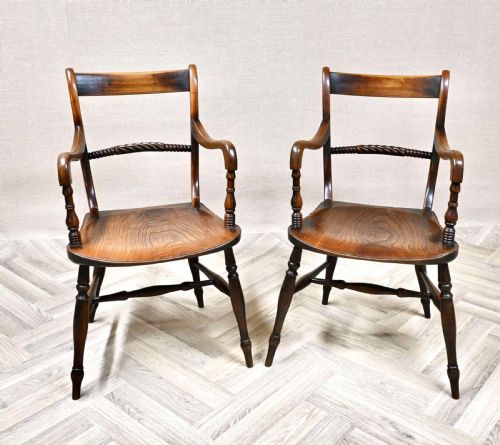
- An armchair designed with armrests, traditionally placed at the head of a dining table. They complement matching sets of single chairs.
- Harlequin set
- A collection of dining chairs closely related in style and period, assembled together rather than manufactured as a single original batch. They share general profiles while exhibiting minor variations in turning or back design.
- Lathback
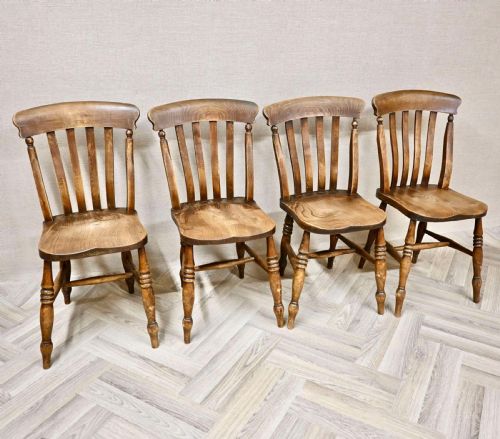
- A chair back featuring flat vertical wooden slats instead of turned spindles. This form is frequently seen on nineteenth-century kitchen seating.
- Crinoline stretcher
- An arched metal or wooden stretcher connecting the legs of a Windsor chair in a continuous curve. It provides essential structural bracing beneath the seat.
Victorian Country Dining Chairs: Frequently Asked Questions
How do I care for antique elm seats?
Protect antique elm and beech timber by keeping chairs away from direct heat sources and sudden temperature shifts that cause wood to dry and split.
Feed the grain occasionally with a suitable traditional wax polish to maintain a healthy surface sheen without blocking the pores of the wood.
What is a harlequin dining set?
A harlequin set brings together individual chairs sharing similar periods, materials, and regional styles rather than originating from a single workshop batch.
This method of gathering seating allows buyers to acquire larger groups of nineteenth-century chairs that match in general character while displaying subtle individual details.
How do I distinguish carvers from single chairs?
Carvers feature integrated armrests designed to accommodate the user more comfortably at the ends of a dining table.
Single chairs lack arms and were made to fit compactly along the sides of the table during everyday meals.
Where were these country chairs made?
Provincial workshops across rural Britain produced these chairs, utilising local timber supplies and regional turning techniques.
Specific areas, such as the Thames Valley, developed distinct Windsor styles defined by particular back designs and wood combinations.