


Elm and Beech Windsor Chairs
Elm and beech windsor chairs combine solid wood seats with turned spindles, offering enduring comfort and honest vernacular style for daily use.
Elm and Beech Windsor Chairs
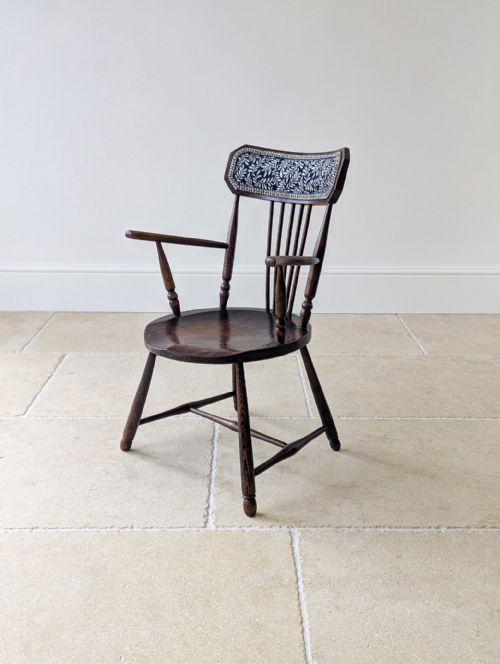
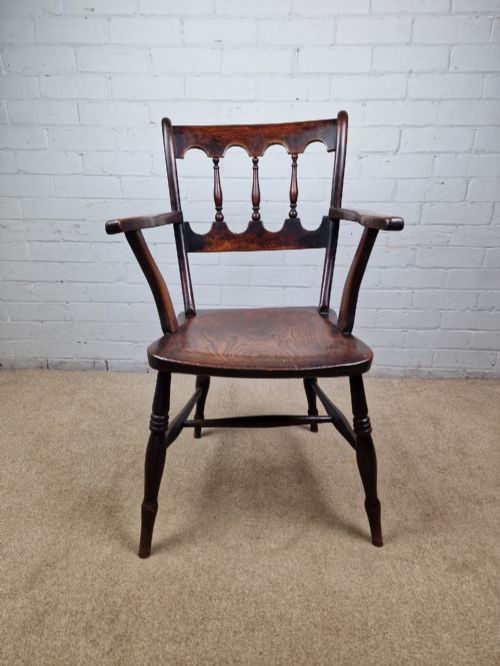
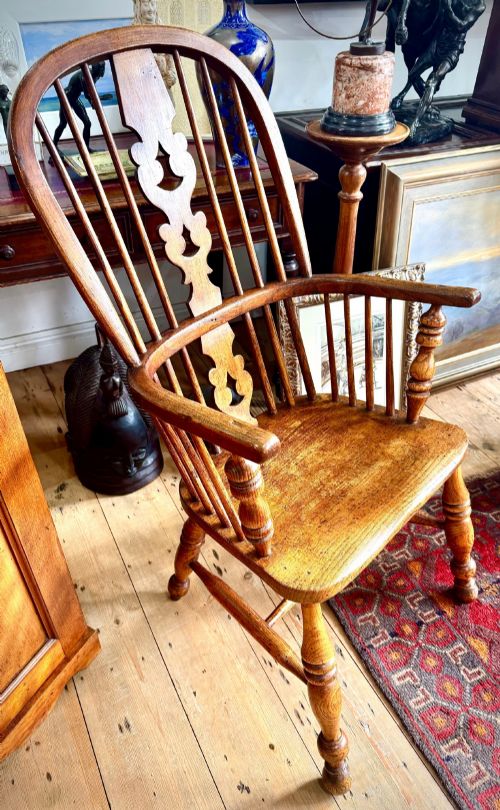
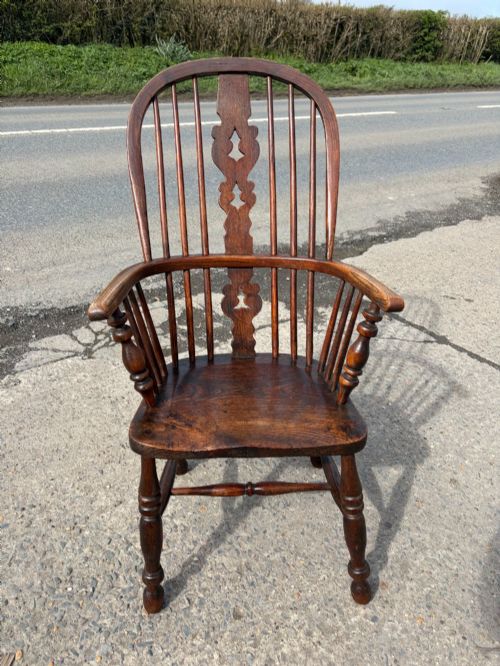
These seats emerge primarily from the Victorian period and the nineteenth century, taking forms such as kitchen chairs, smokers bows, and carver armchairs. Makers constructed them for practical domestic and office environments across English country houses and farmhouses.
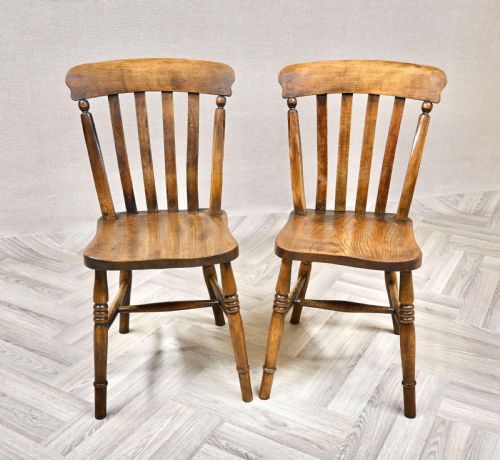
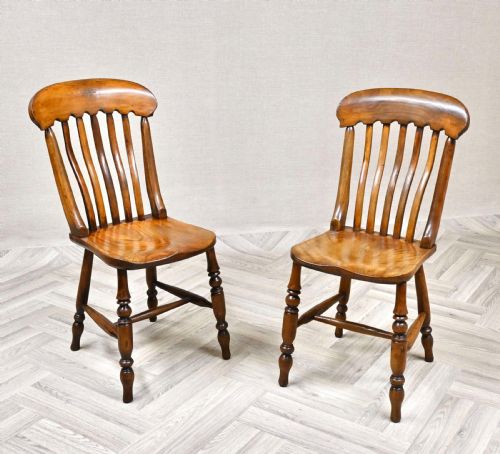
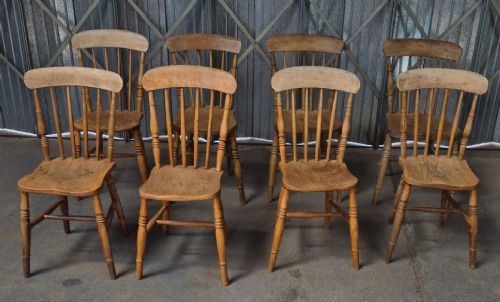
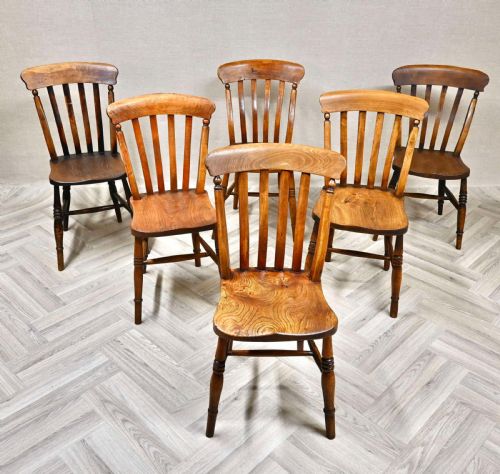
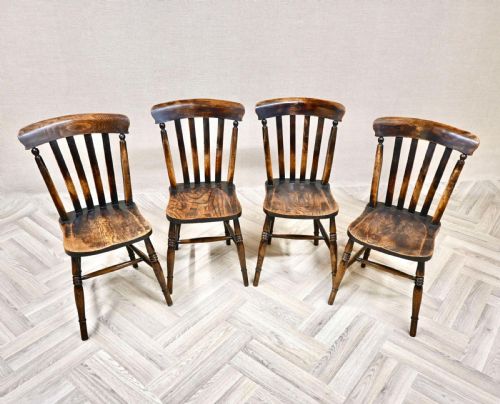
A buyer examining this page encounters regional variations including Thames Valley stick backs, wheelbacks, lath backs, and Oxford bar backs. Sets range from small pairs to groups of twelve, often appearing as harlequin collections gathered over time.
Materials and construction methods
Craftsmen paired solid elm for the saddle-shaped seats, relying on its interlocking grain to prevent splitting under heavy use. They turned beech for the legs, bow frames, and vertical spindles because the dense hardwood accepts fine lathe work without splintering.
Additional timbers such as ash and alder occasionally appear in structural spindles and hoops. Joinery relied on wedged tenons where leg tenons pass completely through the elm seat slab.
The listings on this page span the Victorian period, Edwardian country styles, and mid-century utility formats, constructed from elm, beech, ash, and alder.
Judging construction and proportion
Quality rests on the depth and comfort of the sculpted elm seat and the crispness of the turned beech spindles. Superior examples maintain balanced proportions between the hoop back and the splayed legs.
The integrity of the wedged joints and the thickness of the original timber determine durability. Matched sets command attention for their uniformity, while harlequin groupings display individual regional character.
The Elm and Beech Windsor Chairs Glossary
- Smokers Bow
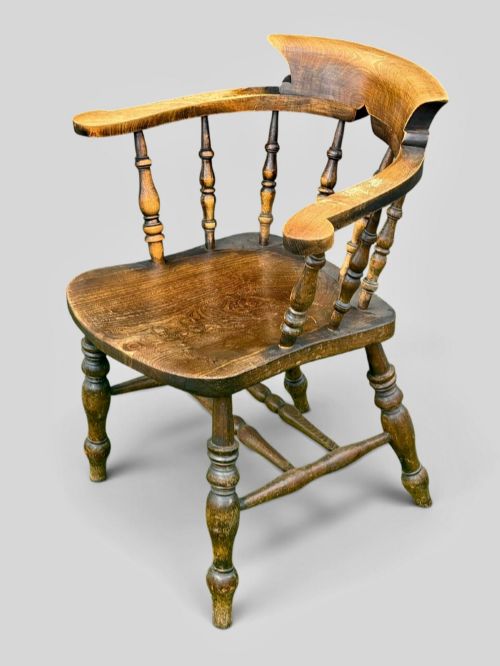
- A low-backed armchair with a continuous turned arm rail, frequently found in captain or office formats. This sturdy form became common in nineteenth-century parlours and commercial rooms.
- Wheelback
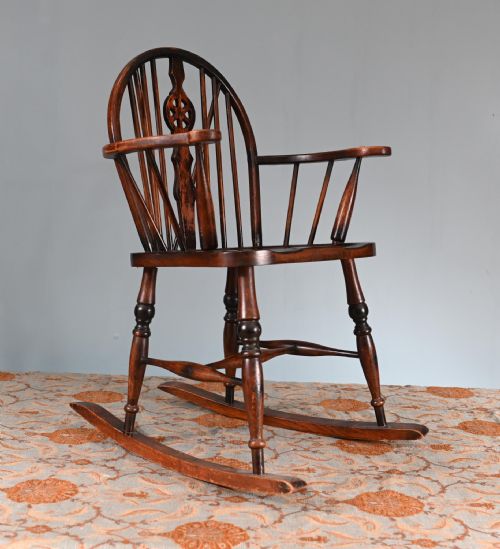
- A Windsor chair featuring a pierced central wooden splat carved in the shape of a spoked wheel. This decorative motif gained popularity during the Victorian era.
- Lath Back
- A chair style characterised by a flat vertical wooden slat running up the centre of the backrest. It provides robust support for kitchen and dining use.
- Stick Back
- A vernacular chair design constructed with multiple plain vertical spindles inserted into the seat and top rail. These linear components distribute weight evenly.
- Harlequin Set
- A collection of dining chairs that share a general style and timber, such as beech and elm, while differing slightly in individual turning details. Such groups accumulated as households acquired extra seating.
Elm and Beech Windsor Chairs: Frequently Asked Questions
What is a smokers bow chair?
A smokers bow is a low Windsor armchair featuring a rounded continuous arm rail supported by turned spindles.
These pieces served as comfortable desk or captain chairs in nineteenth-century homes and commercial spaces.
How do I identify elm and beech?
Elm exhibits a distinct interlocking grain pattern and deep figuring, making it ideal for carved saddle seats.
Beech provides a smooth, pale surface with tight medullary rays, selected for turned legs and spindles.
Are these chairs suitable for daily dining?
These seating options were originally built for heavy domestic use in farmhouse kitchens and dining rooms.
Their solid construction and ergonomic wooden seats ensure they handle regular modern use comfortably.
What makes a set matched versus harlequin?
A matched set consists of chairs sharing identical dimensions, turnings, and back designs from the same workshop.
A harlequin set brings together individual chairs of the same general type and era, united by materials like beech and elm.