




Dark Ash Dining Chairs
Dark ash dining chairs bring honest vernacular character to a room through robust native timber and sensible utilitarian design.
Dark Ash Dining Chairs
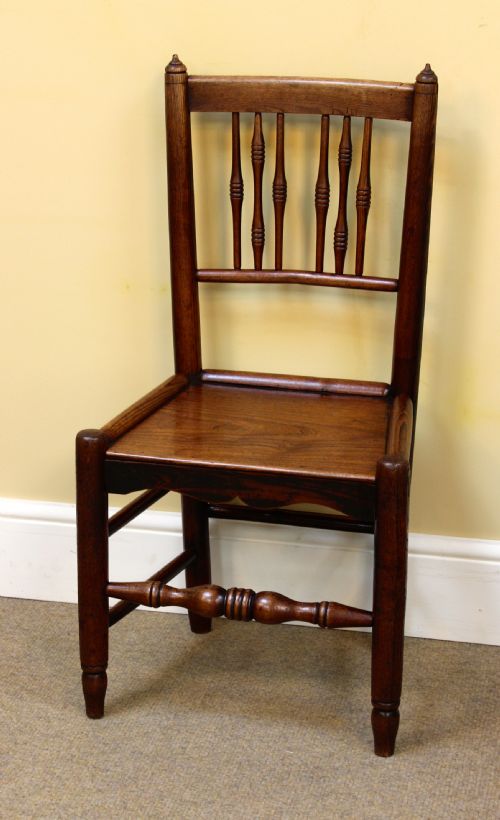
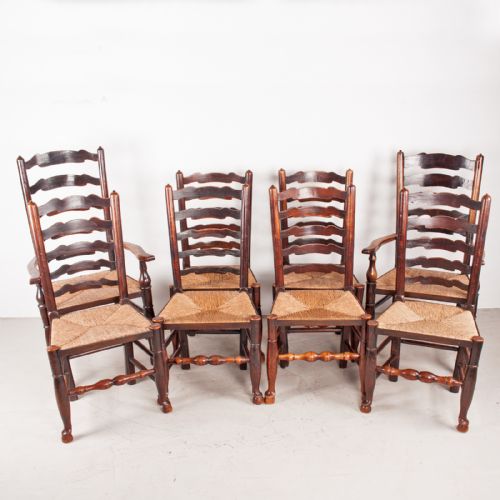
Dark ash dining chairs are primarily represented here by 18th century, Victorian, and 19th century vernacular seating created for everyday domestic use. Buyers encounter sets of kitchen chairs, ladderbacks with rush seats, and Windsor armchairs in robust combinations of ash and elm. These pieces stem from English country traditions, spanning rustic farmhouse designs to spindle-back forms.
The selection ranges from sets of six or eight dining chairs to substantial sets of captain's chairs and individual high-back armchairs. Regional variations such as Ormskirk and Suffolk chairs appear alongside wheel-back and comb-back Windsor styles. The predominant materials are native timbers showing deep patination through decades of service.
How they were made
Makers utilised green woodworking techniques, turning unseasoned ash for spindles and legs while selecting tough elm for scooped seats that resisted splitting. Frameworks were joined using traditional mortise and tenon joints, often secured with wedges to withstand heavy daily use in farmhouses and kitchens.
Seating surfaces combined solid timber with woven rush inserts, supported by steam-bent components like bow backs and ladder rails. Finish was achieved through centuries of friction, wax, and natural oils penetrating the dark ash and alder grain without heavy modern varnishes.
Some ladderback chairs include subtly undulating rails, affectionately known as wavy designs, giving rigid farmhouse seating a gentle sense of movement.
What varies in quality
Quality in dark ash dining chairs rests upon the integrity of the original timber selection and the retention of crisp turned details. Superior examples exhibit well-matched grain patterns across entire sets and minimal replacement parts in the structural underframe.
The depth of patination and the subtlety of the steam-bending separate utilitarian workshop production from finer vernacular output. Chairs retaining their original rush webbing or deep elm saddle seats command greater appreciation among collectors.
The Dark Ash Dining Chairs Glossary
- Ash
- A tough, elastic native hardwood prized by country makers for its strength in steam-bent chair components and spindle turnings. It provides the structural backbone for many vernacular dining chairs.
- Elm
- A durable timber with an interlocking grain that resists splitting, traditionally chosen for solid carved seats. It is frequently paired with ash in country kitchen chairs.
- Windsor
- A chair style featuring a solid wooden saddle seat into which the legs and back spindles are independently tenoned. These chairs often incorporate steam-bent bow backs and comb pieces.
- Ladderback
- A traditional chair design featuring horizontal slats between two upright rear posts. These backs often accompany rush seating in farmhouse environments.
- Rush
- Dried marsh grass woven tightly to form a supportive, resilient seating surface. It appears frequently on ladderback and regional country chairs.
Dark Ash Dining Chairs: Frequently Asked Questions
How do I care for dark ash dining chairs?
Feed the timber periodically with traditional beeswax to maintain the natural lustre of the dark ash and prevent the grain from drying out. Avoid placing them near direct heat sources or in fluctuating humidity to protect old joints.
Keep woven rush seats clean using a soft brush and avoid excessive moisture during cleaning. Regular gentle polishing preserves the historical patination accumulated over centuries of use.
Are these chairs suitable for daily dining use?
These robust vernacular chairs were built specifically for everyday kitchen and farmhouse dining. Their sturdy construction in ash and elm handles regular sitting comfortably.
Check that the structural wedging and joints remain firm before heavy daily deployment. Most sets easily accommodate modern dining routines while adding historical presence to a room.
What is the difference between a side chair and an armchair?
Armchairs feature integrated armrests supported by uprights connected to the seat base, providing a more substantial seating silhouette. They were traditionally reserved for the head of the table or household principals.
Side chairs omit the arms to allow multiple seats to fit closely around a dining table. Both variants often share the same regional turning styles and timber combinations within a set.