

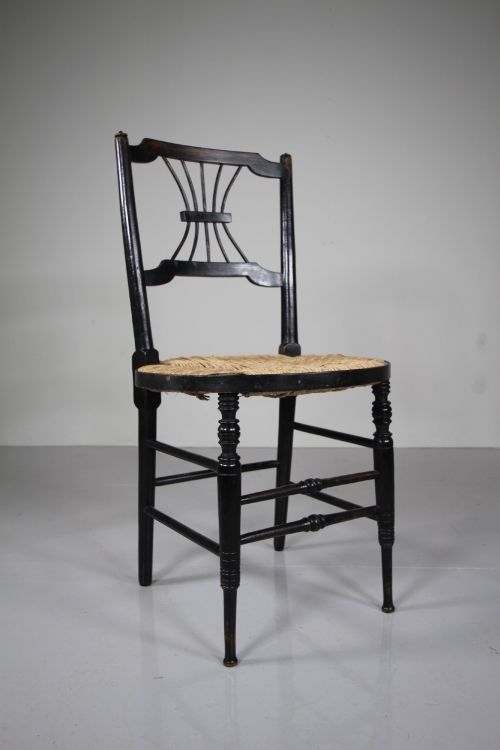


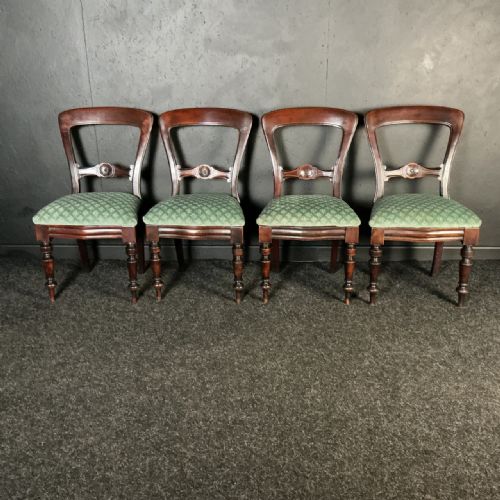
Traditional Side Chairs
Traditional side chairs are practical seats for dining rooms and hallways, chosen for their upright posture and straightforward timber frames.
Traditional Side Chairs
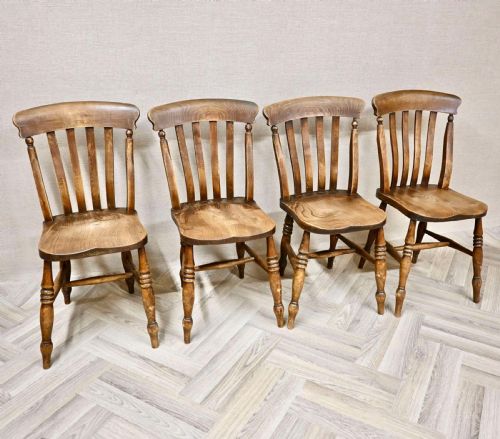
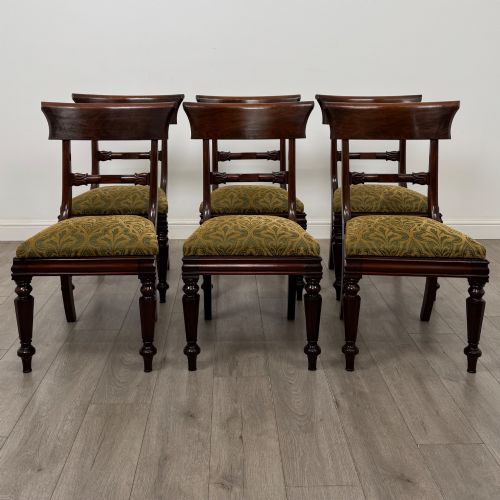
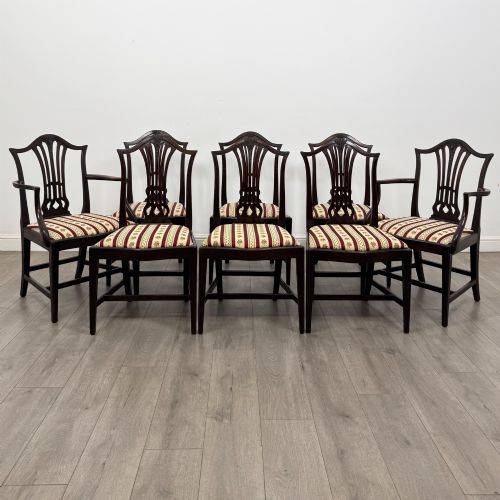
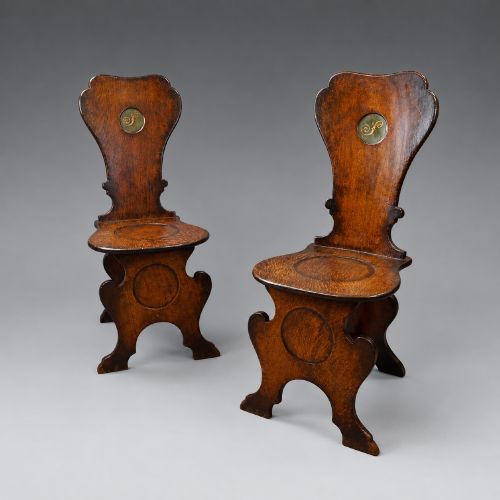
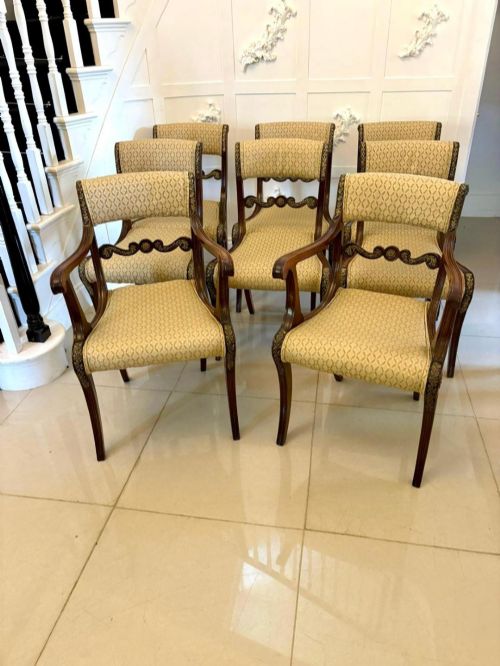
Traditional side chairs appear across the 18th century, Georgian, Victorian, and Edwardian periods, stretching into the 20th century. Buyers encounter mahogany dining seats, elm kitchen chairs, oak hall chairs, and walnut reception seats.
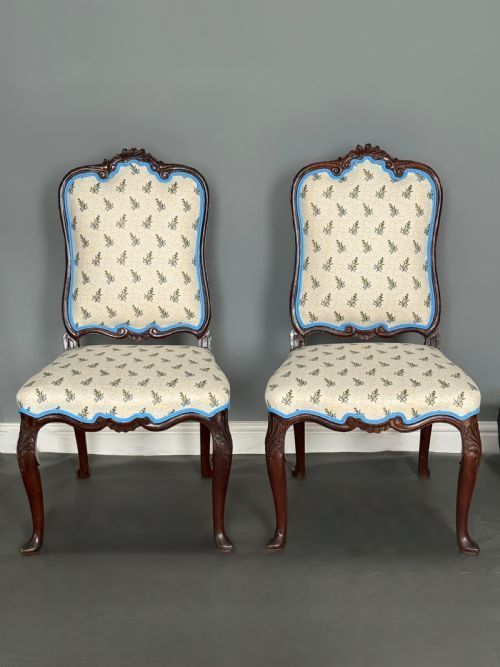
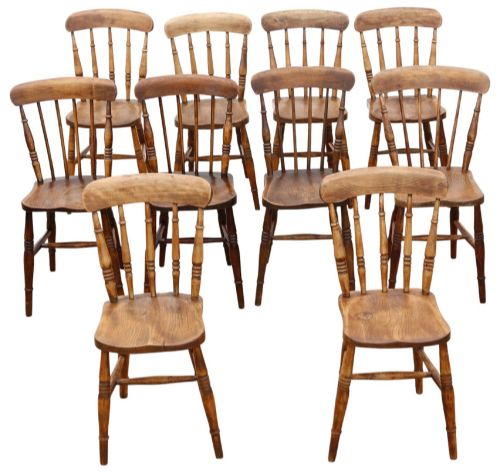
The selection ranges from single pairs of Dutch Baroque and bobbin turned timber frames to large sets of dining chairs in Hepplewhite, Chippendale, and Queen Anne styles. Windsor country chairs and balloon back models appear frequently alongside shield back and bar back designs.
Many examples serve specific domestic rooms, functioning around dining tables or as hall chairs and morning room seating. Makers span formal mahogany productions to vernacular country kitchen seating in elm and beech.
Materials and construction
Timbers dictate the build, with dense Cuban and standard mahogany favoured for formal dining sets, while elm and beech support country kitchen Windsor chairs. Oak and walnut appear in regional pieces and revival styles, occasionally paired with brass fittings.
Joinery methods rely on turned spindles, carved ladder backs, and pegged joints, supplemented by cane seats or upholstered pads in fabric, velvet, and textile. Carved details define shield back and balloon back frames.
Silver ram heads peer out from an unexpected Indian wedding chair among the British timber.
Judging the standard
The grade of timber and crispness of carved detail separate standard sets from exhibition quality examples. Rich grain depth in mahogany and walnut indicates better selection at the bench.
Original timber colour and surface patination show how a frame has aged. Uniformity across large sets of chairs reveals whether the pieces started life together or joined later as harlequin gatherings.
William Morris·Rossetti·Charles Tozer
The Traditional Side Chairs Glossary
- Balloon back
- A rounded, oval-shaped backrest popular on Victorian chairs. This curved timber frame supports the spine during dining.
- Windsor
- A traditional chair type featuring spindles inserted into a solid wood seat. These vernacular seats use elm and beech.
- Shield back
- A chair back shaped like a heraldic shield, seen in Hepplewhite and later revival designs. Carved mahogany often frames this geometry.
- Bar back
- A horizontal crossbar set across the upper chair frame. This detail characterises William IV dining seats.
- Sgabello
- An early form of wooden hall chair with trestle supports and a tall back. These decorative seats date back to Renaissance forms.
Traditional Side Chairs: Frequently Asked Questions
How do I spot a matched set?
Examine the timber grain, turnings, and joinery closely across every chair in the group. Consistent wear patterns and uniform dimensions indicate a factory-produced set rather than assembled singles.
Look underneath the seat rails for maker stamps, carpenter marks, or tonal variations in the wood. Harlequin sets often reveal slight discrepancies in height or carving depth upon inspection.
What is a carver chair?
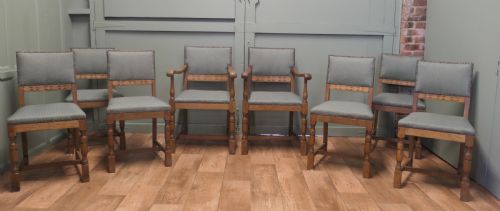
A carver chair is an armchair designed to match a set of smaller side chairs. These pieces sat at the head of the dining table.
In larger dining sets, buyers often find a pair of carvers accompanying six or eight armless side chairs. They feature the same timber and backrest style as the rest of the group.
Are Windsor chairs comfortable?
Windsor chairs utilise a saddled elm seat carved to fit the body. This scooped timber surface provides sturdy support without upholstery.
While lacking soft padding, their high spindle backs offer reliable posture for kitchen and farmhouse dining. Cushions can be added for extra comfort.
How do I care for antique mahogany?
Keep wooden chairs away from direct heat sources and strong sunlight to prevent the timber from drying and splitting. Natural beeswax applied sparingly helps maintain the lustre of the finish.
Clean surfaces with a dry or barely damp cloth, avoiding modern silicone sprays. Inspect joints periodically to ensure structural stability remains firm.