
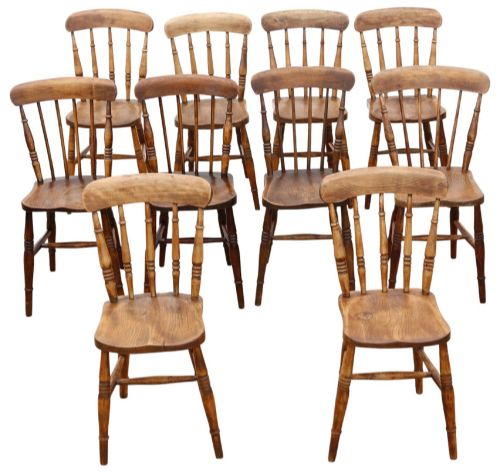
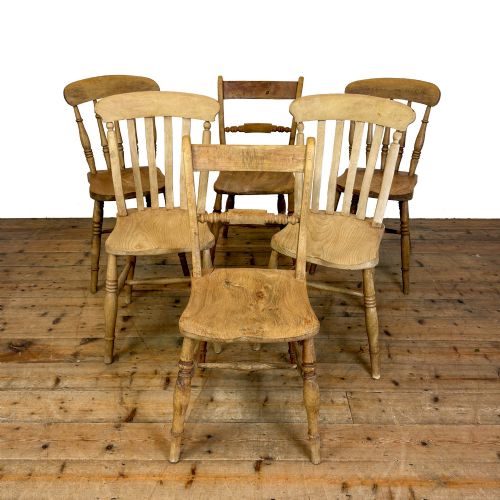
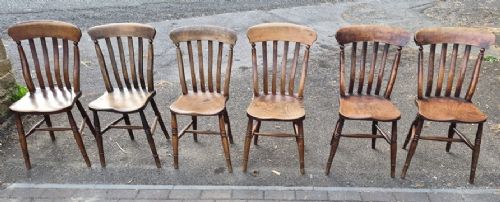
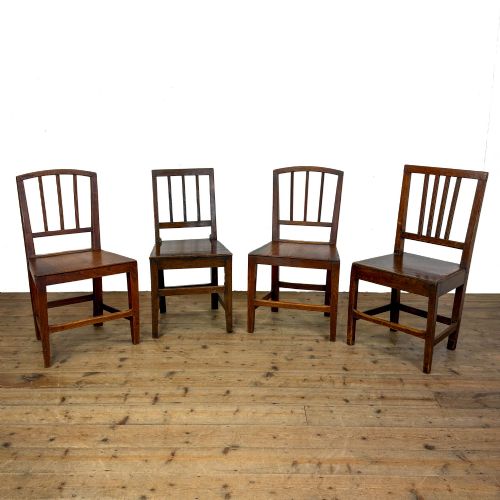
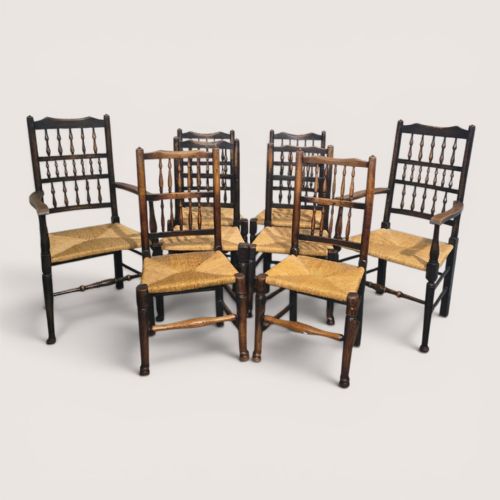


Harlequin Dining Chairs
Harlequin dining chairs bring together mismatched sets gathered over time, offering a collected, characterful look around a large table.
Harlequin Dining Chairs
Harlequin dining chairs are assembled groups of seats that share general forms, periods or construction methods despite individual differences. When you search for harlequin dining chairs, you encounter mixed sets compiled to match in scale and height rather than pattern. These groupings typically range from four to fifteen pieces, allowing larger parties to gather around a table with coordinated seating.
The versions most common on this page stem from nineteenth-century country traditions, particularly kitchen and farmhouse styles. You frequently find combinations of elm, beech and ash in regional vernacular designs like Windsor or ladderback chairs. Earlier Georgian examples in mahogany or walnut also appear, offering formal dining room alternatives to rustic kitchen sets.
Regional variations shape these groups significantly, drawing on local timber and turning traditions such as Lancashire spindlebacks or Thames Valley wheelbacks. Sets often blend carvers and single chairs within the same overarching style, maintaining visual harmony through similar heights and turnings. This collected approach suits everyday family dining rooms and country interiors alike.
Materials and construction
Makers utilised native timbers suited to specific chair parts, combining sturdy woods for daily use. Elm frequently provided strong, split-resistant solid seats, while bent beech or ash formed steam-bent bows, spindles and ladder backs. Oak served both rustic vernacular forms and formal eighteenth-century dining sets.
Turned components relied on pole lathes or foot-powered lathes to shape spindles, legs and stretchers with subtle variations. Windsor designs integrated hooped backs into solid wooden saddles, secured by wedged tenons. Ladder backs and spindle backs relied on pegged mortise and tenon joints to withstand decades of sitting.
Distinctions in quality
Quality in these mixed sets depends on the discipline of the initial gathering and the integrity of individual frames. A superior group maintains consistent proportions, seat heights and wood tones so the collection feels deliberate rather than random. The best sets combine chairs that share turning details or regional vernaculars closely enough to read as a unified family.
Construction soundness separates ordinary sets from better examples. Well-made chairs retain tight joints without excessive movement in the legs or back rails, preserving their structural balance over centuries of heavy use. Original surface patination, whether aged bare timber or historic painted pine, adds considerable character compared to stripped or over-restored surfaces.
The Harlequin Dining Chairs Glossary
- Carver
- An armchair designed to sit at the head of a dining table, often included in larger sets alongside matching single chairs.
- Windsor
- A traditional wooden chair featuring a solid carved seat into which the legs and back spindles are directly inserted.
- Ladderback
- A chair style with horizontal slats or rails set between the uprights of the backrest.
- Spindleback
- A seating form characterised by numerous slender turned wooden uprights forming the back support.
- Rush
- A natural seating material woven from dried marsh plants to form durable matted seat pads.
- Vernacular
- Regional furniture made by local craftsmen using traditional local materials rather than following metropolitan fashion.
Harlequin Dining Chairs: Frequently Asked Questions
What is a harlequin dining chair set?
A harlequin set consists of dining chairs gathered to form a matching group despite subtle differences in design, age or maker. They share common traits such as period, timber or general style to create a cohesive look around a table.
Historically, households accumulated chairs over time or combined sets to accommodate larger gatherings. This approach provides a practical alternative to strict matching suites while maintaining visual balance.
How do I mix chairs in a dining set?
Successful mixing relies on matching key elements like seat height, overall scale and primary timbers. Combining chairs from the same regional tradition, such as nineteenth-century country elm and beech, ensures they sit well together.
Including armchairs at opposite ends of the table anchors the grouping. Keeping chair backs at similar heights prevents the arrangement from looking disordered.
How do I care for antique wooden chairs?
Maintain antique timber by keeping chairs away from direct heat sources and drastic humidity changes. Feeding the wood with appropriate wax preserves the surface patination and prevents the grain from drying out.
Check leg joints periodically to ensure pegs remain secure. Avoid harsh chemical cleaners that strip historical finishes.