


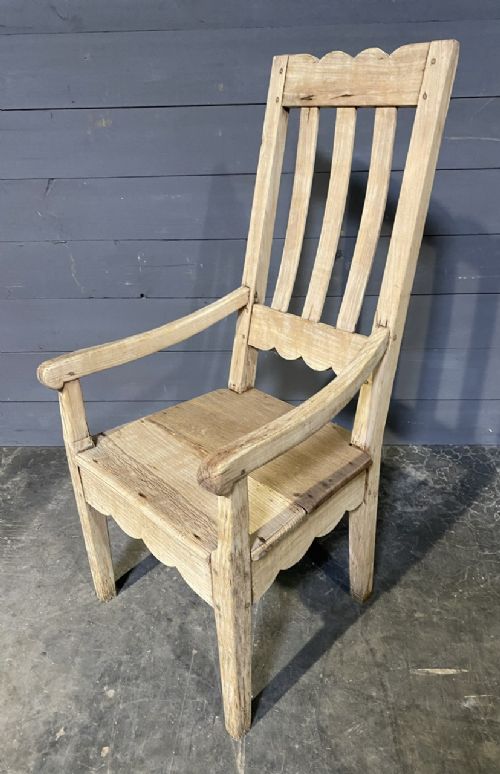

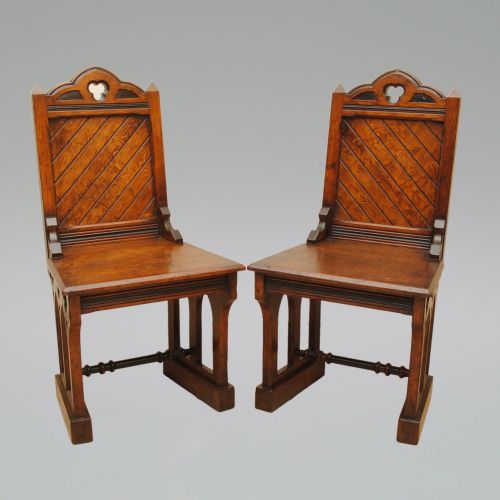

Pine Dining Chairs
These pine dining chairs bring honest timber and country utility to the table, offering simple charm for everyday seating.
Pine Dining Chairs
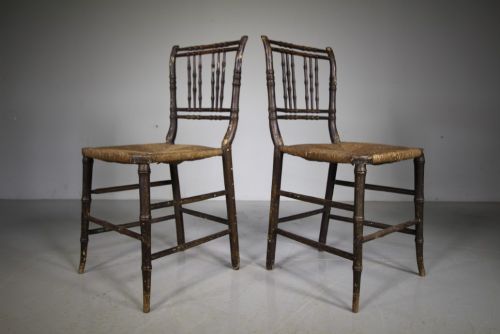
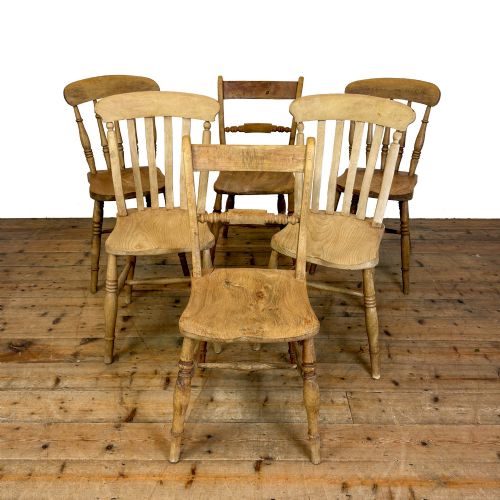
Pine dining chairs encompass sturdy kitchen seating and country forms found across the nineteenth century and into the early twentieth century. These pieces include single side chairs, matched pairs, and larger harlequin sets gathered from various rural and domestic settings.
Buyers frequently encounter variations ranging from rustic farmhouse forms to Gothic revival designs and comb back Windsor chairs. The selection spans straightforward utilitarian seating alongside more decorative painted and scumbled finishes.
Originating largely from domestic and institutional contexts such as Victorian kitchens and country houses, these chairs display straightforward construction suited to practical use. Their forms reflect the straightforward needs of past dining spaces.
How they were made
Makers utilised solid pine and pitch pine alongside elm, beech, and rush for seats and structural supports. Timber was selected for durability, with grain patterns often enhanced by paint or scumble finishes.
Construction techniques rely on traditional joinery methods appropriate for everyday furniture, ensuring stability through decades of use. Surfaces bear the tool marks and patination of period woodworking practices.
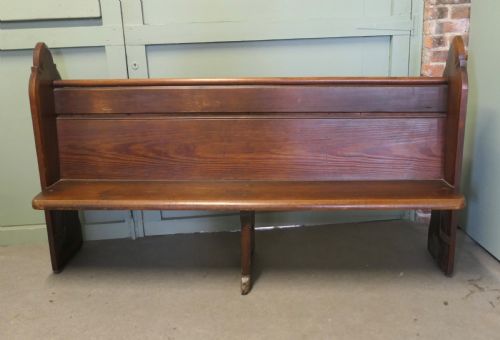
Some nineteenth-century church pews manage to moonlight as dining benches, having swapped the Sunday sermon for the supper table.
What varies in quality
Quality rests in the integrity of the timber and the retention of original surface treatments like paint or scumbling. Pieces that retain their structural firmness without excessive replacement parts command greater interest.
The degree of detail in decorative elements, such as Gothic tracery or comb back turnings, distinguishes standard utility seating from finer vernacular examples.
The Pine Dining Chairs Glossary
- Pitch Pine
- A dense, resinous variety of pine known for its prominent grain and durability. It was frequently utilised in nineteenth-century Gothic and institutional furniture.
- Scumble
- A decorative paint technique involving a translucent top layer dragged or combed over a base coat to imitate finer wood grains. This finish appears on several Victorian examples.
- Harlequin Set
- A collection of chairs assembled to match in style or period rather than originating as a single workshop set. Such groupings often vary slightly in height or minor detail.
- Comb Back
- A Windsor chair variation where the vertical spindles of the back extend up through a crest rail resembling the teeth of a comb. This construction offers strong back support.
- Gothic Revival
- An architectural and decorative style drawing on medieval forms, characterised by pointed arches and vertical emphasis. It appears in nineteenth-century church pews and hall chairs.
Pine Dining Chairs: Frequently Asked Questions
What defines a harlequin set?
A harlequin set consists of individual chairs gathered together because they share a similar period, style, or material rather than being made as a single matching group from the workshop.
These collections offer a characterful dining arrangement where each chair retains slight individual differences in turning or proportions while maintaining a cohesive look around the table.
How do I care for antique pine?
Antique pine benefits from simple maintenance using natural beeswax to nourish the dry timber and protect historic surfaces without applying modern synthetic varnishes.
Keeping the chairs away from direct heat sources and sudden humidity changes prevents the timber from splitting and preserves the original patination.
What is pitch pine?
Pitch pine is a particularly hard and resinous species of pine valued in the nineteenth century for its strength and striking, high-contrast grain patterns.
It appears frequently in institutional settings, pews, and robust dining furniture where durability was essential.
Can I use these chairs daily?
These timber chairs were built for practical domestic use in farmhouses and kitchens, making them well-suited for everyday seating around a modern dining table.
Checking that the joints remain stable ensures the chairs will withstand regular use while retaining their historic character.