

Farmhouse Kitchen Chairs
Farmhouse kitchen chairs are robust wooden seats built for everyday dining, offering honest utility and traditional charm to modern spaces.
What farmhouse kitchen chairs are
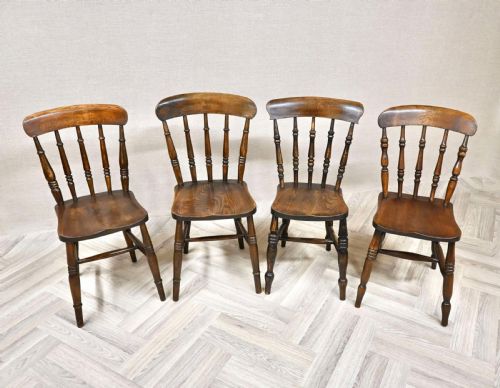
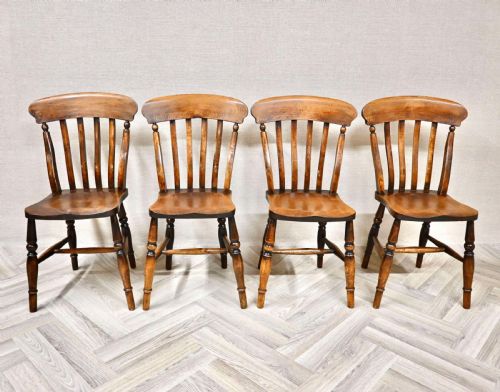
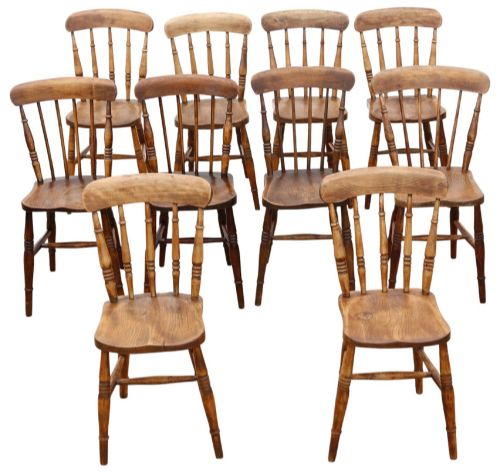
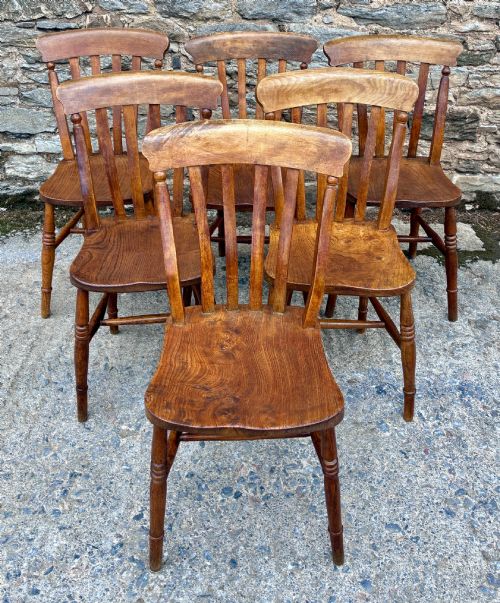
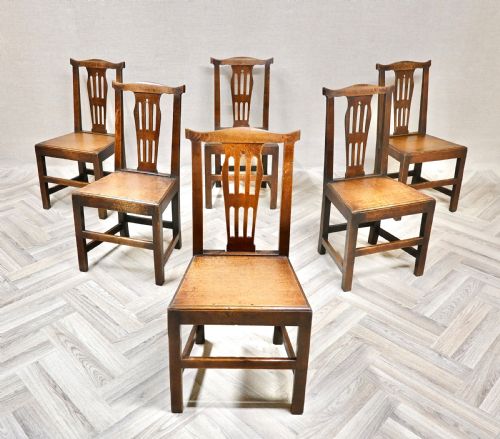
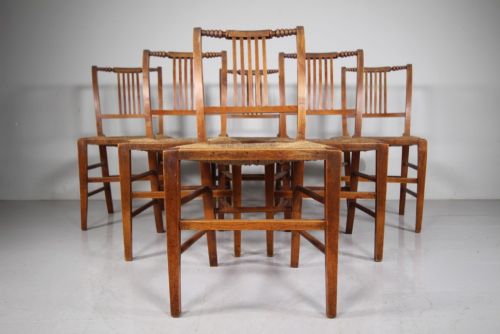
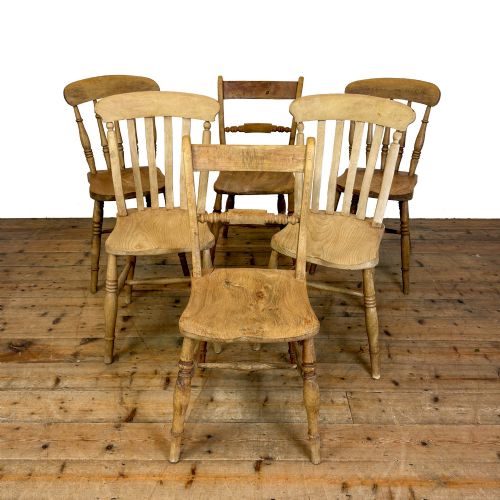
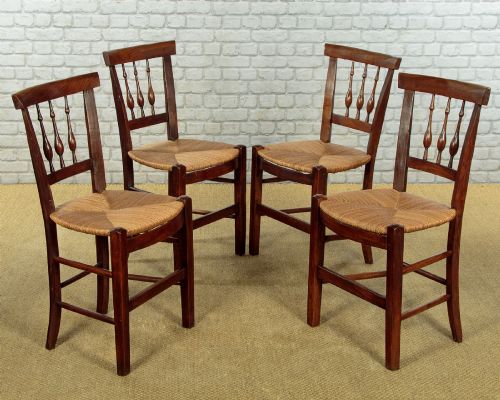
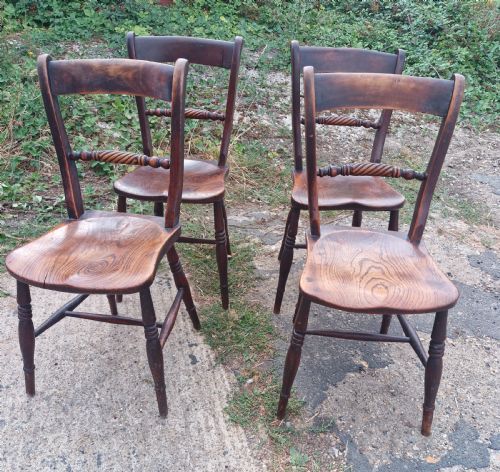
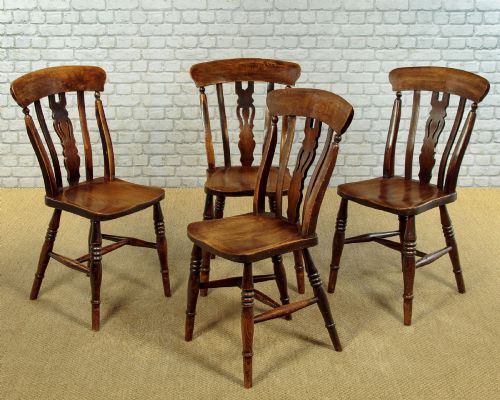
Farmhouse kitchen chairs are functional wooden dining seats originating from rural traditions, frequently encountered as matching sets of four, five, six, or eight pieces. These items serve daily use around rustic tables while bringing authentic historical character to interiors.
The selections recorded here span the nineteenth century, the early twentieth century around nineteen thirty, and the mid nineteenth century Victorian period. English country, rustic farmhouse, traditional country, and Victorian styles dominate the physical forms.
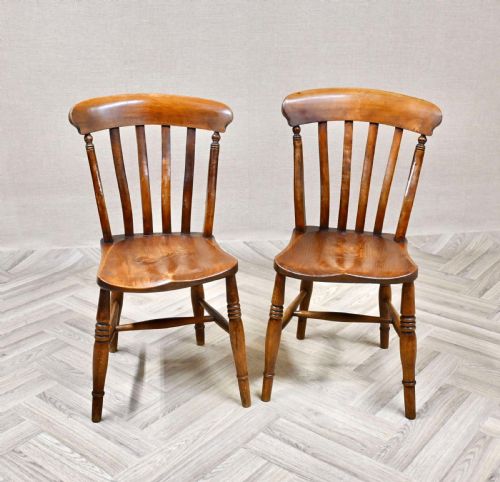
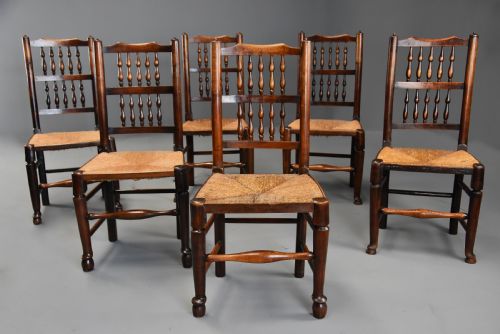
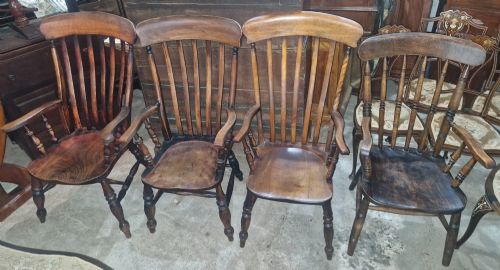
Common layouts include Windsor designs with bowed backs, ladderback variations, slat back configurations, and lathback structures. Dining chairs and occasional carvers appear regularly across these groupings.
How they were made
Construction relies upon solid timbers including elm, beech, oak, ash, and pine, often combining multiple woods within a single seat for strength and flexibility. Turnery techniques shape spindle legs and uprights, whilst bentwood methods form curved Windsor backrests.
Retail Price Guide 2026
Typical UK retail prices for farmhouse kitchen chairs, calculated from the Sellingantiques database of over a million retail prices indexed since 2003. This retail price guide relies exclusively on Sellingantiques data; no external sources or auction records are used, so the figures do not describe the wider market.
Elm was chosen for seats because its interlocking grain prevented the wood from splitting when family members shifted their weight.
What varies in quality
Quality rests in the harmony of mixed timber construction, such as elm seats paired with ash or beech spindles, which demonstrates purposeful material selection. The crispness of turnery and the depth of the sculpted seat separate standard production from superior craftsmanship.
The integrity of original joints and the consistency within a matched group dictate the standing of a set. Greater refinement appears in pieces retaining uncompromised patination and balanced proportions across all matching components.
The Farmhouse Kitchen Chairs Glossary
- Windsor
- A chair built with a solid wooden seat into which the legs and back spindles are directly tenoned. This construction method provides notable structural strength.
- Ladderback
- A chair style featuring horizontal slats rising between two upright rear posts. The design echoes traditional regional woodworking.
- Carver
- An armchair designed to sit at the head of a dining table, sharing stylistic traits with the matching side chairs. These items usually feature supportive armrests.
- Patina
- The surface sheen and colour acquired by wood through age, handling, and polishing over many decades. This characteristic indicates genuine period use.
- Lathback
- A variant of the Windsor chair where flat wooden laths form the central vertical splat of the backrest. This detail offers distinct visual rhythm.
Frequently Asked Questions
Are farmhouse kitchen chairs comfortable for daily use?
These chairs are built with sculpted wooden seats designed to support long periods of sitting around the table.
Adding loose squab cushions can further increase comfort while preserving the historic timber surface beneath.
How do I care for antique wooden kitchen chairs?
Maintain the timber by applying occasional traditional beeswax to nourish the grain and protect the finish from drying out.
Keep them away from direct heat sources and sudden temperature shifts to prevent wood movement or splitting.
Can I mix these chairs with a modern table?
The rustic timber tones and traditional craftsmanship pair naturally with contemporary dining tables to create a balanced contrast.
Uniformity in wood type or leg turnery helps tie disparate seating and table combinations together harmoniously.
What is the difference between Windsor and ladderback chairs?
Windsor chairs utilise a thick solid plank seat with inserted spindles and a bentwood bow, focusing on curved ergonomic support.
Ladderback chairs rely on a frame of vertical posts holding horizontal slats, presenting a more geometric silhouette.