


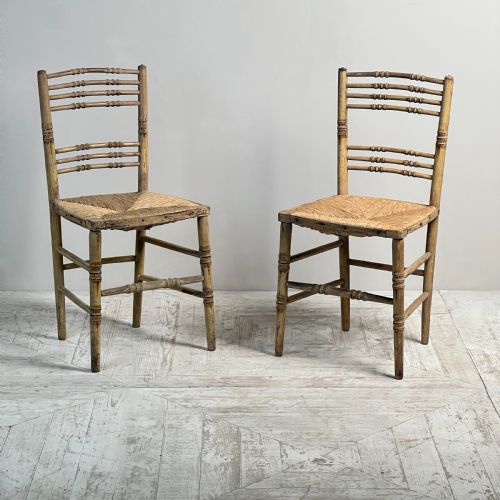
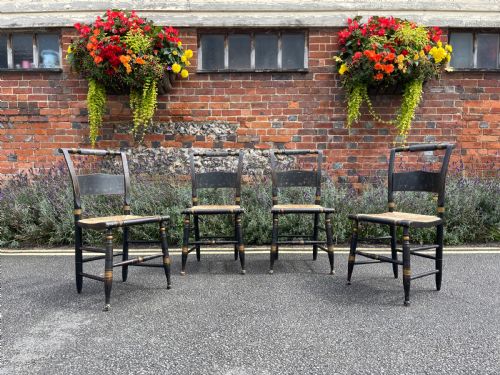


Painted Rush Seat Chairs
Painted rush seat chairs are practical country and period seating, prized for their surviving decorative surfaces and woven texture.
Painted Rush Seat Chairs
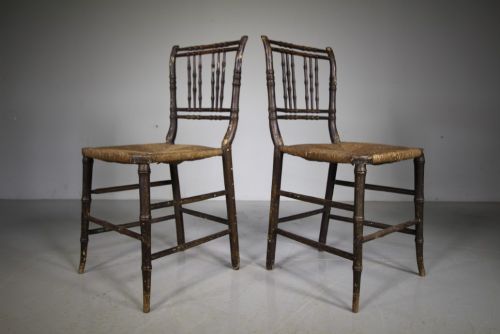
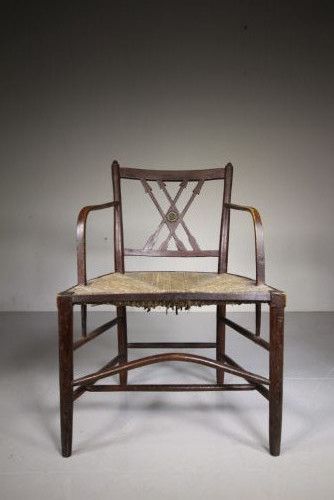
When you search for painted rush seat chairs, you encounter regional vernacular forms, Windsor derivations, and formal Regency responses to rustic seating. The items on this page span the Georgian, Regency, and Victorian eras, alongside specific regional types from Cheshire, Ireland, and Sweden.
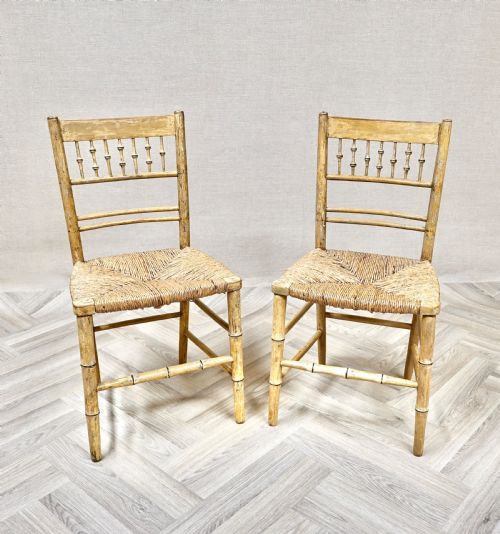
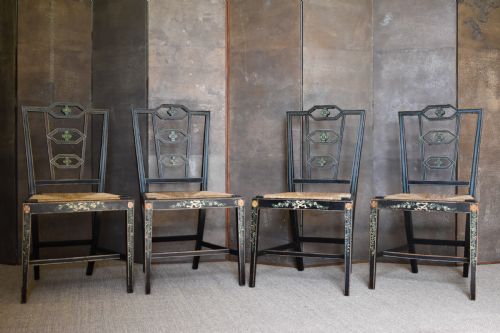
The most frequent examples on this page are pairs and sets of side chairs or armchairs, predominantly utilising pine, ash, beech, or bamboo-turned frames. These are practical seating choices created for domestic spaces, retaining either early decorative pigment or later white and colour finishes.
Origins range across British country workshops, continental European makers, and branded Victorian firms like Morris and Co. Buyers encounter everything from ladder-back kitchen chairs to faux bamboo framing and rocking chair formats.
How they were made
Makers constructed these frames from native timbers such as ash, beech, and pine, frequently turning the wood on a lathe to form spindles, legs, and faux bamboo stalks. Some regional examples employ ladder-back structures, while others integrate bent elements.
Seats are tightly woven using natural rush or plaited straw, known in some Irish pieces as súgán, creating a sturdy and flexible surface suspended across the frame. This organic cordage is durable when kept dry.
Surfaces were finished with paint, varying from early schemes on pine and ash to decorative Victorian Chinoiserie and Hitchcock ornamentation. Over time, these coatings acquire natural wear that reveals the underlying timber.
The inventory includes rocking chairs, ladder-backs, and faux bamboo designs alongside standard dining and side chair formats.
What varies in quality
The survival of original surface pigment defines the distinction between standard examples and those with higher collector interest. Pieces that retain their first paint layer without heavy overpainting carry greater integrity.
Frame construction and timber selection dictate structural stability, with dense hardwoods like ash outlasting softer alternatives. The tightness and condition of the woven rush seat also indicate how well the chair was maintained.
Morris and Co·Hitchcock
The Painted Rush Seat Chairs Glossary
- Rush
- A marsh plant used for centuries to weave durable, flexible chair seats. It provides a natural texture that contrasts with painted wooden frames.
- Súgán
- An Irish term for a twisted straw rope used to form traditional woven chair seats. This material offers a resilient alternative to standard marsh rush.
- Faux bamboo
- Wood turned and painted to imitate real bamboo canes, popular during the Regency period. This decorative technique appears on numerous side chairs and armchairs.
- Ladder-back
- A chair back featuring horizontal wooden slats between the upright posts. This traditional vernacular form is often found on regional ash and pine chairs.
- Vernacular
- Everyday domestic furniture made by local craftsmen using regional styles and materials. These pieces reflect the specific traditions of areas like Cheshire or Ireland.
Painted Rush Seat Chairs: Frequently Asked Questions
Are painted rush seat chairs comfortable?
The woven rush conforms slightly to the sitter, offering a supportive surface despite the rigid wooden frame.
Many buyers add small loose cushions for extra padding during longer periods of dining use.
How can I date a painted chair?
Examine the turnings, timber species, and construction methods, comparing them against known regional vernacular styles.
Original paint layers and tool marks left by early woodworking planes also help determine the period.
Can I use these chairs daily?
Most sturdy ash, beech, and pine examples handle regular domestic use when placed on even floors.
Period pieces require sensible handling to preserve fragile painted surfaces and aged woven rush.