


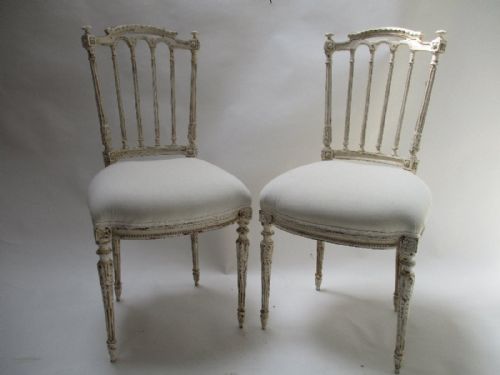
Cream Painted Dining Chairs
Cream painted dining chairs bring together period form and decorative painted surfaces across centuries of European craftsmanship.
Cream Painted Dining Chairs
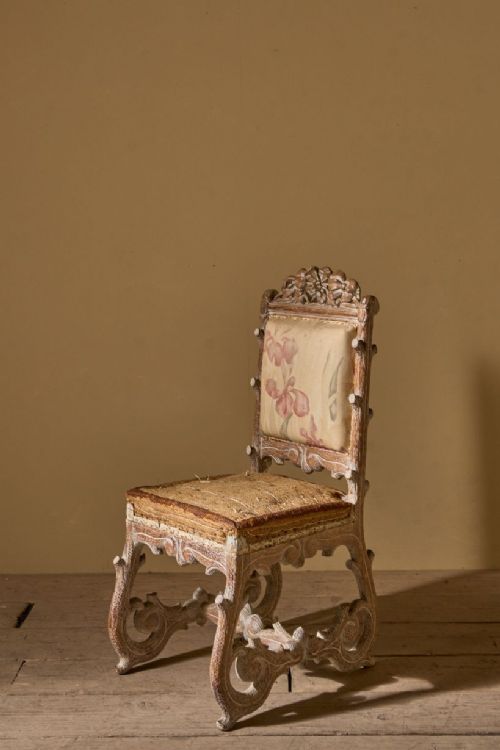
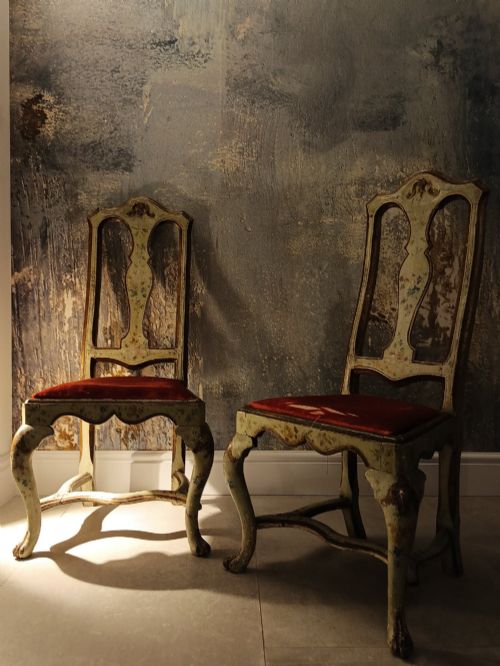
Cream painted dining chairs encompass seating furniture finished with painted or lacquered surfaces, appearing across various centuries and regional styles. Buyers seeking cream painted dining chairs encounter forms ranging from eighteenth-century Italian and English designs to nineteenth-century French models and later revival pieces.
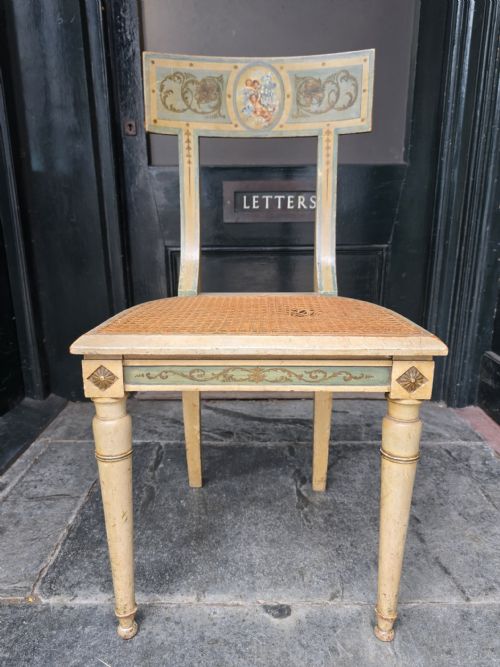
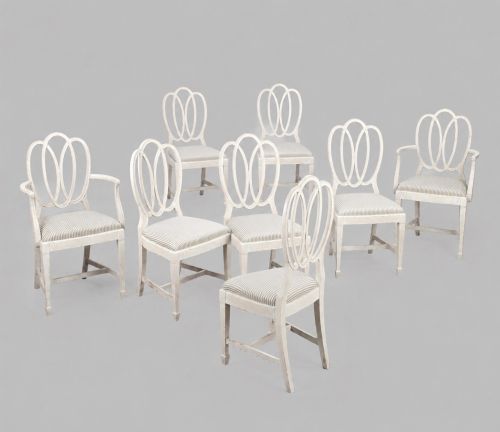
The selection includes individual side chairs, pairs, and larger matched sets suited for dining rooms and occasional seating. Workshops across Europe produced these chairs in styles such as Regency, Louis XVI, Queen Anne, and Hepplewhite, applying paint over wood to achieve a decorative finish.
Side chairs and armchairs predominate in the listings, alongside garden dining sets and occasional seating. These pieces demonstrate how traditional seating forms adapted to painted decoration during the eighteenth, nineteenth, and early twentieth centuries.
How they were made
Constructed from wood such as carved timber, these chairs rely on traditional joinery techniques to form frames, legs, and backrests. Artisans shaped the structural elements before applying surface finishes.
Makers applied paint, lacquer, and faux bois finishes over the wooden frames to create the distinctive decorative appearance. Upholstery materials including fabric, velvet, and cane appear on seats and backs where specified by the design.
Some nineteenth-century makers went to great lengths to paint wooden chairs so convincingly that people try to stroke the grain.
What varies in quality
Quality in these chairs rests upon the precision of the woodwork and the integrity of the carved details on the frame. Finer examples display crisp carving and well-proportioned forms that reflect the stylistic period of their origin.
The condition and application of the painted or lacquered surface also distinguish pieces, with original or well-preserved finishes contributing to the character of the chair. The integration of materials like cane or upholstered fabric affects the overall execution of the seating.
The Cream Painted Dining Chairs Glossary
- Side chair
- A chair without arms, designed primarily for use at a dining table. These pieces form the majority of standard dining sets.
- Faux bois
- A decorative finish painted to imitate the appearance of natural wood grain. This technique appears on nineteenth-century seating.
- Louis XVI Revival
- A nineteenth-century style drawing on the neoclassical forms of the French eighteenth century. Chairs in this manner display restrained classical lines and painted surfaces.
Cream Painted Dining Chairs: Frequently Asked Questions
What periods do these chairs come from?
The pieces span from the eighteenth century through the Victorian era into the early twentieth century. Dates include specific decades such as eighteen-eighty and nineteen-twenty.
Craftsmen across these periods utilised styles ranging from Queen Anne and Regency to Louis XVI revival and Italian rococo.
How do I identify the style?
Stylistic markers include the shape of the backrest, the carving on the wooden frame, and the leg geometry. French models often show neoclassical influences, while Italian examples display rococo characteristics.
Paint and lacquer finishes further define the aesthetic of each period, from traditional eighteenth-century coats to later revival treatments.
Are these chairs sold in sets?
Listings include individual side chairs, pairs, and larger sets containing up to twelve or fourteen pieces. Garden dining sets comprising tables and chairs also occur.
Buyers can find matching groups suitable for formal dining arrangements as well as pairs for occasional seating.
What materials are used?
The primary structural material is wood, often carved and finished with paint, lacquer, or faux bois effects. Seat components frequently incorporate fabric, velvet, or woven cane.
Combinations of these materials reflect the specific workshop traditions of the originating region and period.