



White Painted Side Chairs
White painted side chairs bring light and refined form to a room, offering versatile seating rooted in centuries of decorative tradition.
White Painted Side Chairs
White painted side chairs encompass dining chairs, salon chairs, and decorative seating finished in pale or white pigments over wood. These pieces span the nineteenth century and the early twentieth century, drawing on historical aesthetics from French neoclassical designs to rustic country forms.
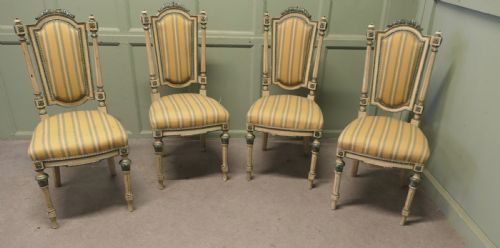
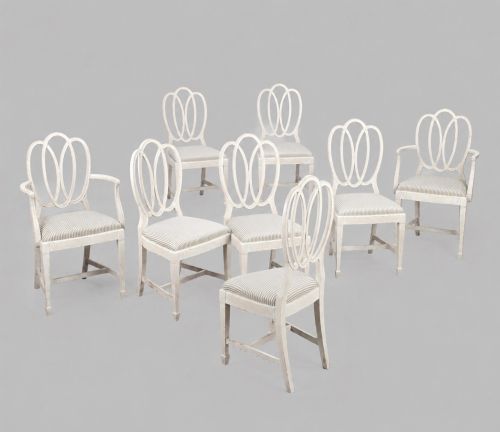
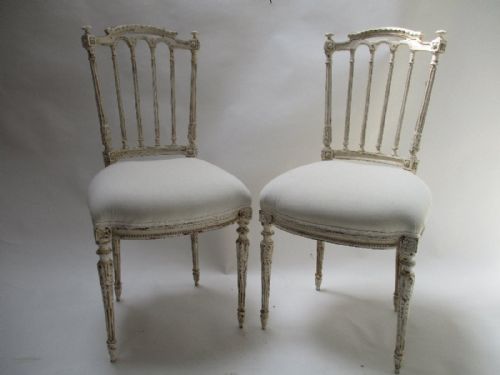
Buyers encountering white painted side chairs on this page will most frequently find sets and pairs originating from the Victorian era and the nineteen-twenties. The selection ranges from formal Louis XVI style and Gustavian pieces to lacquered Queen Anne influenced models and faux bamboo armchairs.
The underlying construction relies on timber frameworks, frequently utilising beech and carved wood, enhanced by fabric upholstery, cane seats, and textile elements. These chairs function primarily around dining tables or within salons, combining structural seating with distinct decorative presence.
Materials and construction
Makers built white painted side chairs using solid timbers such as beech, which provided the dense grain necessary for intricate carved wood details and slender legs. Artisans applied layers of paint directly onto the wood, sometimes employing lacquer or later paint applications to achieve the characteristic pale finish seen across the periods.
Upholstery techniques incorporated durable textiles and fabric pads set into the frames, whilst other examples integrated woven cane for lighter seating surfaces. Construction methods combined traditional joinery with decorative carving, aligning with styles like Hepplewhite, Chinoiserie, and French Neoclassical traditions.
White Painted Side Chairs Retail Price Guide 2026
Typical asking prices for white painted side chairs among the pieces listed under this phrase on Sellingantiques today, from the lower quarter to the upper quarter. They describe what is for sale here now, not the wider market.
Painted finishes across the selection range from original white pigments to later decorative coats and lacquered surfaces.
Assessing quality and finish
Quality in white painted side chairs rests upon the crispness of the original carved wood details and the structural integrity of the timber frame. Pieces that retain harmonious proportions across large sets demonstrate superior workshop coordination compared to mismatched groupings.
The application and layering of paint or lacquer define the visual depth of the surface, distinguishing artisan finishes from heavier, later interventions. The integration of specialised elements such as cane work or tailored upholstery further separates standard utilitarian seating from finer decorative examples.
The White Painted Side Chairs Glossary
- Side chair
- A chair without arms, traditionally designed for dining tables or auxiliary seating around a room. These pieces form the majority of seating arrangements in period interiors.
- Gustavian style
- A Swedish interpretation of French neoclassical design characterised by restrained neoclassical motifs and pale grey or white paint. This aesthetic emphasises light and functional elegance.
- Faux bamboo
- A decorative technique where wood is turned and carved to imitate the segmented stalks of natural bamboo. It gained popularity during periods influenced by East Asian design trends.
- Cane
- Woven rattan material used to create light, resilient seats and back panels. It adds texture and breathability to wooden chair frames.
White Painted Side Chairs: Frequently Asked Questions
How do I use these chairs in a modern home?
White painted side chairs integrate easily into contemporary dining spaces or bedrooms as accent seating. Their neutral finish allows them to bridge historic and modern interiors without overwhelming the room.
Pairing a set around a timber dining table adds an element of contrast. Smaller salon chairs work effectively as standalone pieces in hallways or reading corners.
What periods do these chairs represent?
The pieces span from the nineteenth century through to the nineteen-twenties, incorporating Victorian production alongside later revivals. Stylistic influences draw heavily from earlier eighteenth-century French and English designs.
Craftsmen of the later periods frequently reinterpreted classic forms like Queen Anne and Louis XVI aesthetics. This historical crossover creates a diverse range of decorative options.
How do I identify different regional styles?
Regional characteristics appear through specific decorative motifs and the handling of the timber frames. Gustavian pieces display Swedish restraint, whereas French salon chairs showcase more elaborate carved ornamentation.
English influenced pieces often reference Hepplewhite or Queen Anne proportions. Examining the specific curvature of the legs and backrests reveals these design origins.
Are these chairs suitable for daily dining use?
Most of these chairs were originally constructed for domestic dining or salon use and remain structurally capable of daily seating. Timber frames like beech provide the necessary strength for regular handling.
Upholstered and caned variations require consideration of fabric wear over time. Careful placement ensures the longevity of both the painted finish and the underlying wood.