





French Country Side Chairs
These french country side chairs bring rustic character and practical charm to an interior.
French Country Side Chairs
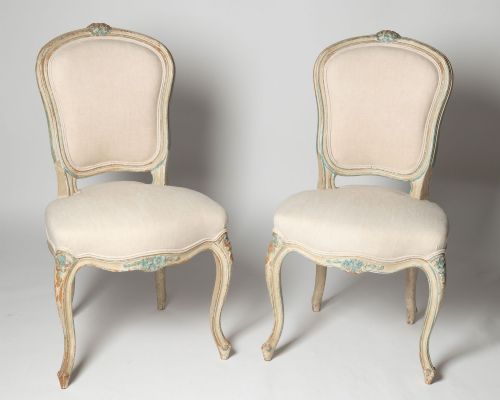
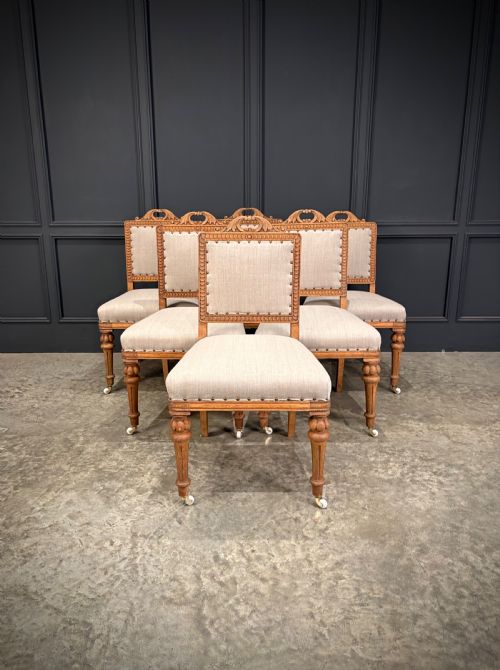
When you search for french country side chairs, you are looking at practical seating shaped by regional traditions across various historical periods. The examples on this page span the nineteenth and early twentieth centuries, encompassing Edwardian variations alongside continental designs.
The origins reflect both formal French chateau aesthetics and simpler rustic interpretations. Dealers often handle sets of six alongside pairs and individual country side chairs.
How they were made
Traditional makers utilised native timbers such as oak, walnut, fruitwood, beech, and painted wood for the frames. Artisans shaped these materials using hand carving techniques to achieve the characteristic curves and decorative motifs.
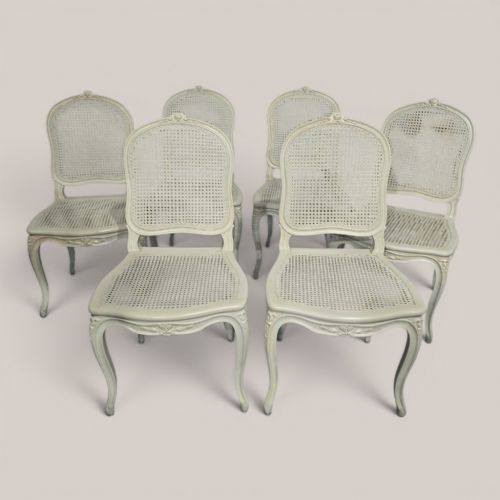
Seats incorporated natural woven materials like rush and cane, alongside upholstered fabric inserts. Brass elements occasionally appeared in mounts or structural details to finish the construction.
The periods represented span from 1800 through the Edwardian era up to the 1920s.
What varies in quality
The quality of french country side chairs is determined by the crispness of the hand carving and the integrity of the timber frame. Superior examples display balanced proportions and robust joinery that has survived generations of use.
The material used for the seat, whether tightly woven rush, fine cane, or fabric, influences the overall standard. Original surfaces and patination on woods like bleached oak and walnut separate standard items from finer specimens.
The French Country Side Chairs Glossary
- Rush
- A marsh plant used for centuries to weave durable, textured seats for traditional chairs. It tightens as it dries.
- Bergere
- An enclosed upholstered armchair with wooden framing, typical of comfortable French salon seating. The sides are traditionally filled in with cane or upholstery.
- Ladder back
- A chair back featuring multiple horizontal wooden rails between the upright posts. This design is common in regional and kitchen seating.
- Cane
- Thin strips of peeled rattan woven into an open mesh pattern for chair seats and backs. It offers lightweight flexibility.
- Fruitwood
- A dense timber harvested from fruit-bearing trees, valued by cabinetmakers for its warm tone and smooth grain. It was frequently utilised in regional French furniture.
French Country Side Chairs: Frequently Asked Questions
Are these chairs comfortable for dining?
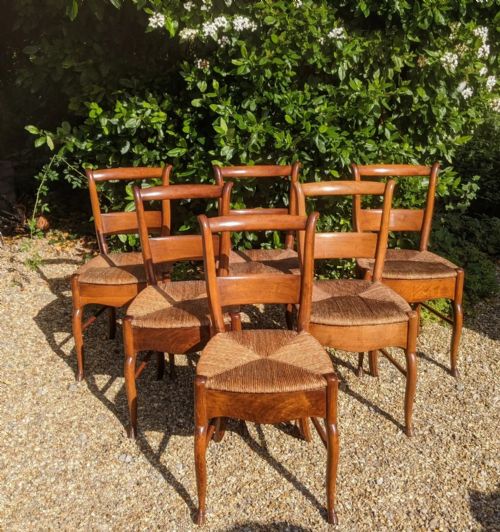
Many of these chairs were designed precisely for prolonged dining use, particularly the versions featuring supportive ladder backs and woven rush seats. Their ergonomic proportions suit modern dining tables surprisingly well.
For extra comfort, many owners add loose squab cushions upholstered in complementary fabrics. This provides a softer seat while preserving the historic timber and rush underneath.
How do I care for rush seats?
Rush seats require a dry environment and gentle treatment to prevent the natural fibres from becoming brittle. Regular dusting with a soft brush keeps the weave clear of grit.
Avoid excessive moisture when cleaning, as water can rot the dried marsh plants. A damp cloth should only be used sparingly for stubborn marks.
Can I mix different chair styles together?
Mixing regional French styles with simpler country pieces creates a collected, authentic interior. The shared use of natural woods like oak and walnut provides a visual link across different designs.
Pairing ladder back chairs with carved salon chairs works well around a rustic table. The key is to balance wood tones and seat heights rather than matching every single chair.
How do I identify a Louis XV style chair?
Louis XV style chairs are defined by flowing asymmetrical curves, cabriole legs, and delicate floral carvings. The framework avoids straight lines in favour of organic, serpentine contours.
Unlike heavier Victorian pieces, these chairs feel lighter and more graceful. The style draws inspiration from French court design translated into regional workshops.