

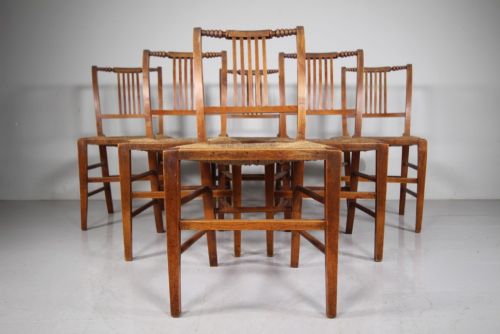
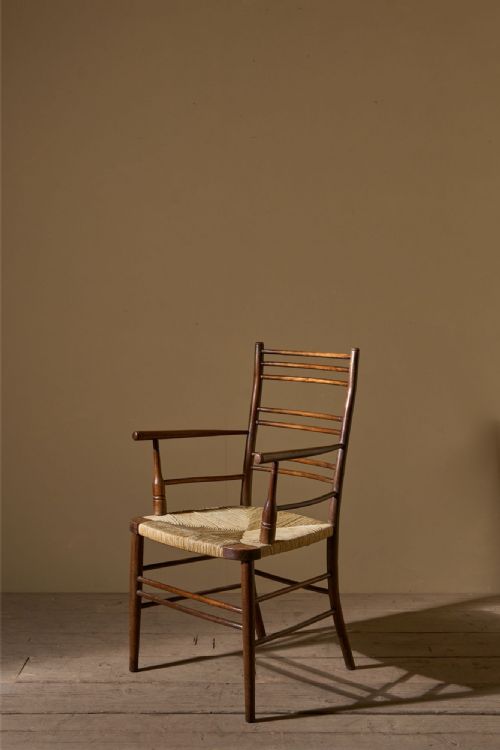
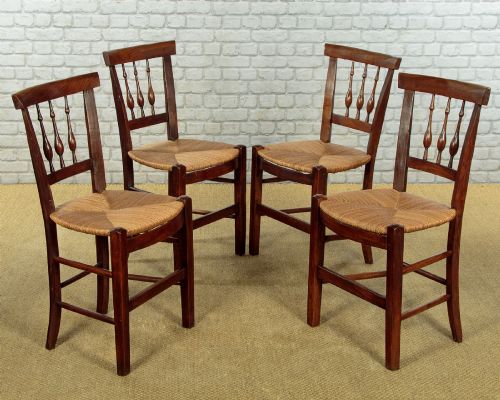
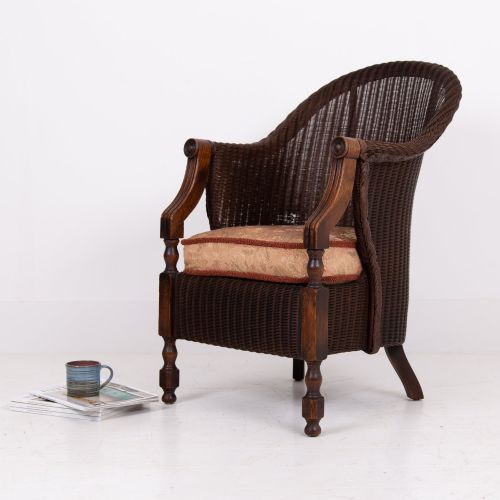
Vintage Woven Seat Chairs
Vintage woven seat chairs bring together natural fibre seating and sturdy wooden frames across periods from the eighteenth century to the twentieth.
Vintage Woven Seat Chairs
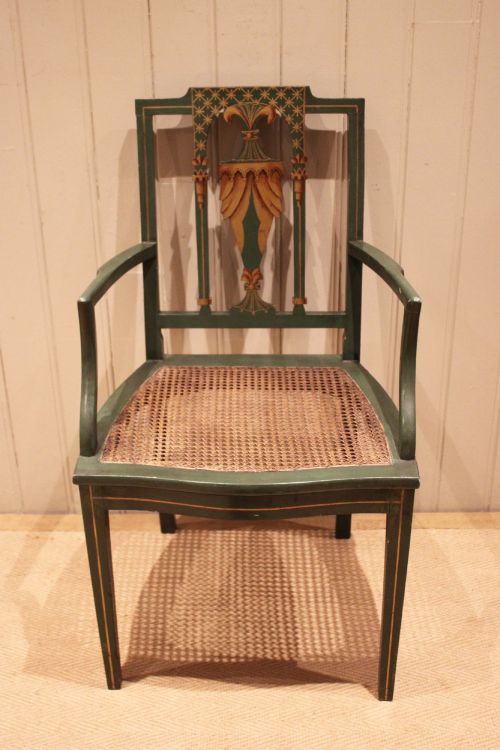
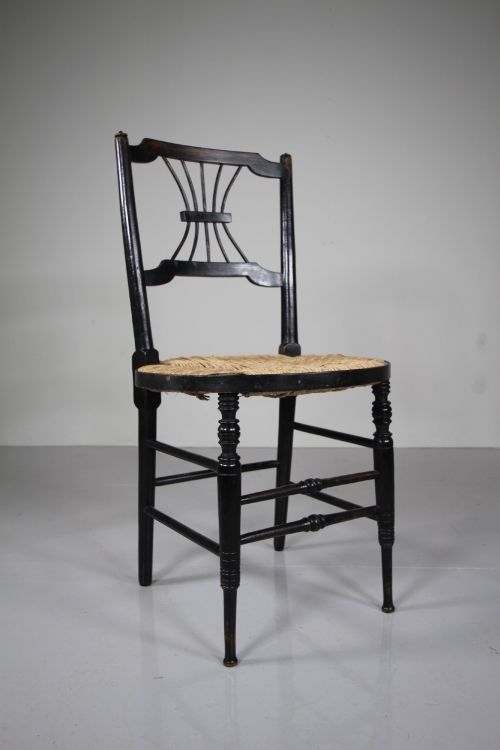
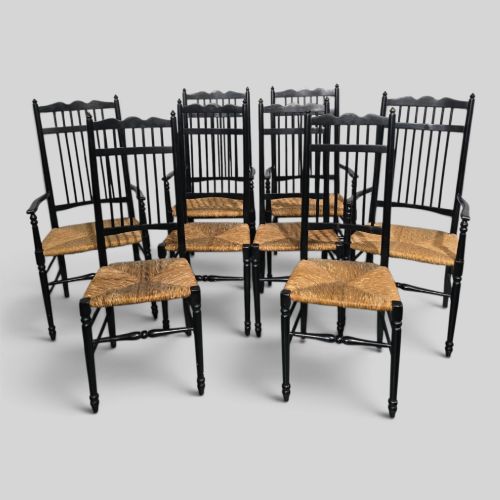
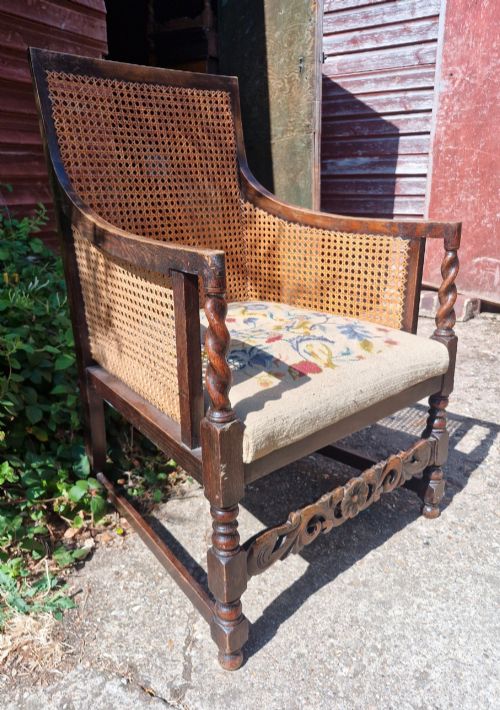
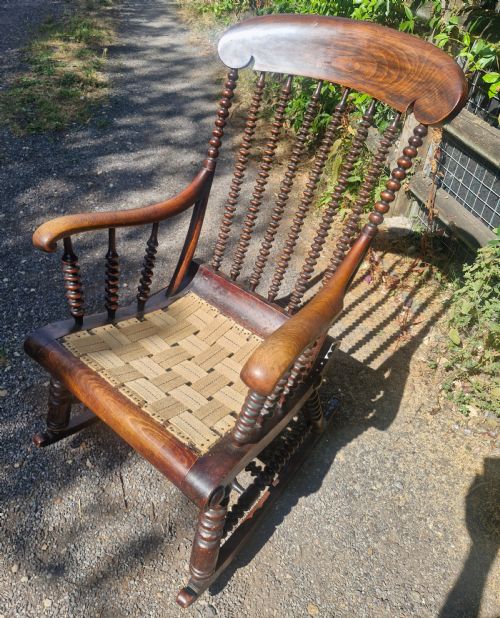
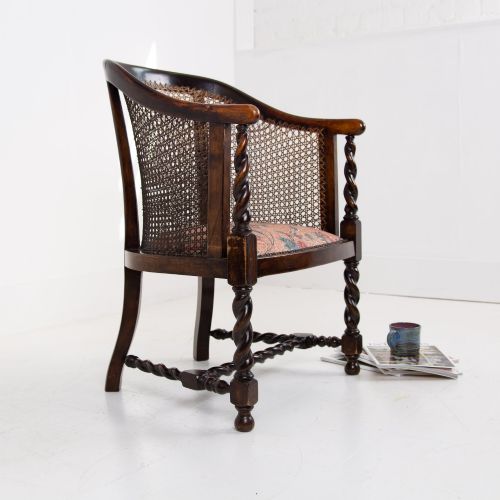
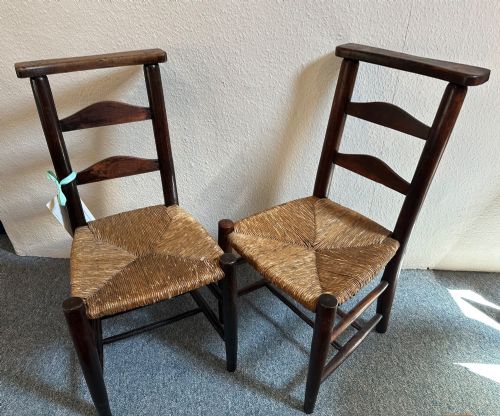
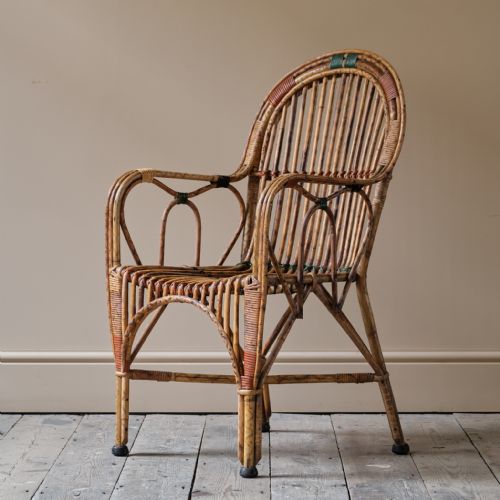
Vintage woven seat chairs encompass a broad spectrum of seating forms, ranging from simple country dining chairs and ladderbacks to elaborate bergères and rocking chairs. When exploring this selection, buyers frequently encounter pieces featuring traditional rush, cane, rattan or split cane seating integrated into wooden frameworks.
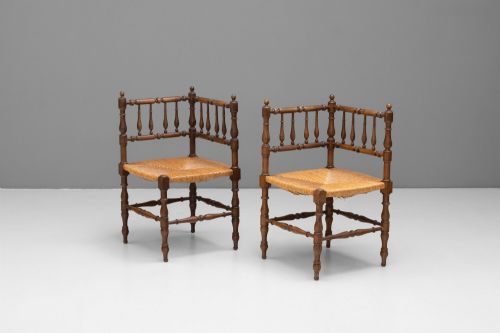
The objects span multiple eras, including Victorian, Edwardian, Arts and Crafts, and Art Deco movements. Forms vary considerably from small side chairs and corner chairs to large armchairs, lounge chairs, and children's high chairs.
Origins stretch from English country workshops to colonial settings and continental designers, providing diverse interpretations of woven seating. The most common varieties combine sturdy wooden frames in oak, mahogany, or elm with organic woven elements.
Materials and construction methods
Construction relies heavily on traditional woodworking techniques paired with flexible plant-based materials. Frames are built from timber such as oak, mahogany, walnut, teak, elm, and painted wood, often shaped with turnings, barley twists, or ladder backs.
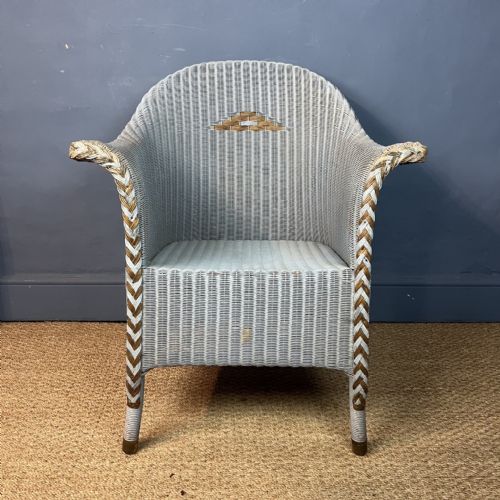
Seats and backs utilise natural weaving media including rush, cane, rattan, wicker, and split cane. These materials are hand-woven tightly across wooden rails or dropped into rebated frames to provide resilient yet flexible support.
Several sturdy chairs managed to survive decades of daily service inside St Paul's Cathedral before finding their way into homes.
Evaluating craftsmanship and condition
Quality in these chairs rests upon the integrity of the wooden frame joinery and the tightness of the woven seating panel. Superior examples display dense, uniform weaving patterns that show minimal sagging alongside robust timber construction.
Makers' marks, original painted or polished surfaces, and historical context elevate certain pieces significantly. Finer examples retain their original rush or cane intact, whereas utilitarian versions often demonstrate simpler construction and later re-weaving.
William Morris·Rossetti·Liberty·Morris and Co·Dryad and Co
The Vintage Woven Seat Chairs Glossary
- Bergere
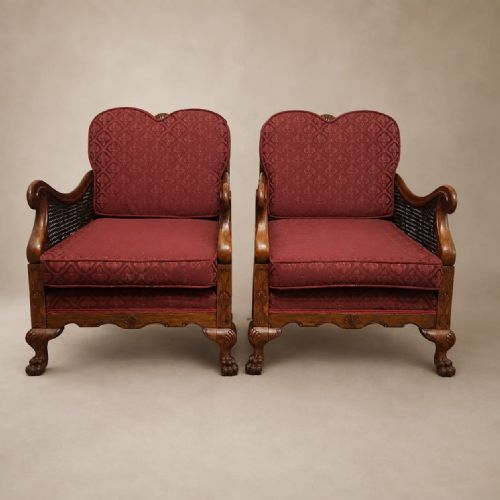
- An upholstered or cane-panelled armchair featuring enclosed sides and a wooden frame. This French-inspired form became popular in mahogany, walnut, and painted finishes during the nineteenth and twentieth centuries.
- Rush
- A marsh plant used traditionally for bottoming country chairs. The dried stems are twisted into cords and hand-woven in distinctive envelope patterns across the seat frame.
- Cane
- The outer bark of the rattan palm stripped and woven into intricate mesh patterns. It provides a lightweight, resilient surface for chair seats and backs.
- Ladderback
- A chair style characterised by horizontal wooden slats or rails across the backrest. These chairs frequently feature rush or cane seats and appear extensively in country and Arts and Crafts contexts.
- Barley twist
- A decorative turning technique resembling a twisted rope carved into furniture legs and uprights. This detail appears frequently on early twentieth-century oak frames.
Vintage Woven Seat Chairs: Frequently Asked Questions
How do I clean a rush seat?
Rush seats benefit from gentle dusting with a soft brush and occasional light wiping with a barely damp cloth. Excessive moisture ruins natural plant fibres.
Keep these chairs away from direct heat sources and damp environments to prevent the dried rush from becoming brittle or moulding over time.
Are cane seats comfortable?
Cane seating offers natural flexibility that conforms slightly to the user's weight. The woven mesh allows good air circulation during warmer weather.
Many people add loose squab cushions to wooden and cane armchairs for extended seating comfort while preserving the visible weave.
How do I date a rush seat chair?
Dating relies on examining the timber frame construction, tool marks, wood species, and stylistic cues such as ladder backs or bobbin turnings. Eighteenth and nineteenth-century examples often display hand-shaped components.
Secondary indicators include original painted finishes and maker stamps or paper labels affixed to the underside of the wooden rails.
Can broken cane panels be repaired?
Skilled restorers can re-cane damaged panels completely using traditional hand-weaving methods through pre-drilled holes in the wooden frame. This process restores both the structural integrity and appearance.
Partial repairs are rarely successful on older woven panels, making complete re-weaving the standard approach for maintenance.