




Black Wood Dining Chairs
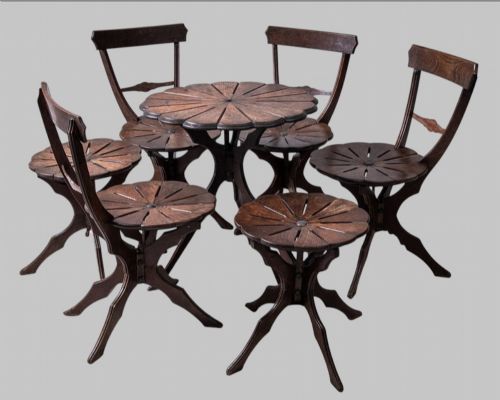
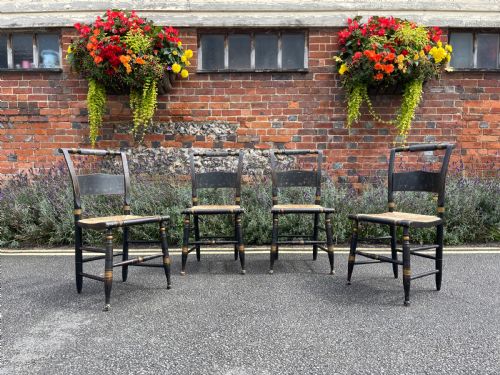
Black wood dining chairs bring a dark, grounded presence to a room, ranging from ebonised Regency forms to Arts and Crafts designs.
Black Wood Dining Chairs
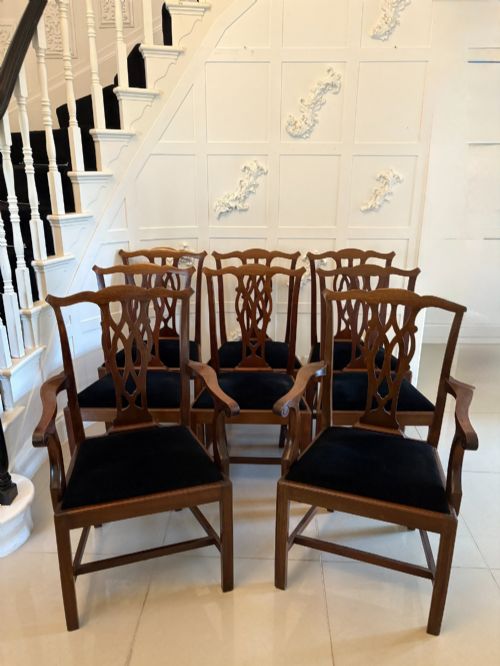
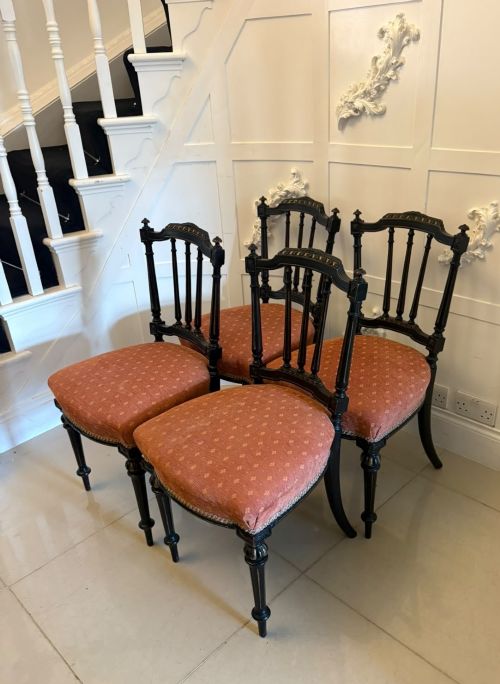
Black wood dining chairs encompass seating finished with ebonised surfaces, dark polish, or black paint, appearing across periods from the eighteenth century to the early twentieth century. When exploring black wood dining chairs, buyers encounter styles including Regency, Victorian, Arts and Crafts, and George III, alongside regional variations such as Alpine Folk Art and Swiss pieces.
The selection on this page relies heavily on ebonised wood, mahogany, oak, and walnut, often enhanced with gilt, paint, or fabric upholstery. Forms range from single side chairs and pairs to substantial sets of matching dining chairs and parlour suites.
Makers and designers represented include Philip Webb for Morris & Co, alongside historic cabinet makers working in traditional styles like Chippendale, Sheraton, and Edwardian Chippendale Revival. Buyers most frequently find Victorian ebonised examples, Regency painted sets, and nineteenth-century interpretations of earlier styles.
Materials and construction
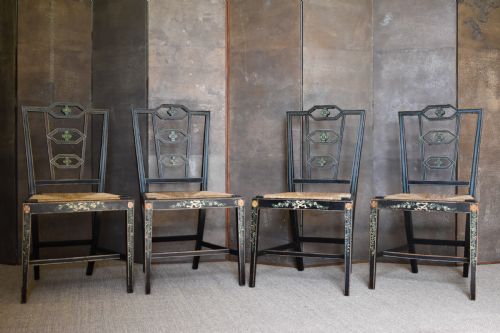
Makers utilised various timber foundations, including mahogany, oak, walnut, and general hardwoods, before applying ebonising stains, dark paint, or black lacquering to achieve a uniform dark finish. Many surfaces feature parcel gilt highlights, hand-painted decoration, or marquetry inlay to break the dark ground.
Construction techniques combine traditional joinery with applied decorative elements such as turned bamboo-style turnings, carved backs, rush seating, and fabric upholstery fixed to the frame. Finishers often layered lacquering and gilt directly onto the wood or over a prepared gesso ground, depending on the stylistic period.
Assessing quality
Quality rests on the integrity of the timber framing, the precision of the joinery, and the preservation of the original surface finish, whether ebonised, painted, or lacquered. Pieces retaining crisp carving and untarnished gilt decoration demonstrate higher execution than later or heavily refinished counterparts.
The cohesion of a matching set dictates its desirability, particularly with larger dining sets where uniform ageing across all chairs preserves the set's integrity. The sophistication of the design, from simple faux bamboo turnings to complex marquetry inlay or signed Arts and Crafts production, elevates a piece.
Morris & Co·Philip Webb·Hitchcock
The Black Wood Dining Chairs Glossary
- Ebonised
- Wood treated with stain, dye, or paint to imitate expensive ebony. This dark finish gained popularity during the Regency and Victorian eras for formal seating.
- Parcel Gilt
- Woodwork decorated with small areas of gold leaf applied over a prepared surface. It frequently highlights carved details on black or painted frames.
- Faux Bamboo
- Wood turned and carved to resemble natural bamboo stalks. This decorative technique appeared frequently on nineteenth-century Regency and Victorian chairs.
- Marquetry
- Inlays of different woods fitted into a wooden panel to form decorative patterns. Swiss and Dutch pieces in the collection employ this intricate technique.
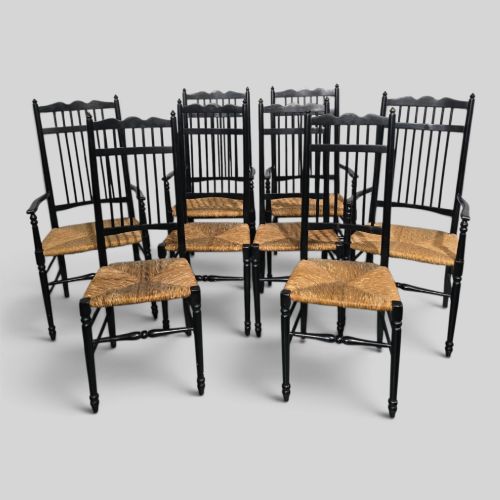
- Rush
- Woven marsh grasses used to create traditional woven seats. It provides a contrasting textured surface against dark wooden frames.
Black Wood Dining Chairs: Frequently Asked Questions
Are these chairs suitable for daily dining?
Most of these historic chairs function well for everyday dining provided the timber frames remain structurally stable and the joinery is secure. Many nineteenth-century sets were built for robust domestic use.
Buyers should consider the seat height and upholstery comfort when planning daily use, as older seating dimensions often differ from modern standards. Protecting antique finishes from moisture and heavy wear preserves their condition over time.
How do I care for ebonised wood?
Ebonised wood requires dusting with a soft, dry cloth to prevent surface scratching and the accumulation of grit. Avoid using harsh chemical cleaners or silicone-based polishes that can degrade the dark finish.
Keep the chairs away from direct sunlight and strong heat sources to prevent the wood from drying out or the black finish from fading. Occasional application of a suitable microcrystalline wax helps protect the surface.
What defines a Regency black wood chair?
Regency black wood chairs typically feature classical revival motifs, sabre legs, and sophisticated ebonised or painted finishes often enhanced with gilt detailing. The forms draw inspiration from ancient Greek and Roman furniture styles.
Design elements like faux bamboo turnings or delicate cane work frequently appear in this period. These chairs were designed to offer a refined, architectural presence in formal dining rooms and parlours.
Can I mix different styles of black chairs?
Mixing different styles of black wood chairs creates a collected, eclectic dining arrangement that highlights varied periods and forms. The unifying dark finish helps tie disparate designs together visually.
When combining sets or individual side chairs, pay attention to seat heights and overall scale to ensure guests sit at a comfortable level around the dining table. Matching armchairs with simpler side chairs offers a balanced traditional look.