
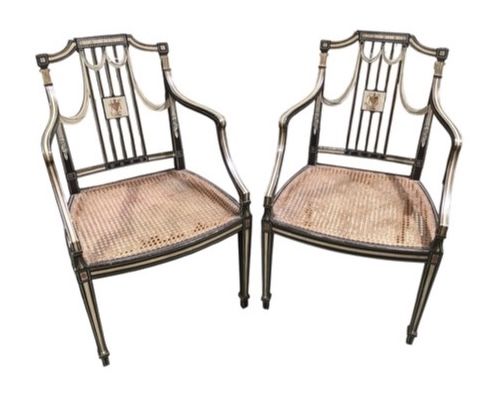


Ebonised Carver Chairs
Ebonised carver chairs offer striking dark finishes and architectural lines that command attention in any traditional or modern interior.
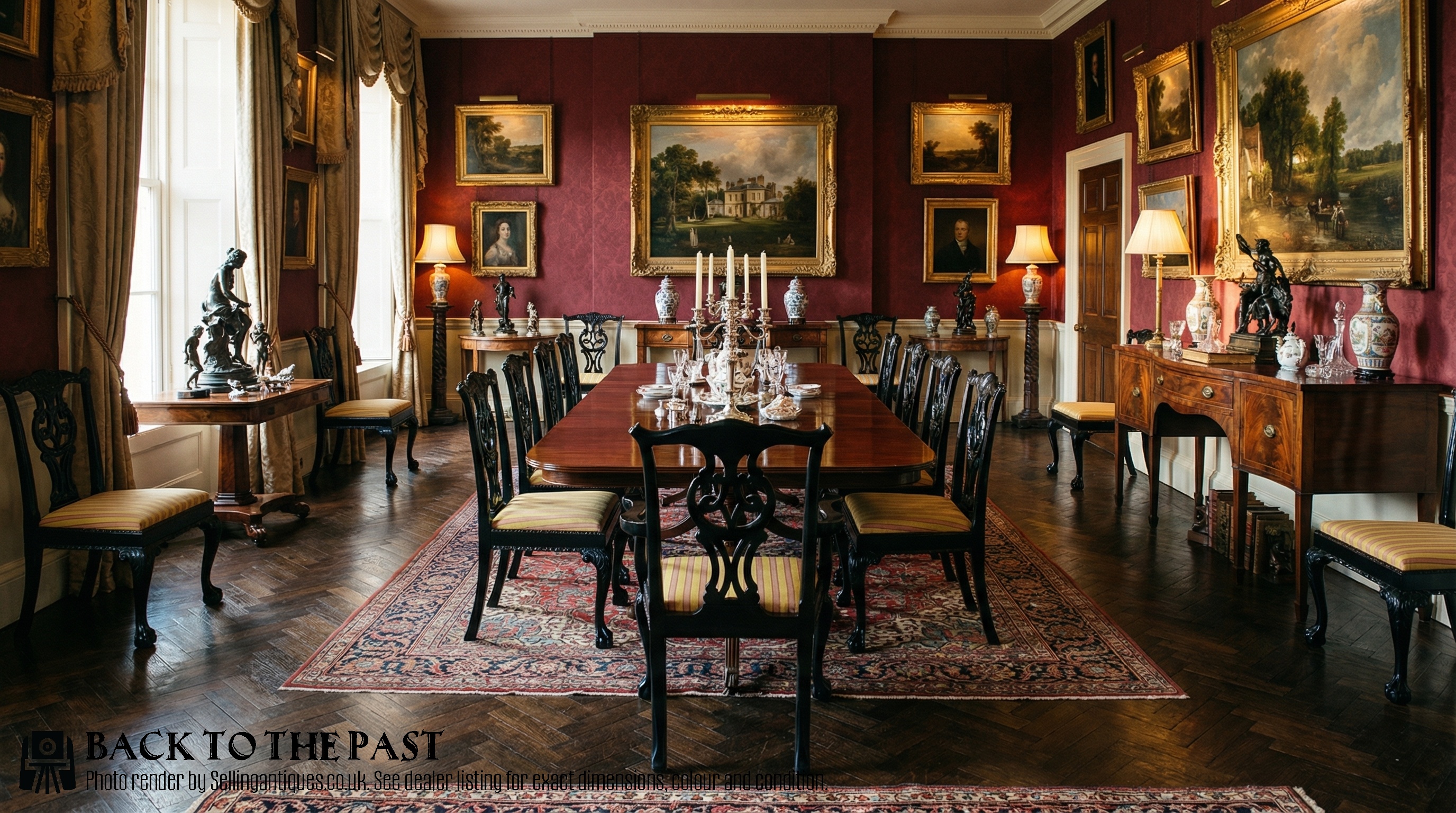
Ebonised Carver Chairs
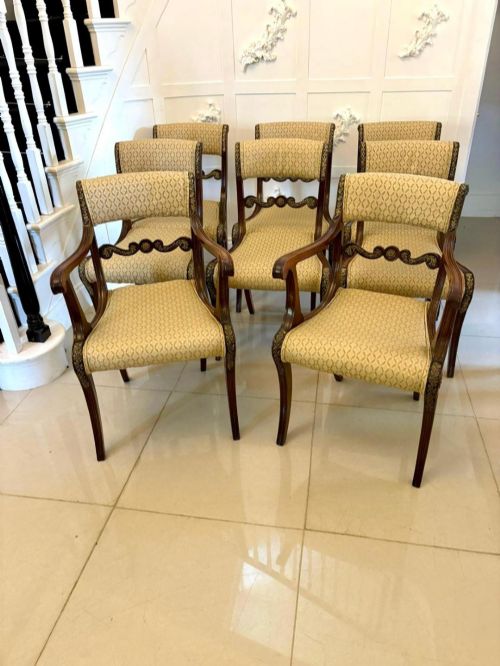
Ebonised carver chairs encompass substantial armchairs and elbow chairs designed for dining rooms, libraries, and parlours across multiple eras. When seeking ebonised carver chairs, you encounter pieces spanning the eighteenth century through to the early twentieth century, reflecting shifting tastes in formal seating.
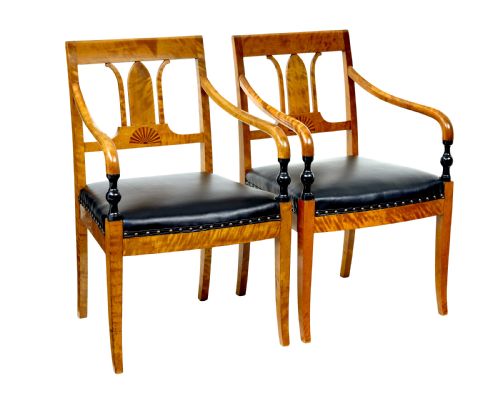
The selection ranges from authentic Regency and George III examples to later revivals, including Arts and Crafts, Art Deco, and Aesthetic Movement interpretations. Many pieces originate from British workshops, alongside notable Swedish Biedermeier and Scandinavian designs.
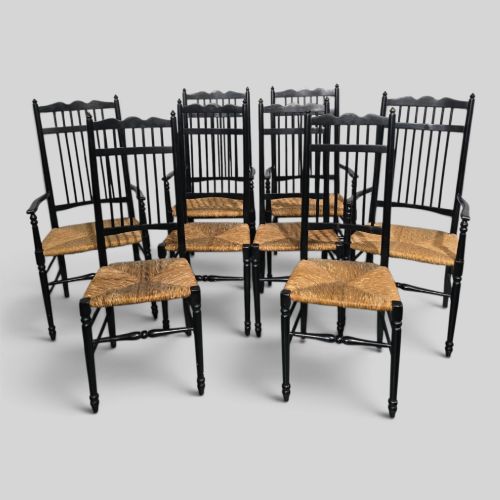
Most entries function as pairs or larger dining sets, frequently combining ebonised frames with cane seats, fabric upholstery, or parcel gilt highlights. The underlying timber often reveals beech, mahogany, or birch beneath the dark painted or polished surface.
Materials and construction
Cabinetmakers utilised dense hardwoods such as mahogany and beech as the structural foundation for ebonised carver chairs, ensuring durability in daily use. Wood was meticulously turned, carved, or painted to achieve the desired silhouette, whether following strict classical proportions or stylized bamboo turns.
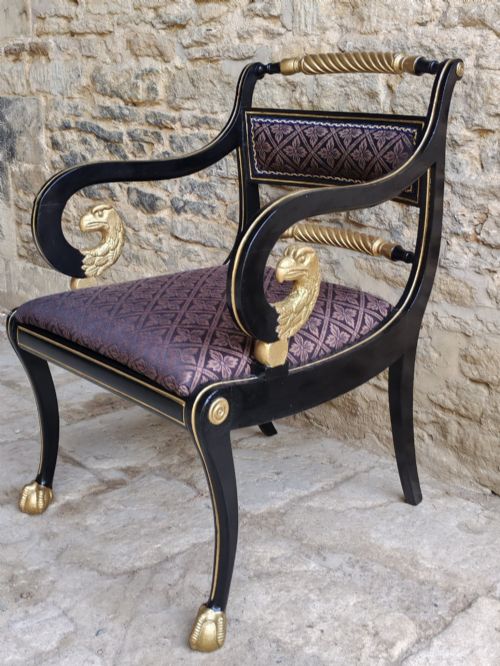
Surface finish is paramount, achieved through ebonising wood to mimic ebony, sometimes enhanced with parcel gilding or painted decoration. Seats were constructed using woven cane panels or padded upholstery upholstered in various fabrics.
Joinery methods rely on traditional pegged and mortise-and-tenon joints to secure the arms and legs, maintaining structural integrity across centuries of sitting.
Some chairs lean so hard into botanical mimicry they feature carved bamboo knots made entirely of solid beech.
Quality and execution
The distinction between standard seating and exhibition quality lies in the crispness of the carving and the depth of the ebonised finish. Superior pieces exhibit refined proportions, balanced turnings, and harmonious integration of decorative elements like gilt highlights or painted motifs.
Original surface treatments carry more authority than later repainting, while intact cane work or period upholstery materials indicate careful preservation. The integrity of the underlying hardwood frame determines longevity and stability under weight.
Lamb of Manchester
The Ebonised Carver Chairs Glossary
- Ebonised
- Wood finished to resemble ebony through staining, painting, or polishing. This dark surface creates a sharp visual contrast within a room.
- Carver
- An armchair, traditionally placed at the head of a dining table or used as a desk chair. These pieces feature supportive armrests integrated into the frame.
- Parcel Gilt
- Wood or ornament partially gilded with gold leaf. This technique highlights specific carved details against a dark ebonised background.
- Cane
- Woven plant material, often rattan, used to create breathable and lightweight seat panels. It provides a resilient surface that complements wooden frames.
- Aesthetic Movement
- A late nineteenth-century design style emphasising visual beauty over narrative content. Pieces from this movement often incorporate ebonised finishes and Japanese-inspired motifs.
Ebonised Carver Chairs: Frequently Asked Questions
What is an ebonised carver chair?
An ebonised carver chair is an armchair featuring a dark, ebony-mimicking finish, typically used at the ends of dining tables or in libraries.
These pieces combine functional armrests with decorative silhouettes ranging from Regency classicism to later revival styles.
How do I identify a Regency ebonised chair?
Regency ebonised chairs display classical proportions, often incorporating saber legs, reeded framing, or parcel gilt accents inspired by antiquity.
They frequently appear as painted or polished birch and mahogany, sometimes utilising faux bamboo turnings typical of the early nineteenth century.
Are these chairs suitable for daily dining?
Most ebonised carver chairs are built from sturdy hardwoods like beech and mahogany, making them structurally sound for regular seating.
Consider whether the seat is upholstered or caned, as different surfaces require specific care during daily use.
What is the difference between Regency and Regency Revival?
Regency pieces were manufactured during the British Regency era in the early nineteenth century. Regency Revival items date from later periods, such as the early twentieth century, copying those earlier neoclassical forms.