


Edwardian Ebonised Chairs
Edwardian ebonised chairs bring dark, polished elegance and crisp period character to a room, offering both practical seating and striking visual presence.
Edwardian Ebonised Chairs
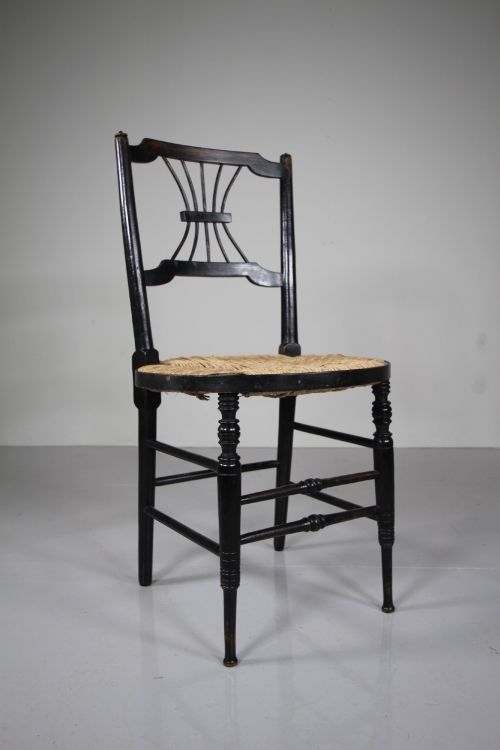
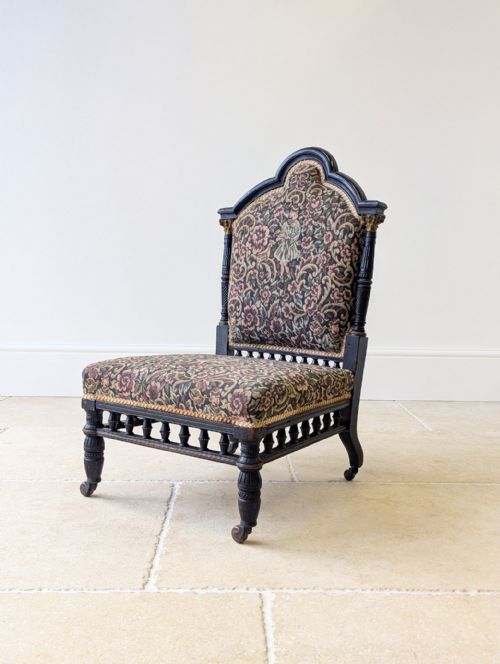
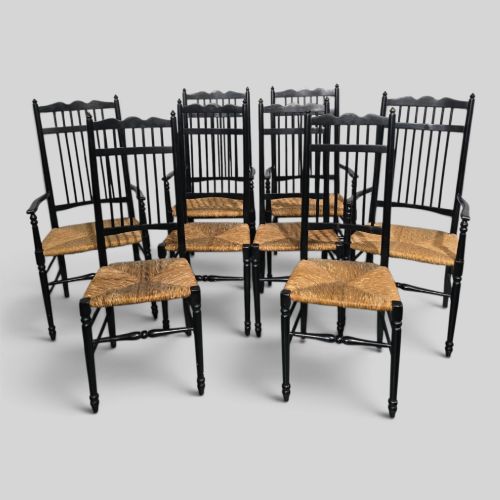
When searching for edwardian ebonised chairs, buyers encounter a refined selection of dark-finished timber seating originating predominantly from the early twentieth century alongside related nineteenth-century examples. These pieces span versatile forms including side chairs, boudoir chairs, and matched dining sets designed for formal and informal reception spaces.
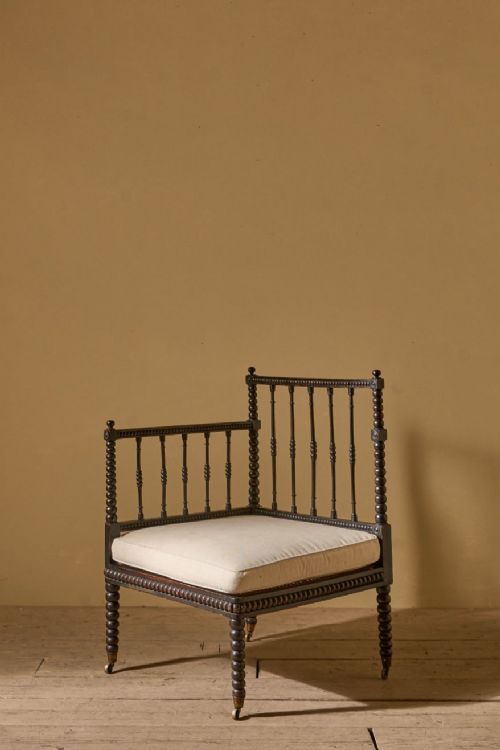
The inventory on this page reflects a diverse tradition of dark furniture, drawing influences from Aesthetic Movement taste, Arts and Crafts simplicity, and earlier revival styles. Side chairs and low salon seating appear frequently alongside occasional armchairs and corner chairs.
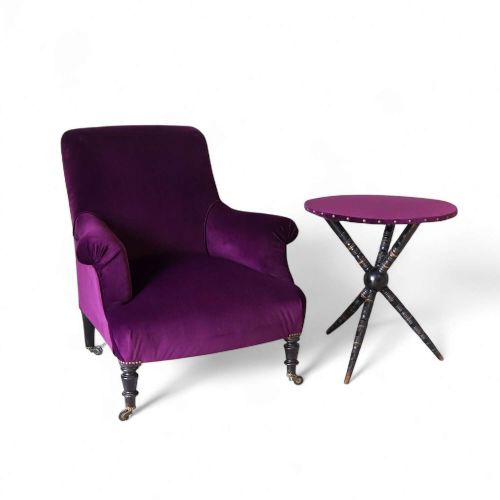
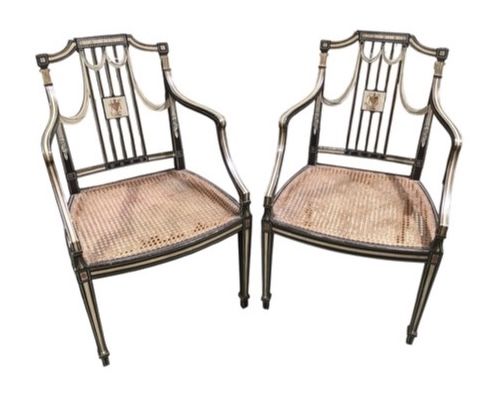
Makers and designers of the period utilised ebonised finishes to mimic costly exotic hardwoods, creating a striking contrast against upholstered velvet, leather, or woven cane seats. Buyers will find that surviving examples range from simple bedroom seating to substantial dining chairs and swivel piano stools.
What varies in quality
The distinction between standard utility seating and finer examples lies in the crispness of the turned wood details, the integrity of the ebonised finish, and the structural stability of the frame joints. Superior pieces retain their original surface patination without excessive flaking of the dark finish.
Upholstery execution and the retention of original materials such as cane seating or period fabric contribute significantly to the character of the piece. Chairs that retain firm joinery and well-preserved decorative elements command greater interest from collectors.
Periods represented span the nineteenth century, Victorian era, and early twentieth century up to nineteen twenty.
William Morris·Rossetti
The Edwardian Ebonised Chairs Glossary
- Ebonised wood
- Timber treated with a dark stain, dye, or paint to imitate the dense black appearance of genuine ebony.
- Aesthetic Movement
- A late nineteenth-century design style emphasising visual beauty, simplicity, and artistic expression over historical revivalism.
- Arts and Crafts
- A movement prioritising traditional craftsmanship, visible construction, and simple forms inspired by medieval and vernacular traditions.
- Cockpen chair
- A distinctive chair type featuring an open lattice back design, often associated with eighteenth-century Chinese Chippendale taste and later revivals.
- Bobbin work
- Turned furniture legs and stretchers shaped to resemble a string of spools or bobbins.
- Showwood
- Exposed wooden framing around an upholstered back or seat, allowing the polished timber finish to remain visible.
Edwardian Ebonised Chairs: Frequently Asked Questions
What defines an ebonised chair?
An ebonised chair is constructed from timber treated with a dark stain or finish to achieve a deep black surface, mimicking expensive exotic woods.
This technique was widely used across various nineteenth and early twentieth-century styles to create a dramatic visual contrast with colourful upholstery.
How do I care for ebonised wood?
Maintain the dark finish by dusting regularly with a soft cloth and avoiding excessive moisture or direct sunlight that could fade the surface.
Apply occasional appropriate wax polish gently to preserve the sheen without building up heavy residues on the painted or stained wood.
Are these chairs suitable for daily use?
Many of these pieces are structurally sound for everyday seating, though older frames with delicate turned elements or cane seats benefit from considerate handling.
Checking the stability of the joints ensures the chair can safely accommodate regular use in a modern living space.
How do I distinguish Edwardian from Victorian pieces?
Edwardian seating generally tends toward lighter proportions and simpler decorative restraint compared to the heavier, more elaborately upholstered Victorian forms.
Stylistic crossover remains common, as late nineteenth-century Aesthetic and Arts and Crafts influences extended directly into the early twentieth century.