




Rustic French Dining Chairs
These rustic French dining chairs bring authentic provincial character to a room, offering sturdy seating built for daily farmhouse life.
Rustic French Dining Chairs
When you search for rustic French dining chairs, you encounter seating rooted in provincial traditions, often taking the form of ladder backs and side chairs. These pieces originate from periods spanning the nineteenth century up to nineteen twenty, reflecting straightforward rural design.
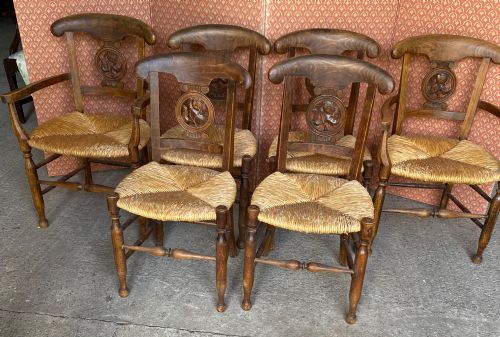
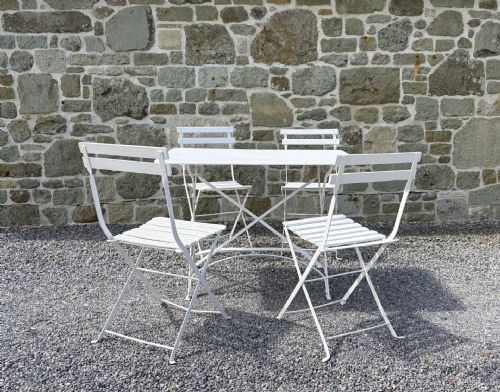
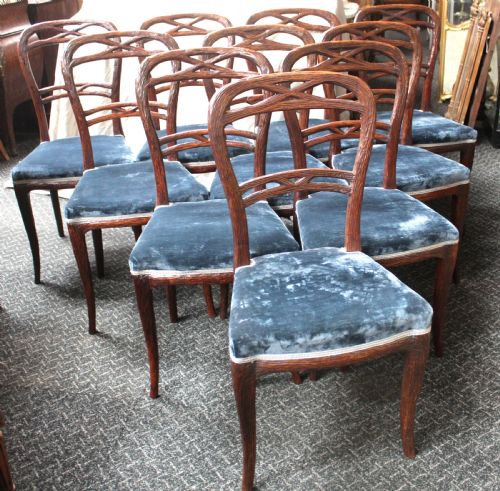
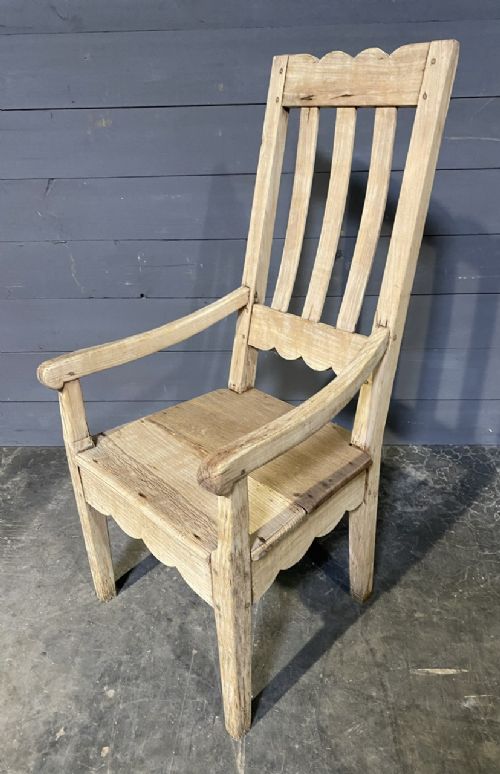
The versions most commonly met on this page include sets of oak, fruitwood, and rush seat kitchen dining chairs. Alongside these, you find occasional armchairs, garden dining sets, and faux bois examples that bring organic textures indoors.
Many of these items carry French provincial and French country styles, showing how regional makers adapted formal seating into durable furniture for everyday use. Their forms remain practical, designed around high backs and woven or wooden seats.
Materials and Construction
Makers relied heavily on solid timbers like oak and fruitwood to build frames that could withstand heavy daily use. These woods were shaped using traditional turning and joining techniques, often incorporating ladder backs with multiple horizontal slats.
Seats frequently feature rush weaving fitted tightly within wooden frames, providing a resilient and natural surface. Additional materials such as iron, paint, and fabric appear across specific garden and indoor pieces from the nineteenth and early twentieth centuries.
Listings feature items built from oak, fruitwood, and iron, spanning the nineteenth century through to nineteen twenty.
Judging Quality and Character
Quality rests primarily in the integrity of the timber framing and the tightness of the joinery. Chairs that retain their original rush seats or untouched fruitwood patination stand apart from examples altered by heavy restoration.
Sets also demonstrate quality through the consistency of their turning and the balance across multiple chairs. Matching groups that preserve their early surface wear display the true integrity of provincial craftsmanship.
The Rustic French Dining Chairs Glossary
- Ladder Back
- A chair style featuring a backrest composed of horizontal wooden slats or rails stacked vertically. This traditional form provides sturdy support and appears frequently in country seating.
- Rush Seat
- A seating surface woven from dried marsh plants twisted into cords. It offers a flexible and durable platform that was standard in practical rural furniture.
- Fruitwood
- Timber harvested from fruit-bearing trees such as cherry, pear, or apple. It is valued for its warm tone and smooth grain in provincial cabinetmaking.
- Faux Bois
- An artistic technique mimicking the appearance of natural wood grain on concrete, metal, or other surfaces. It reflects nineteenth-century garden design sensibilities.
- French Provincial
- A style derived from furniture made in the provinces of France rather than Paris, prioritising utility, local timbers, and restrained ornamentation.
Rustic French Dining Chairs: Frequently Asked Questions
What defines a French country chair?
These chairs are defined by their regional construction, typically utilising local woods like fruitwood or oak alongside woven rush seats. Their designs prioritize practical daily use over ornate decoration.
They reflect the domestic traditions of provincial homes, featuring simple turnings and high ladder backs built for comfort and durability.
Are rush seats durable?
Rush seats are surprisingly resilient and were designed to withstand generations of daily farmhouse use. The twisted marsh plants form a tight weave that holds its shape well under normal weight.
To preserve them, keep the seats away from excessive moisture and direct humidity, which can weaken the natural fibres over time.
How do I date these chairs?
Dating relies on examining the tool marks, timber selection, and construction methods used in the frame. Nineteenth-century pieces often show hand-turned spindles and distinct wear patterns.
Comparing the joinery style and any remaining surface finishes against documented period examples helps narrow down the decade of production.
Can I mix these with modern tables?
These provincial chairs pair effectively with contemporary tables by introducing organic warmth and textural contrast to clean lines. Their neutral wood tones and simple silhouettes ground modern dining spaces.
Using mismatched chairs around a modern table creates an eclectic look that highlights the individual character of each piece.