



Pair Rustic Dining Chairs
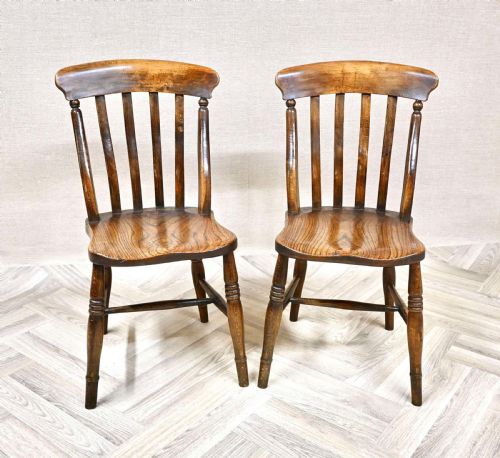
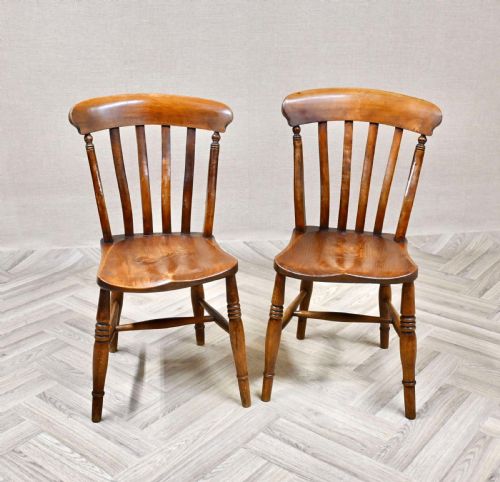
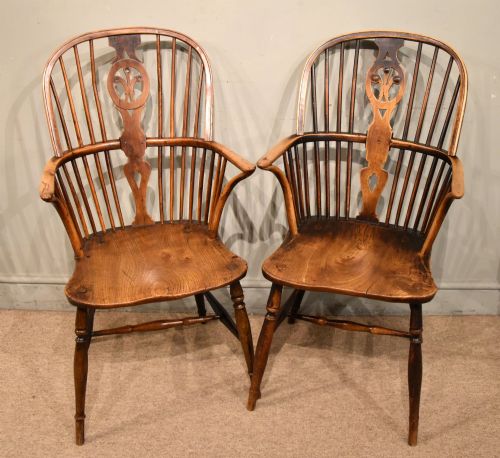
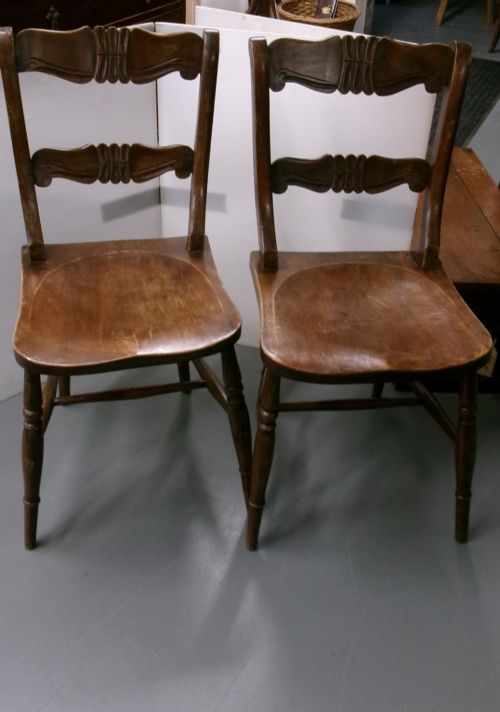
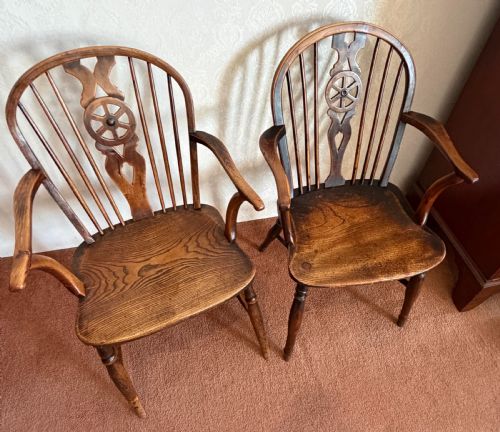
Pair rustic dining chairs bring honest country character to the table, offering sturdy timber construction shaped by generations of domestic use.
Pair Rustic Dining Chairs
When you search for pair rustic dining chairs, you encounter robust seating created for everyday farmhouses, cottages, and kitchens. These matches or near-matches draw primarily from the eighteenth and nineteenth centuries, spanning Georgian, Victorian, and Edwardian eras.
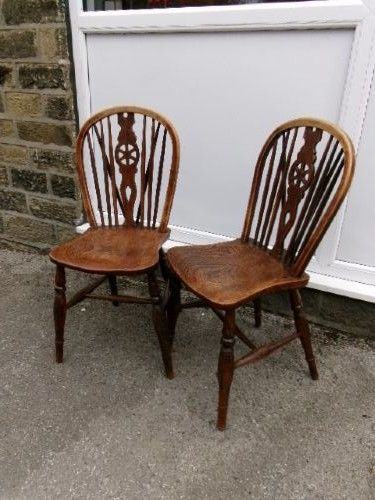
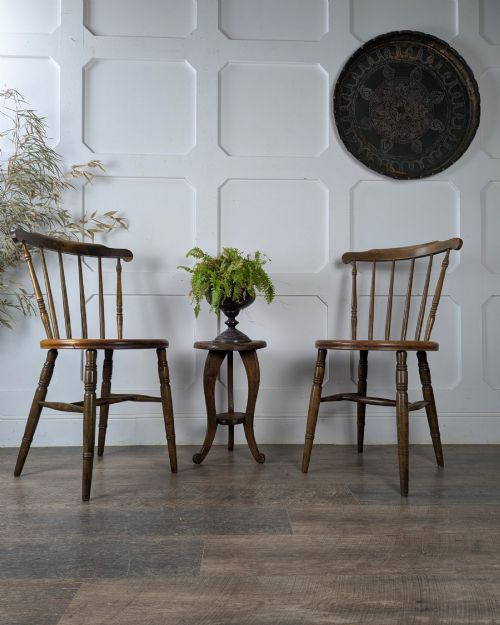
The selections here lean heavily toward Windsor forms, ladderbacks, and spindlebacks rather than formal parlour furniture. Elm, oak, and ash predominate, often paired with rush seats or solid timber boards shaped for utility.
How They Were Made
Traditional rural makers relied on local hardwoods, turning to elm for resilient seats, ash for flexible spindles, and oak or beech for structural frames. Constructive integrity depended on pegged joints, turned components, and steam-bent elements.
Surfaces were frequently left bare to age naturally, though occasional examples show early paint layers or simple waxed finishes. Rush seating was woven directly into the frames to provide durable support without upholstery.
Some nineteenth-century kitchen chairs still bear faint grease marks from centuries of elbows leaning across the elm grain.
What Varies in Quality
Quality rests in the harmony of the pairing, as true matches differ from assembled near-pairs that share only general proportions. The crispness of turnings on bobbin-turned or spindle-back examples also separates standard workshop output from finer pieces.
Timber selection dictates longevity, with thick elm seats and uncompromised ash underframes holding their structural tension far better over centuries. The preservation of original surface patination rather than over-scraped timber preserves the integrity of the design.
The Pair Rustic Dining Chairs Glossary
- Windsor
- A chair built with a solid wooden seat into which the legs, back spindles, and bow are separately bored and wedged. This technique creates a remarkably sturdy frame suited to heavy domestic tasks.
- Wheelback
- A Windsor variation featuring a pierced splat shaped like a cartwheel back centre. It remains a defining motif of nineteenth-century country kitchen seating.
- Rush Seat
- A woven seating surface made from dried marsh grasses twisted into cords. It offers a resilient, supportive platform for daily dining.
- Bobbin Turned
- A decorative turning technique producing a series of rounded wooden spheres resembling spools of thread. It appears frequently on eighteenth-century oak frames.
- Vernacular
- Furniture designed and built by local craftsmen using regional traditions rather than metropolitan pattern books. These pieces reflect the specific materials available in areas like Wales or the Scottish Isles.
Pair Rustic Dining Chairs: Frequently Asked Questions
Are these chairs comfortable for daily dining?
Most country chairs feature solid elm seats sculpted to fit the body rather than deep modern cushioning. Their upright postures support extended meals well.
Adding loose squab cushions provides extra softness if required for long sitting sessions.
How do I identify a true pair?
True pairs match precisely in height, timber grain, spindle count, and turning details. Minor hand-carved variances often indicate vernacular workshop production.
Near-pairs share the same period and general form but show subtle differences in dimensions or turning.
How should I care for antique timber?
Keep rural chairs away from direct heat sources and dramatic humidity swings to prevent timber splitting. Regular applications of beeswax maintain the surface.
Avoid heavy commercial polishes that can build up and dull the natural patination.
What defines a stick back chair?
Stick back designs use simple turned spindles inserted straight into the seat plank without a central splat. This construction offers lightness alongside considerable strength.
They represent a practical rural tradition spanning the Georgian and Victorian eras.