


Edwardian Ladderback Chairs
Edwardian ladderback chairs bring simple regional woodwork and rush seating into formal and country interiors alike.
Edwardian Ladderback Chairs
Edwardian ladderback chairs combine traditional country seating forms with the lighter proportions typical of the period. Buyers searching for edwardian ladderback chairs encounter various formats, ranging from single side chairs to large dining sets of six or ten.
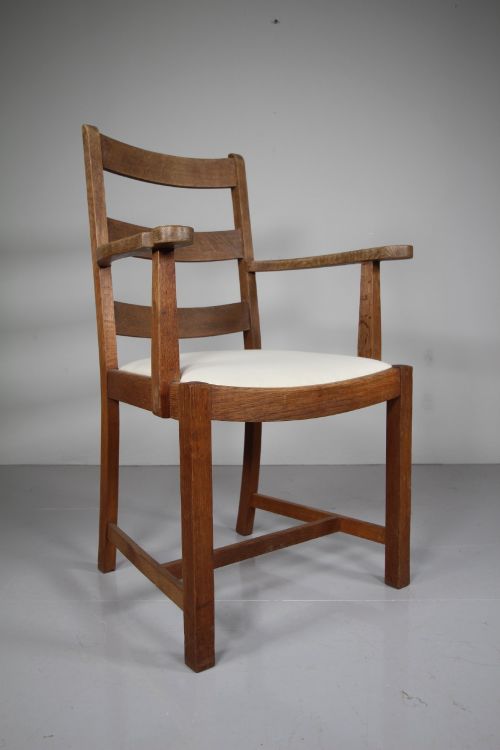
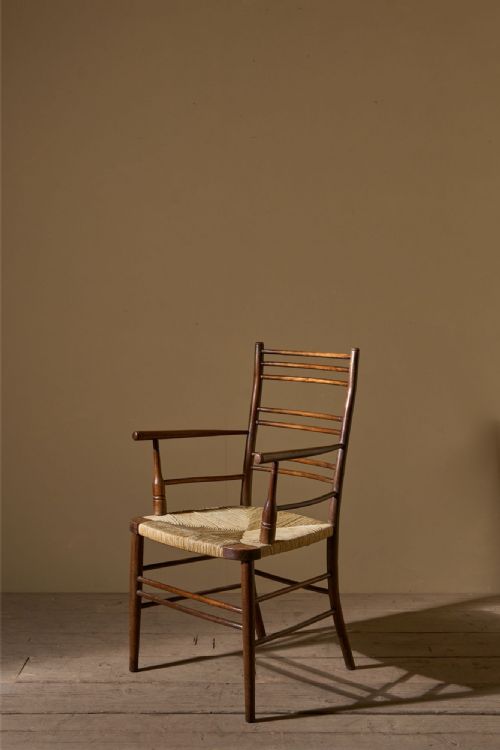
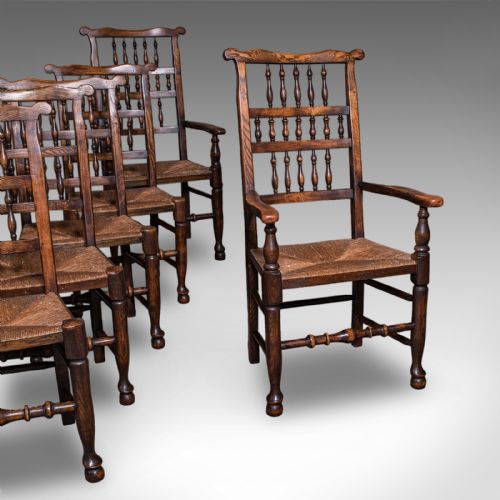
The designs draw heavily on regional vernacular traditions, particularly Lancashire patterns and wavy line formats. Pieces appear as simple dining chairs, carvers with arms, and occasional low armchairs.
Makers of the period adapted earlier vernacular models for contemporary dining rooms. The selection includes both utilitarian kitchen seating and more refined Arts and Crafts interpretations.
How they were made
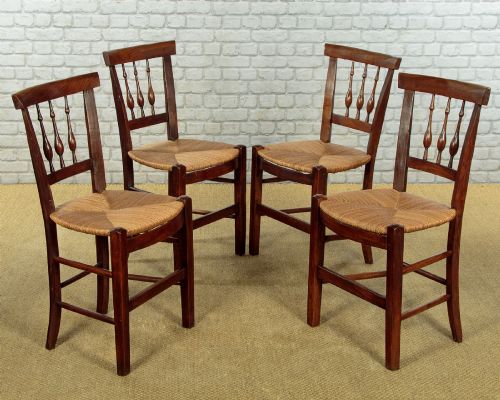
Construction relies heavily on native timbers such as oak, beech, and mahogany, shaped into turned posts and horizontal back rails. Frames frequently incorporate rush seating woven tightly around wooden stretchers.
Joinery techniques follow traditional framing methods, sometimes supplemented by brass castors on larger armchairs or specialised reclining pieces. Certain examples feature inlaid mahogany details or carved elements rather than plain turned spindles.
Listings feature oak, beech, and mahogany timbers paired with rush, fabric, and brass elements across Edwardian and 19th-century periods.
What varies in quality
Quality differences emerge in the selection of timber and the tightness of the rush weaving. Sets matched across larger numbers of chairs show greater consistency in turning and proportion than assembled groups.
Refined detailing, such as wavy line slats or Liberty & Co origins, separates standard vernacular seating from exceptional design examples. The integrity of the frame and the original material finish dictate the standing of each piece.
Liberty & Co
The Edwardian Ladderback Chairs Glossary
- Ladderback
- A chair back featuring multiple horizontal wooden slats positioned between the upright posts. This traditional format provides robust lumbar support.
- Rush seat
- A seating surface woven from dried marsh rushes around a wooden frame. This technique creates a resilient and textured platform.
- Carver
- An armchair designed with open sides to accommodate bulkier clothing. These pieces typically sit at the heads of dining tables.
- Arts and Crafts
- A design movement prioritising hand craftsmanship and simple vernacular forms. Pieces from this tradition often display honest structural joinery.
- Wavy line
- A horizontal back slat shaped with gentle serpentine curves. This decorative variation softens the rigid geometry of standard slats.
Edwardian Ladderback Chairs: Frequently Asked Questions
Are these chairs comfortable for daily dining?
The upright backs and woven rush pads offer firm support suited for long meals. Their proportions accommodate standard dining table heights.
Adding loose squab cushions can alter the seat height and softness according to personal preference.
How do I care for rush seats?
Keep rush seating dry and clean it gently with a soft brush to remove dust. Avoid excessive moisture, which can weaken the natural fibres over time.
Applying occasional light paste wax to the wooden frame helps preserve the finish without affecting the woven areas.
Can I find large matching dining sets?
Sets of six, eight, and ten chairs appear alongside individual armchairs and pairs. Larger groupings often originate from country houses where uniform dining seating was required.
Matching sets require careful comparison of turning details to ensure consistent height and slat profiles.
What defines an Arts and Crafts ladderback?
Arts and Crafts examples emphasise simplified construction and honest materials like oak and rush. They reflect a deliberate departure from heavy Victorian upholstery.
Specific retailers like Liberty & Co retailed these simplified seating forms for contemporary homes.