
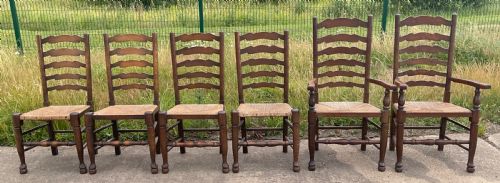
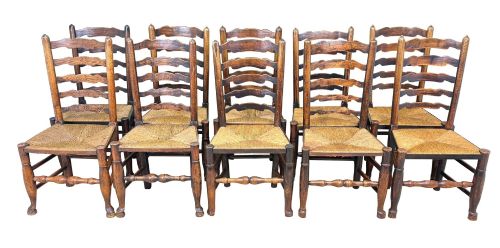
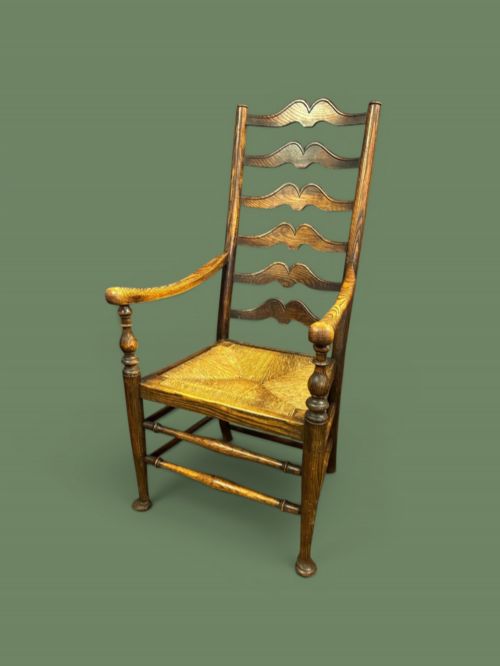
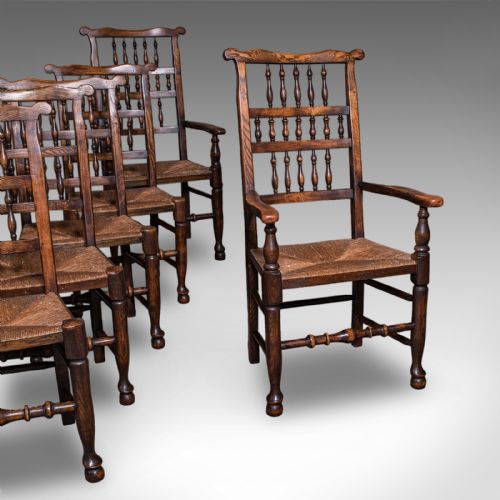


Rush Seat Ladderback Chairs
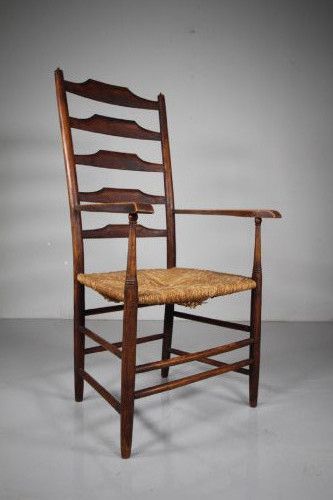
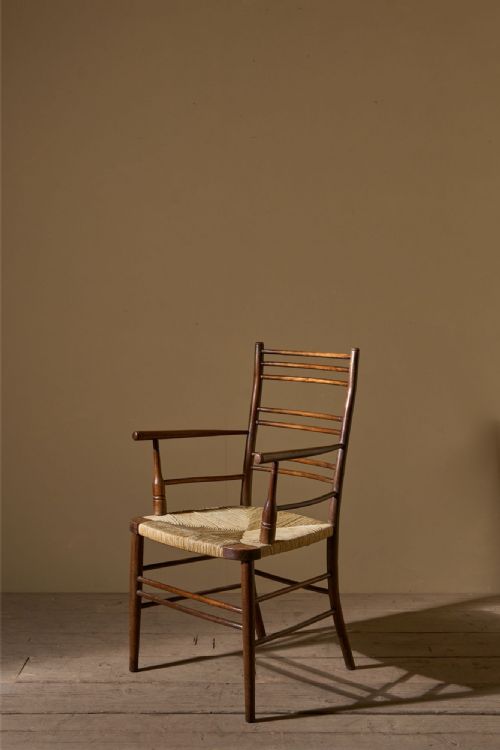
Rush seat ladderback chairs offer sturdy vernacular utility and honest joinery, built for generations of farmhouse and kitchen dining.
Rush Seat Ladderback Chairs
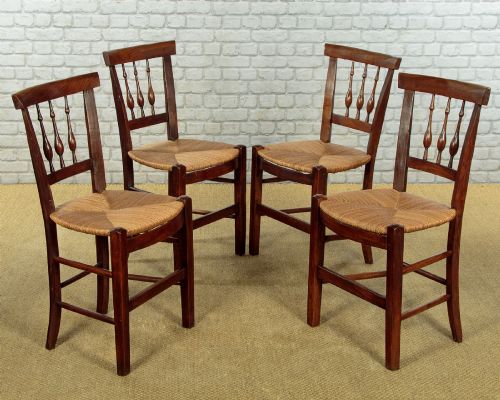
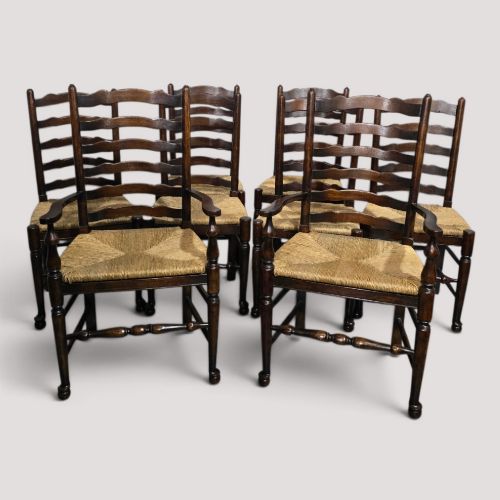
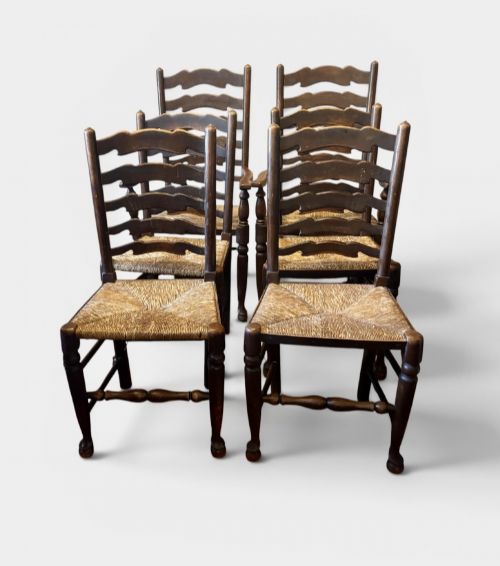
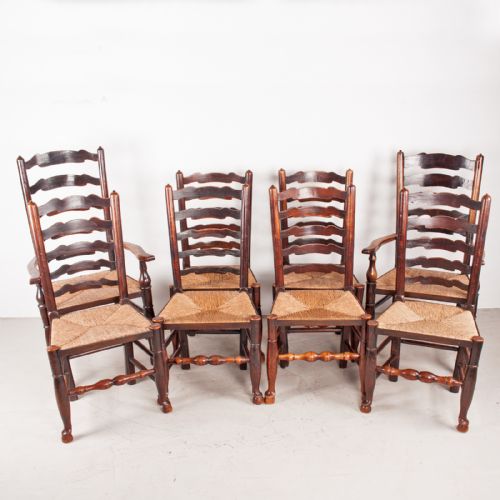
When you search for rush seat ladderback chairs, you encounter traditional country seating defined by horizontal slats across the back and woven rush bottoms. These pieces range from single side chairs and carvers to large dining sets spanning multiple periods.
The selections here lean heavily towards English country, Arts and Crafts, and regional vernacular styles. You will find sturdy oak, elm, ash, and beech frames produced across the nineteenth and early twentieth centuries, alongside occasional French provincial and colonial variants.
How they were made
Local timber such as oak, elm, ash, and beech formed the structural frames, often turned on pole lathes or joined with mortise and tenon construction. Turners shaped the upright posts and horizontal slats to balance lightweight agility with physical strength.
The seating surface relies on natural rush or plaited straw wound tightly around the seat rails by hand. This organic cordage yields a flexible, supportive platform that settles and polishes with continuous use.
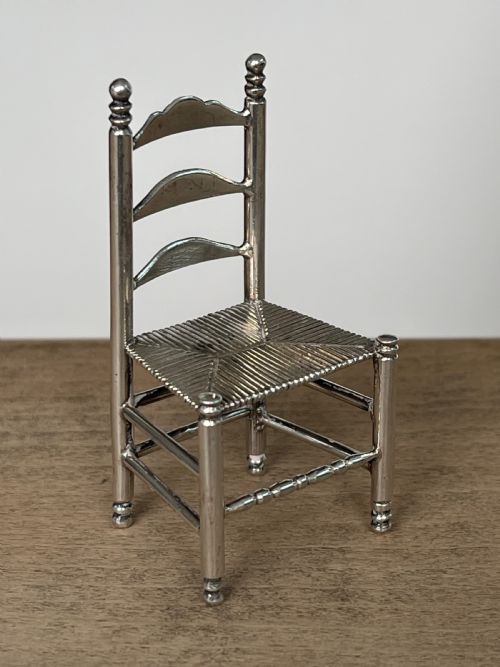
Tiny doll house chairs and towering high chairs prove that makers built rush-seated ladderbacks for every member of the household.
What varies in quality
The integrity of the frame construction dictates the baseline quality, where tight joints and well-seasoned timber prevent the wobbles common in daily use. Heavier scantlings and balanced proportions separate utilitarian workshop output from finer cabinetmaker interpretations.
The precision and tightness of the rush weaving define the upper tiers of craftsmanship. Uniform strands and evenly packed corners ensure the seat retains its tension and structure across decades.
Philip Clissett·Dicon Nance·Lawrence Neal·Edward Gardener·Liberty and Co
The Rush Seat Ladderback Chairs Glossary
- Ladderback
- A chair style characterised by horizontal wooden slats, or rails, rising up the backrest. These slats are often curved or graduated in depth.
- Rush
- Natural marsh grass twisted into cord and woven tightly to form a durable, flexible seat base. It requires a dry environment to prevent deterioration.
- Carver
- An armchair, traditionally placed at the head of a dining table, featuring supportive armrests attached to the main uprights.
- Vernacular
- Everyday domestic furniture rooted in regional traditions and local materials rather than high-style metropolitan design.
- Spindle back
- A variation featuring thin, turned vertical wooden rods filling the back frame instead of solid wooden planks or wide slats.
Rush Seat Ladderback Chairs: Frequently Asked Questions
How do I clean a rush seat?
Dust the woven surface gently with a soft brush and avoid excess moisture at all costs. Water causes natural marsh grass to swell and rot.
Keep the timber nourished with appropriate wax while protecting the woven base from direct heat sources that make the cord brittle.
Can broken rush seats be repaired?
Skilled craftspeople can entirely re-weave damaged or sagging seats using traditional natural rush materials. This renewal process restores both the tension and the correct seating height.
Original frames benefit greatly from professional rewoven inserts when the underlying wooden structure remains sound.
Are these chairs suitable for daily dining?
Solid construction in woods like oak and ash makes these pieces well suited for regular kitchen and dining room use. Their lightweight frames also allow for easy movement around the table.
Pairing antique seating with modern wool or sheepskin pads can provide extra comfort during long dinner parties without altering the frame.
How do I date a ladderback chair?
Turned details, timber choices, and wear patterns offer primary clues to the era of manufacture. Eighteenth-century models often display hand-carved nuances, whereas later Victorian and Arts and Crafts examples utilise more standardised lathe work.
Matching sets from the early twentieth century frequently show machine assistance alongside traditional hand joinery.