


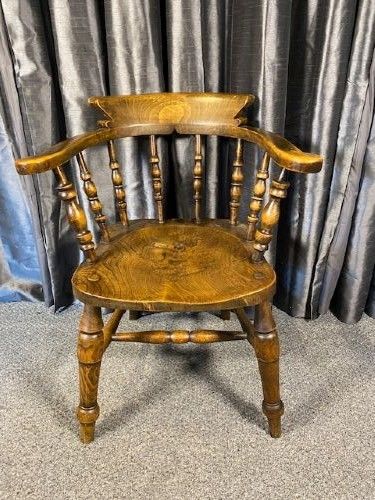
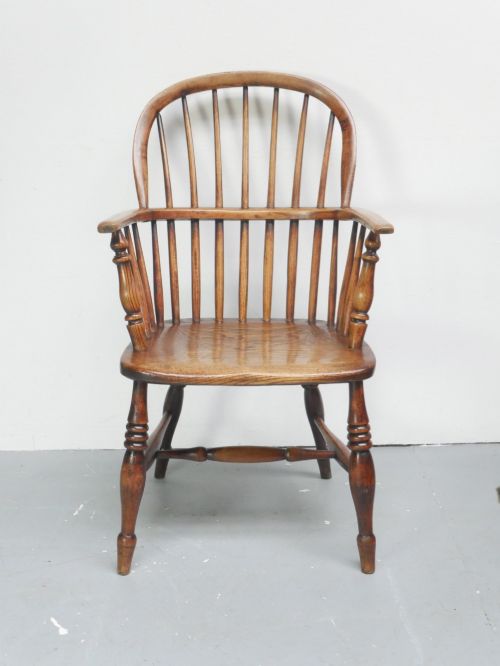
Traditional Spindle Back Armchair
A traditional spindle back armchair brings vernacular character to a room, offering sturdy construction and honest timber forms shaped by generations of country makers.
Traditional Spindle Back Armchair
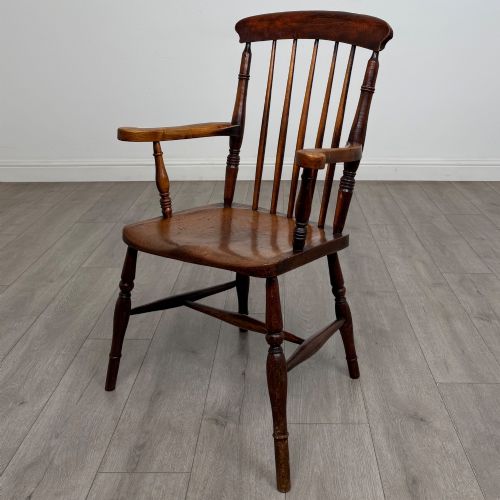
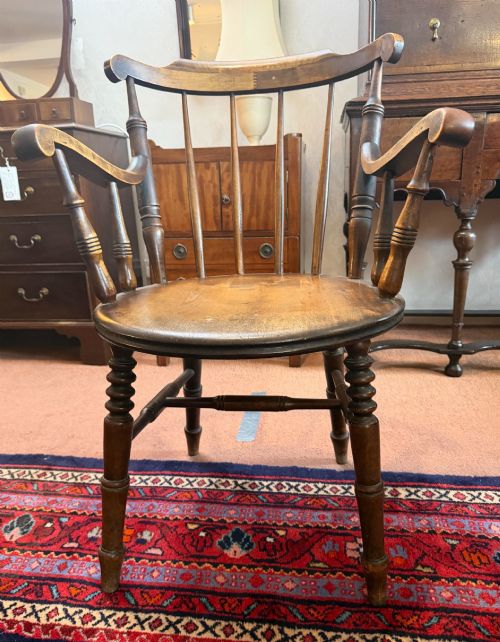
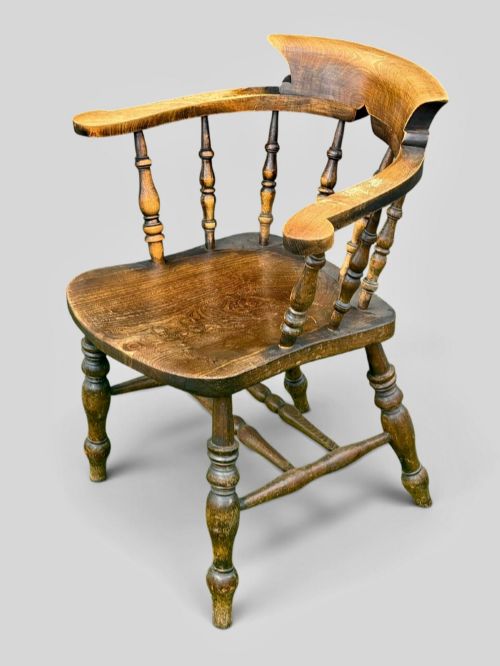
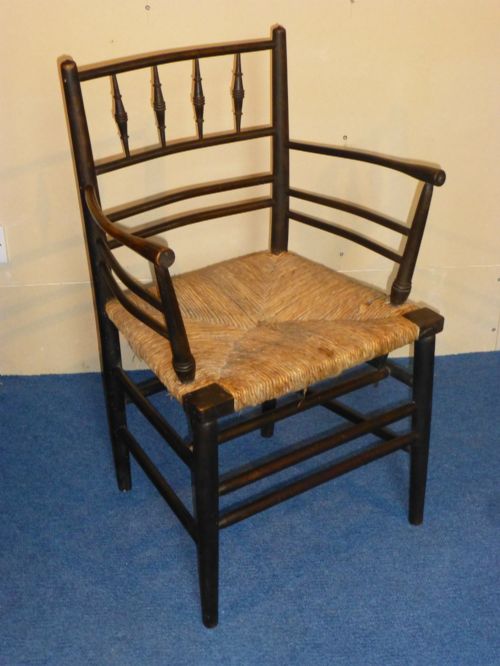
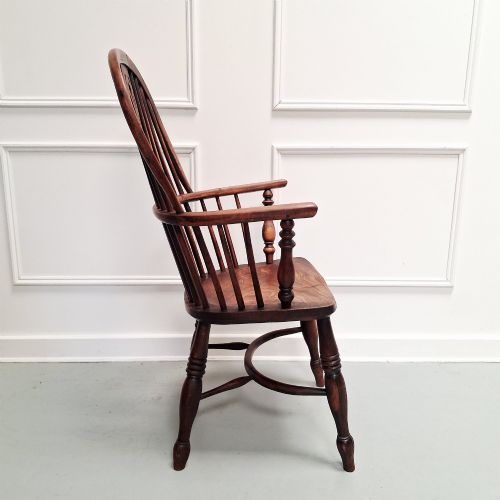
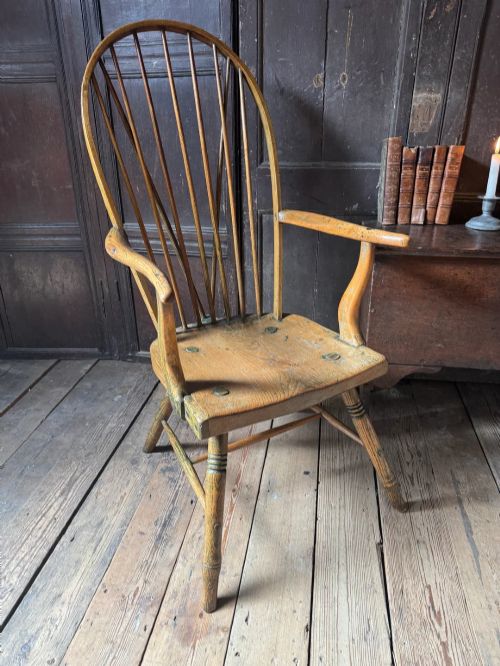
When you search for a traditional spindle back armchair, you encounter vernacular seating developed across English counties during the eighteenth and nineteenth centuries. These chairs combine turned wooden uprights with shaped seats and supportive arms, reflecting domestic and farmhouse origins.
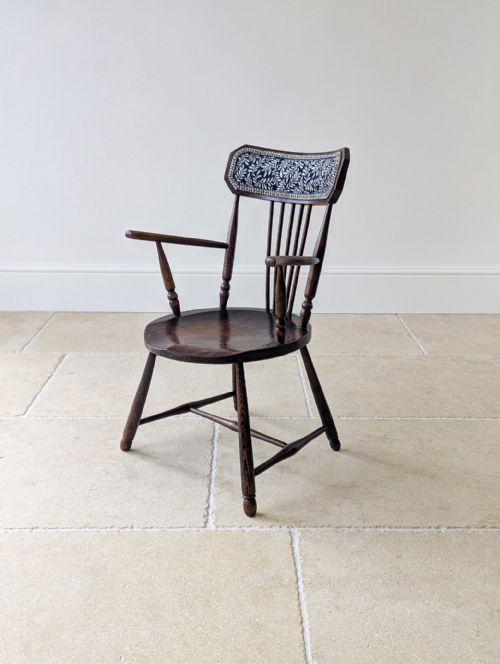
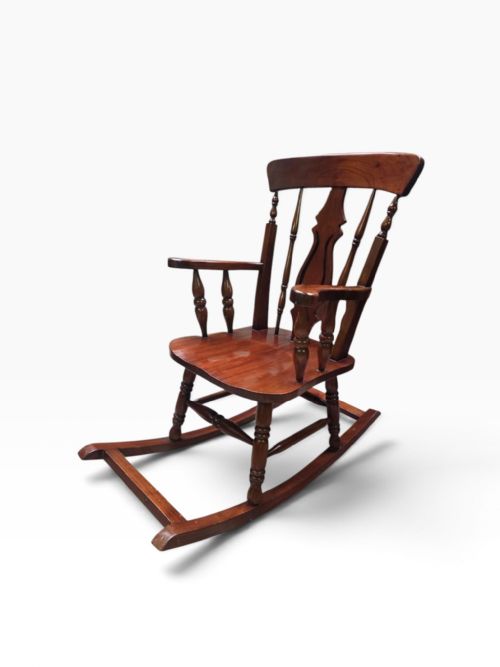
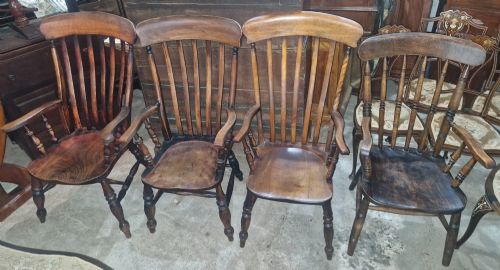
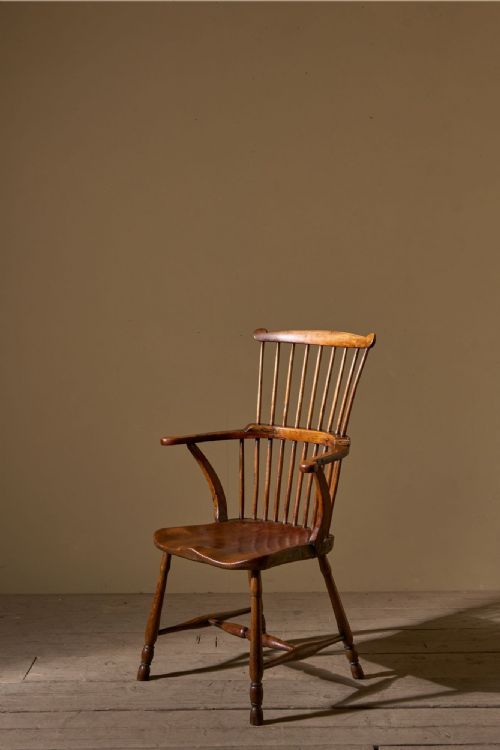
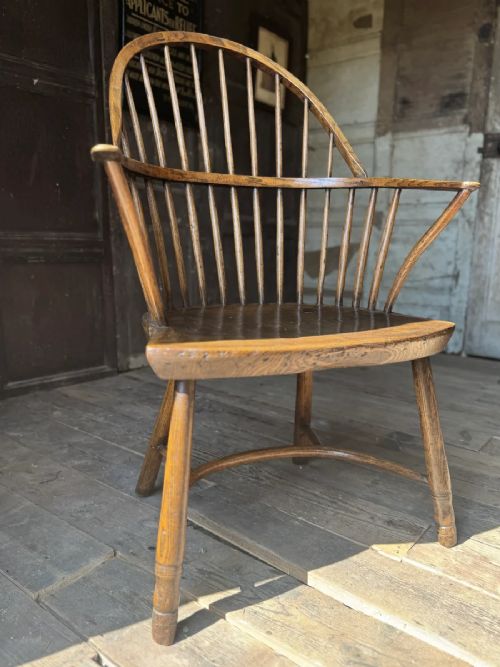
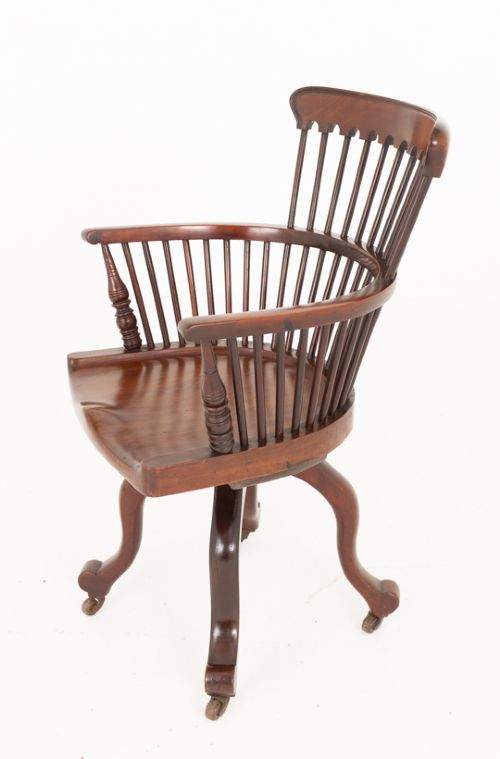
The selections available range from eighteenth-century comb back and high hoop-back Windsor designs to late Victorian kitchen and farmhouse variants. You will frequently find examples utilising elm, ash, and beech, alongside specialised forms like desk chairs and rocking chairs.
Regional workshops produced distinct variations, including West Country, Lancashire, and Scottish forms. These pieces serve as practical seating that carries centuries of domestic history within their timber frames.
How they were made
Constructed using traditional timber combinations, makers paired solid elm seats with ash or beech for the bent components and spindle uprights. This took advantage of each wood's specific mechanical properties, allowing ash to bend under steam while elm provided a stable, splitting-resistant base.
Turning lathes shaped the uprights, stretchers, and legs, while drawknives and spokeshaves carved the solid wooden saddles. Assembly relied on wedged tenon joints, securing the vertical spindles and legs firmly into bored holes without metal fixings.
The listings show regional English variations spanning the eighteenth, nineteenth, and early twentieth centuries, constructed predominantly from native elm, ash, and beech.
What varies in quality
The articulation of the turning and the depth of the sculpted seat distinguish finer examples from standard utility seating. Superior pieces display crisply detailed spindles and balanced proportions that demonstrate the maker's confidence.
Timber selection and surface preservation dictate the visual character of each chair. Original patination on native woods like yew, laburnum, or elm elevates a piece, whereas heavy restoration or inappropriate finishes diminish the historic integrity.
J Spencer·Philip Webb·E W Godwin
The Traditional Spindle Back Armchair Glossary
- Spindle back
- A chair back constructed from vertical turned wooden rods. These slender uprights distribute support evenly across the occupant.
- Windsor
- A chair built with a solid wooden seat into which the legs and back elements are directly inserted. This structural method creates a resilient, unified frame.
- Crinoline stretcher
- An arched or bowed underframe linking the legs of a chair to provide rigidity. It often curves backward in early nineteenth-century designs.
- Vernacular
- Objects made by local craftsmen following regional traditions rather than high-style academic designs. These items prioritize utility and available local materials.
- Comb back
- A Windsor chair design where the vertical spindles extend upward to support a horizontal top rail resembling a traditional hair comb.
Traditional Spindle Back Armchair: Frequently Asked Questions
How do I date a spindle back armchair?
Dating relies on examining the construction methods, tool marks, and timber choice used in the seat and undercarriage. Eighteenth-century models often feature distinct comb-back or high hoop-back profiles with heavier, hand-turned components.
Later Victorian and Edwardian examples tend to show more standardised turning and machine assistance. Comparing the wear patterns around the footring and seat edges also helps indicate the age of the piece.
Are these chairs comfortable for daily use?
Solid wood saddles are carved to follow human contours, offering surprising support during extended sitting. Adding a loose cushion can further enhance comfort for modern living.
Their robust timber frames are engineered for daily household use in kitchens, studies, or fireside settings. The supportive armrests and upright posture encourage relaxed seating without slouching.
How should I care for antique elm and ash furniture?
Maintain the timber by applying natural beeswax sparingly to nourish the dry wood and preserve the surface sheen. Avoid placing the chair near direct heat sources or in fluctuating humidity to prevent timber splitting.
Regular dusting with a soft, dry cloth protects the historic patination accumulated over centuries. Minimal intervention ensures the original finish remains intact for future generations.