



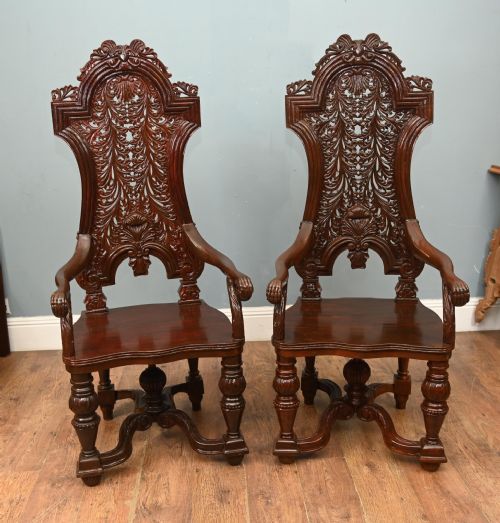

19th Century Throne Chair
A 19th century throne chair brings commanding presence and architectural timber carving into an interior through historic seating designs.
19th Century Throne Chair
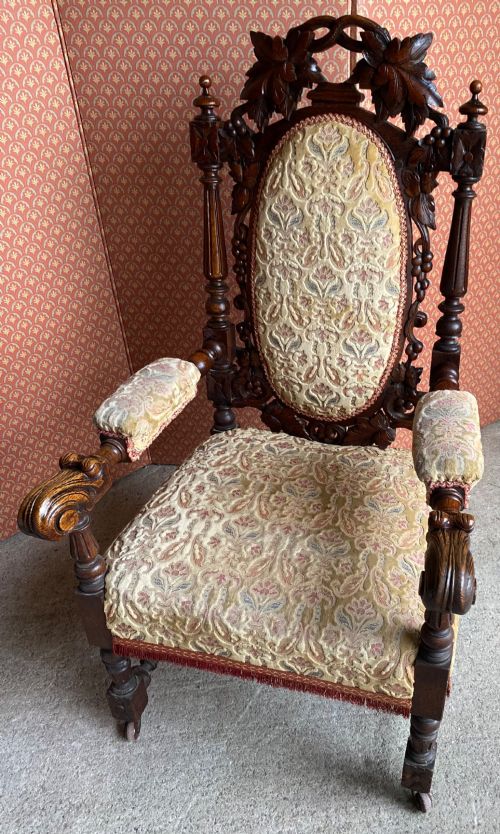
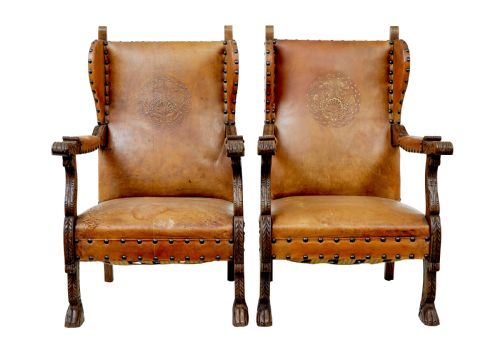
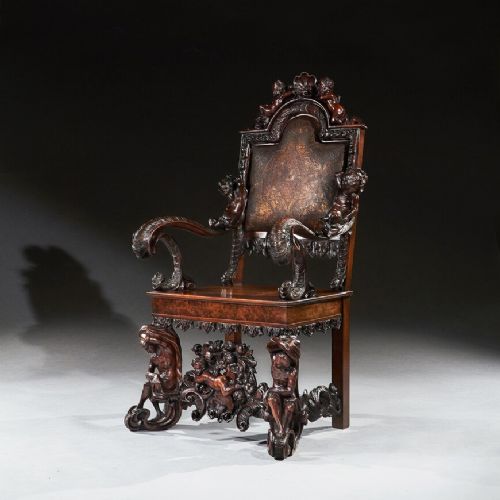
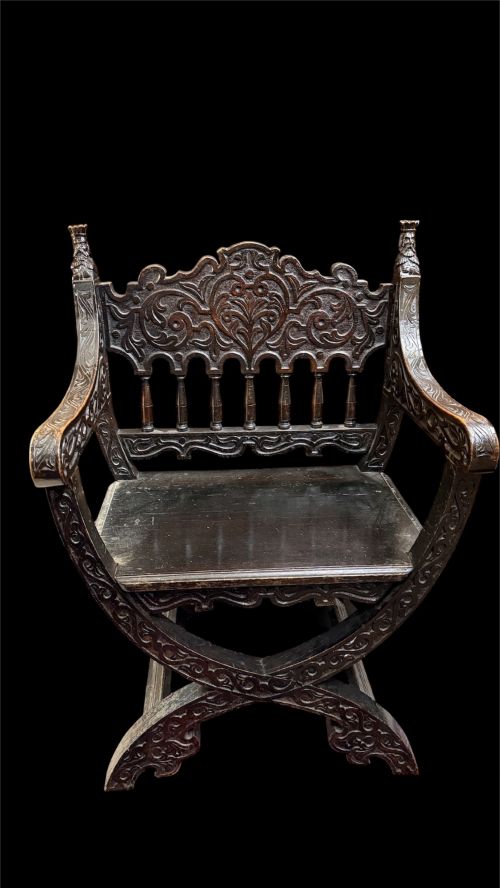
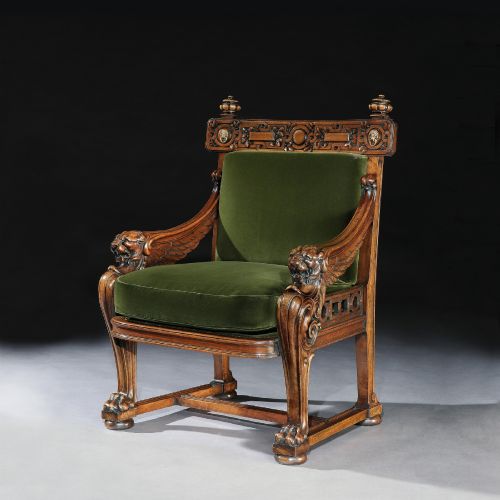
A 19th century throne chair encompasses substantial seating built to project authority, ranging from Gothic Revival oak armchairs to heavily carved walnut Renaissance revival pieces. Buyers exploring this category encounter monumental seating forms designed with high backs, imposing armrests, and deep timber frames that echo ecclesiastical or ceremonial origins.
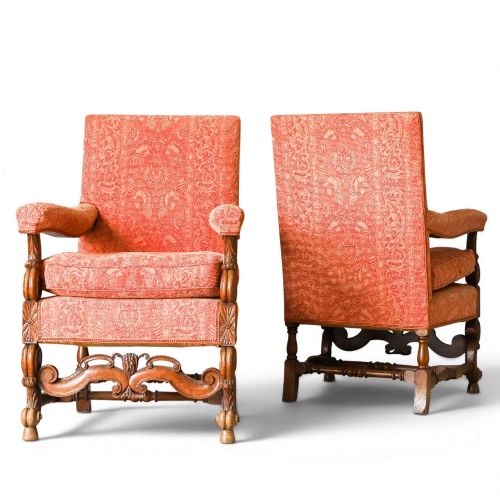
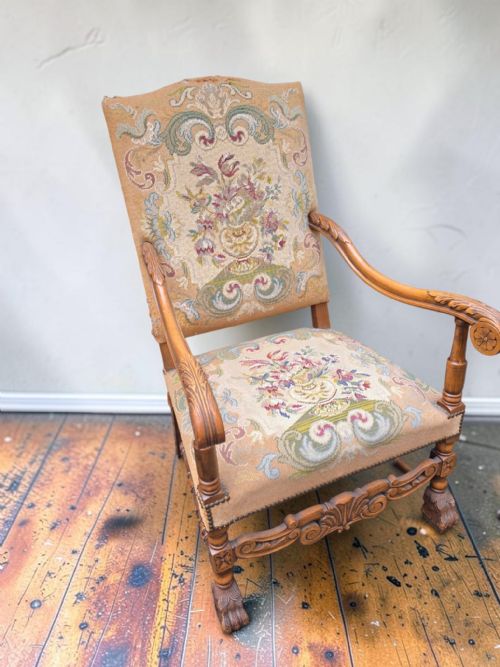
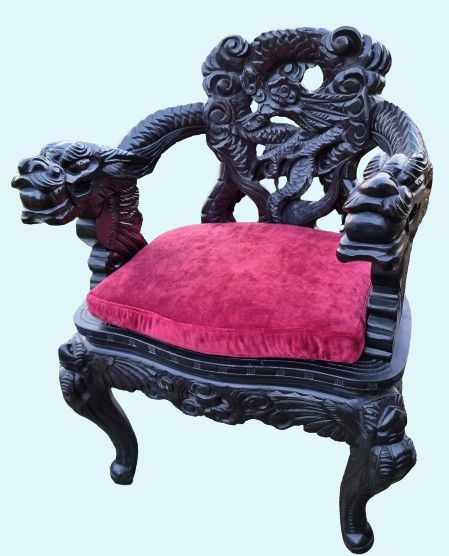
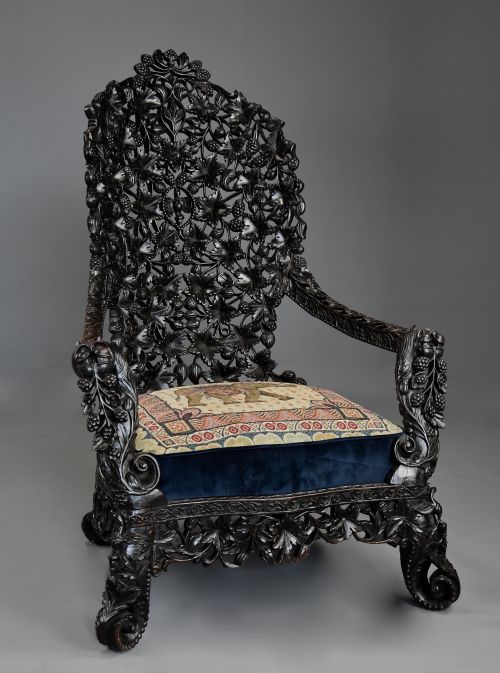
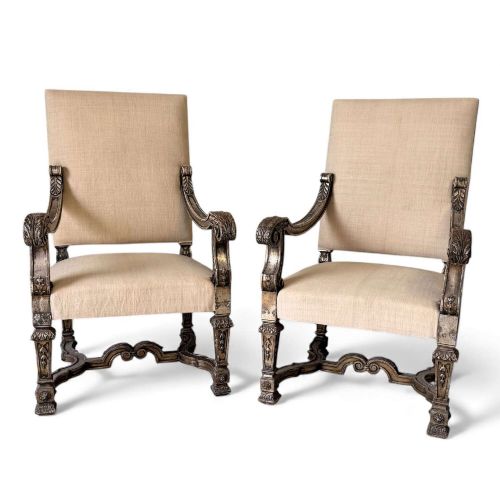
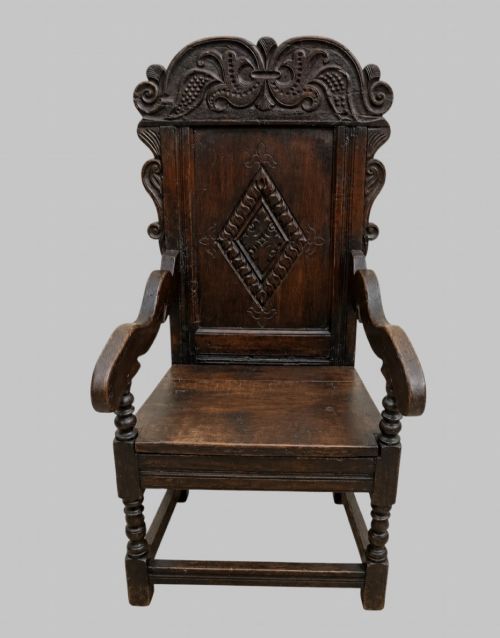
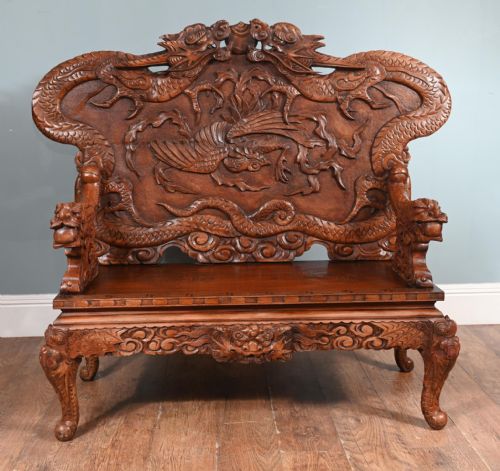
The selections span diverse regional interpretations, including English and Welsh oak wainscot constructions, French walnut fauteuils, and intricate Anglo-Indian or Chinese hardwood versions. Many examples adapt earlier historic vocabularies such as Jacobean, Baroque, and Gothic styles onto nineteenth-century frames.
Beyond standard armchairs, the inventory incorporates specialised forms like Glastonbury chairs, caquetoire chairs, high-backed ceremonial seats, and occasional pairs suited for prominent placement in a grand hall or library.
Materials and Technique
Construction relies heavily on dense timbers such as oak, walnut, teak, and exotic hardwoods, selected for their structural stability under deep relief carving. Master carpenters employed traditional joinery, mortise and tenon framing, and elaborate turning to assemble the heavy structural skeletons required for monumental seating.
Surface decoration frequently combines hand-carving with applied elements, utilising brass studs, embossed leather, velvet, tapestry, and painted finishes. Upholstered variants utilise traditional stuffing methods secured beneath heavy textile coverings or buttoned leather panels.
19th Century Throne Chair Retail Price Guide 2026
Typical asking prices for 19th century throne chair among the pieces listed under this phrase on Sellingantiques today, from the lower quarter to the upper quarter. They describe what is for sale here now, not the wider market.
The inventory spans diverse cultural expressions from British Gothic revival oak to Chinese cinnabar lacquer and intricate Anglo-Indian carving.
Judging Quality
Quality reveals itself in the depth, crispness, and continuity of the hand-carving across the timber frame, distinguishing fluid sculptural work from mechanical or shallow execution. The choice of primary timber density and the integrity of historic joinery dictate the structural longevity of the piece.
Proportion and the fidelity of historic revival detailing separate standard workshop production from exhibition-grade creations attributed to notable designers or specialised European and Asian workshops. The preservation of original upholstery materials, patinated leather surfaces, and secondary woods further elevates the standing of an individual seating piece.
Andrea Brustolon·Thomas Hope·A.W.N. Pugin
The 19th Century Throne Chair Glossary
- Wainscot chair
- A heavy wooden armchair of boxed construction, typically featuring panelled backs and solid armrests popular in earlier centuries and revived during the Victorian era.
- Caquetoire
- A lightweight, trapezoidal-shaped conversational armchair originating in the sixteenth century and reinterpreted in walnut during the nineteenth century.
- Monopodia
- A furniture support formed from a single animal leg, often featuring lion paws or winged figures derived from classical antiquity.
- Glastonbury chair
- A distinctive nineteenth-century Gothic Revival chair design characterised by intersecting X-shaped frames and sloping armrests.
- Fauteuil
- An open-framed upholstered armchair featuring exposed wooden arms, commonly produced in various French revival styles.
19th Century Throne Chair: Frequently Asked Questions
Where should I place a large throne chair?
These imposing seats suit spacious hallways, libraries, or living rooms where their high backs and sculptural timber frames can command the spatial layout.
Positioning them away from direct sunlight protects vulnerable textile upholstery and aged leather surfaces from fading over time.
How do I identify a Gothic Revival example?
Look for characteristic architectural motifs such as pointed arches, quatrefoils, tracery panels, and heavy linenfold carving executed in dark oak.
These elements reflect nineteenth-century artisan enthusiasm for medieval ecclesiastical aesthetics.
Are these chairs comfortable for daily seating?
Most historic examples prioritize architectural presence and upright posture over modern lounging ergonomics, featuring rigid high backs and firm armrests.
Upholstered variants with buttoned leather or padded tapestry offer a softer seating experience compared to entirely solid timber versions.
How can I distinguish regional styles?
European pieces frequently showcase oak and walnut with classical or Gothic revival carving, while Asian and Ceylonese variants utilise dense exotic hardwoods featuring intricate dragon or floral motifs.
Regional turning techniques and structural silhouettes provide additional clues to geographic origin.