




Scroll Arm Accent Chair
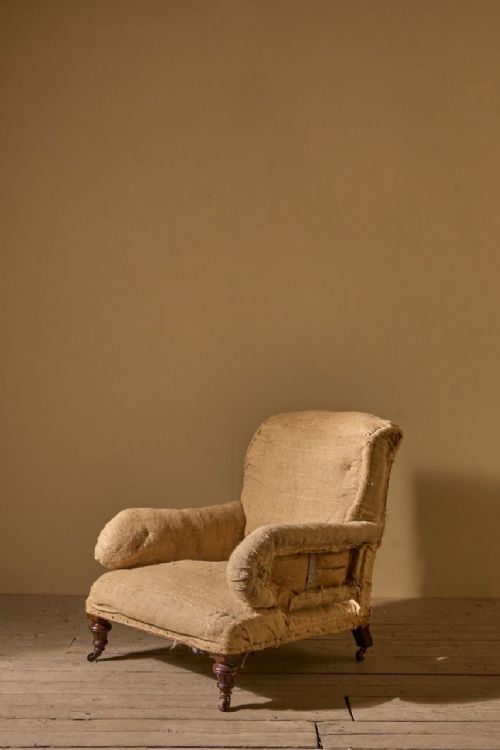
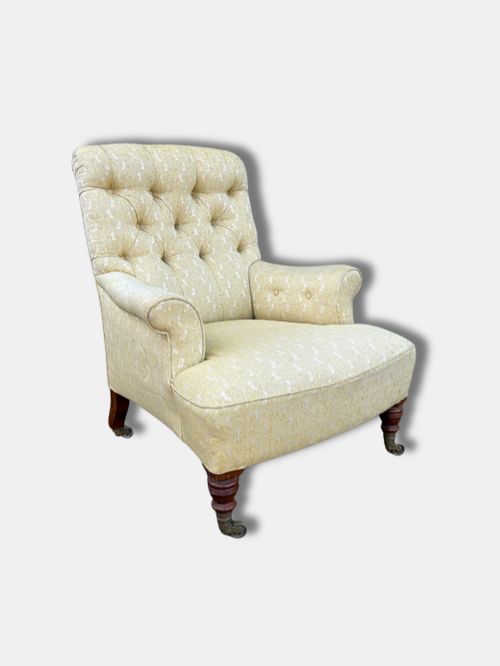
A scroll arm accent chair brings architectural definition and deep upholstered comfort to a room through distinctive curved woodwork.
Scroll Arm Accent Chair
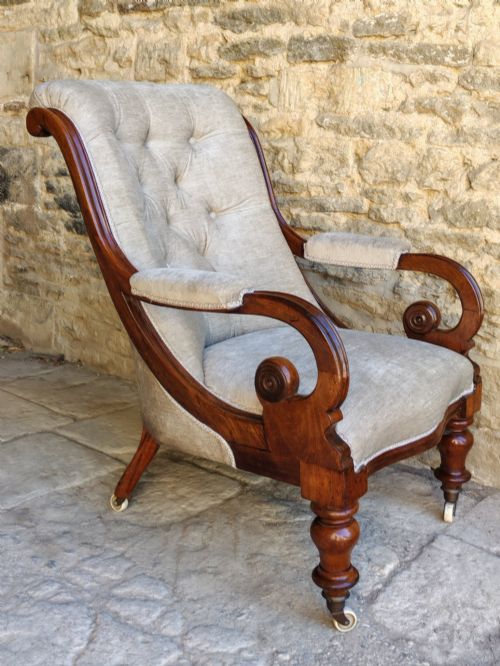
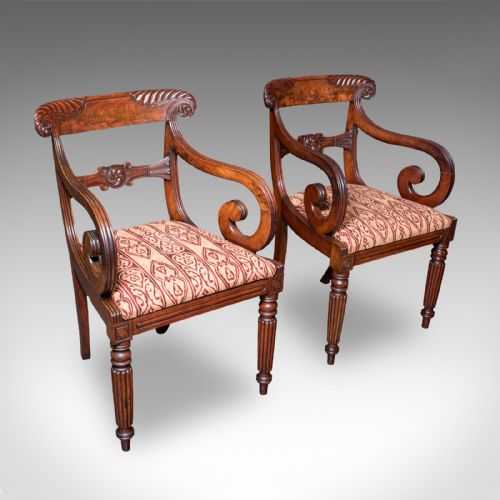
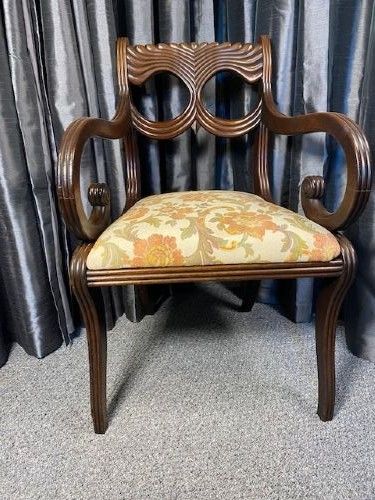
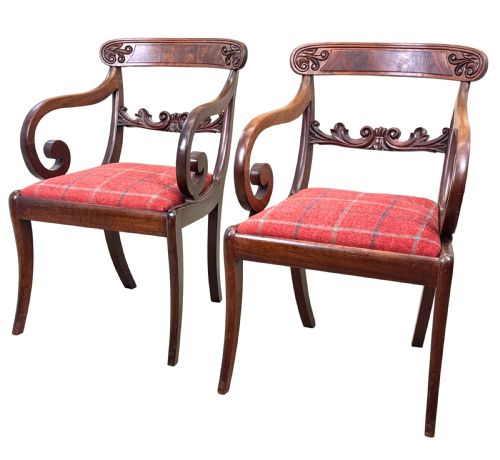
A scroll arm accent chair is a seating form defined by its sweeping armrests, appearing across various historical periods including the Regency, Victorian, and William IV eras. These pieces function as reception seats, library chairs, or occasional seating in domestic spaces.
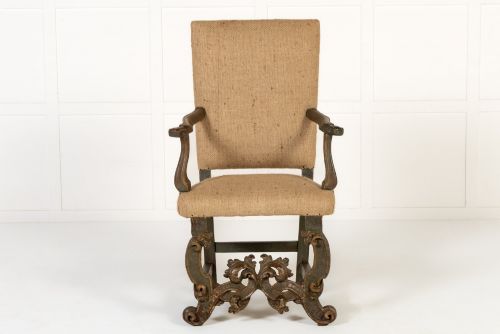
The version most commonly met on this page is the nineteenth century mahogany or walnut armchair, often featuring upholstered pads and distinct carved wooden frames. Pieces range from French gilt occasional chairs to substantial English library armchairs and smaller elbow chairs.
Makers and regional styles introduce considerable variety, from simple ash construction to elaborate French Empire and Italian Baroque interpretations. These seating options combine structural timber frames with textile coverings such as velvet, fabric, and leather.
What varies in quality
The standard of a scroll arm accent chair rests upon the precision of the timber carving and the architectural proportion of the frame. Superior examples demonstrate fluid, hand-carved scrollwork where the wood grain follows the curves of the arm without weakness.
Material selection dictates the longevity and visual weight of the piece, with dense hardwoods like mahogany and walnut offering superior structural integrity compared to softer timbers. The integration of upholstery with the wooden frame reveals the maker's skill in balancing comfort with architectural form.
Some nineteenth-century makers packed their scroll armchairs with layers of horsehair and wool, creating seats that have outlasted empires.
Howard and Sons
The Scroll Arm Accent Chair Glossary
- Carver chair
- An armchair, typically with wooden arms, designed to match a set of dining chairs.
- Elbow chair
- An alternative term for an armchair, often used in historical inventories to describe smaller reception or writing seats.
- Giltwood
- Wood that has been coated with gold leaf or a gold-coloured metallic finish for decorative effect.
- Scroll arm
- An armrest curved into a spiral or scroll shape at the terminal, characteristic of many nineteenth-century seating designs.
- Library armchair
- A substantial, deeply upholstered seat designed for prolonged reading and comfort in a study or library.
Scroll Arm Accent Chair: Frequently Asked Questions
What is a scroll arm accent chair?
A scroll arm accent chair is a seating piece characterised by armrests that curve inward or outward in a spiral scroll shape. These chairs combine functional support with decorative woodwork.
They appear in various historical styles, ranging from simple nineteenth-century mahogany carvers to ornate French gilt occasional chairs.
How do I date a scroll arm chair?
Dating relies on examining the timber species, construction methods, and stylistic details of the frame. Regency and William IV pieces often feature specific mahogany grains and classical motifs.
Later Victorian examples tend to introduce heavier carving, ebonised finishes, or alternative upholstery techniques like button backing.
Where should I place an accent chair?
These chairs suit reception rooms, libraries, or bedrooms where they provide both a seating option and a decorative focal point. Their distinct arm profiles allow them to sit effectively in corners or beside fireplaces.
Consider the surrounding scale of the room, as larger library models require more open space than slender occasional chairs.
What materials were used?
Frames were typically built from hardwoods such as mahogany, walnut, rosewood, oak, and ash. Some examples incorporate iron or giltwood.
Upholstery materials include traditional fabric, velvet, and leather, often complemented by brass hardware or nailhead trim.