


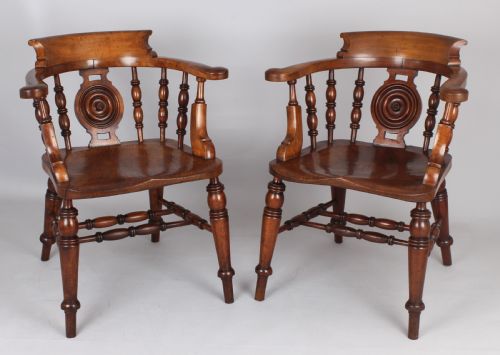

Antique Birch Armchairs
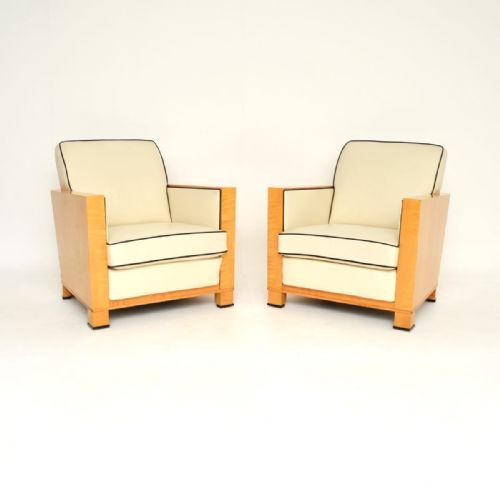
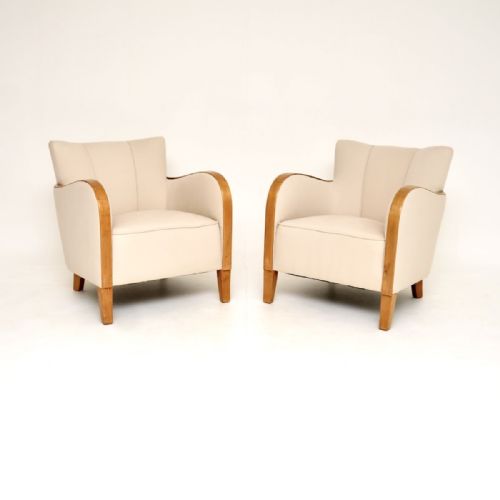
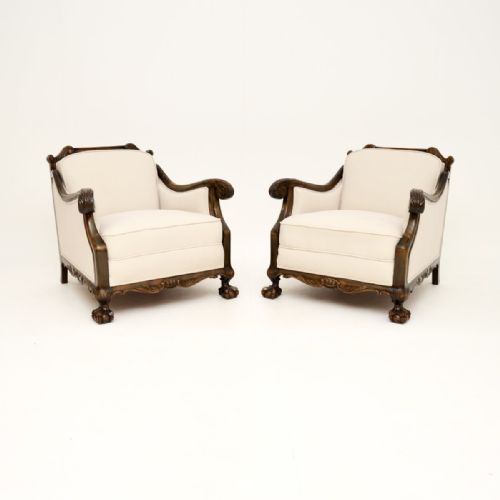
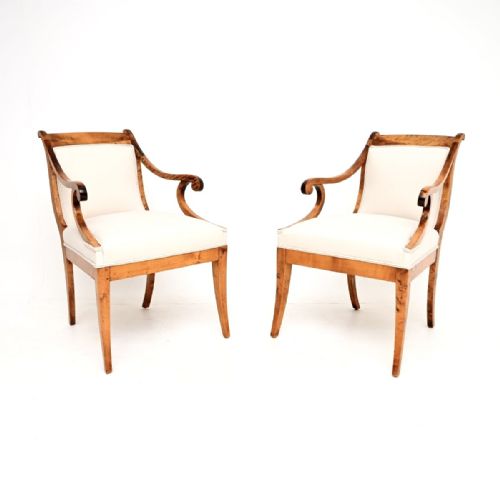
These antique birch armchairs bring pale, figured grain and robust nineteenth and twentieth-century seating into a room.
Antique Birch Armchairs
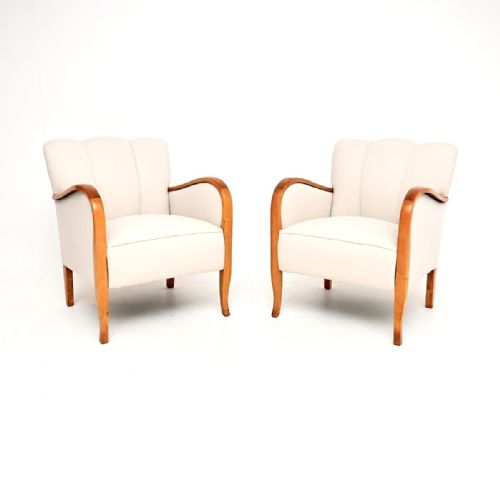
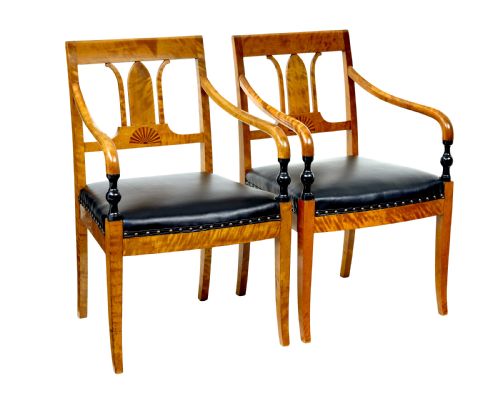
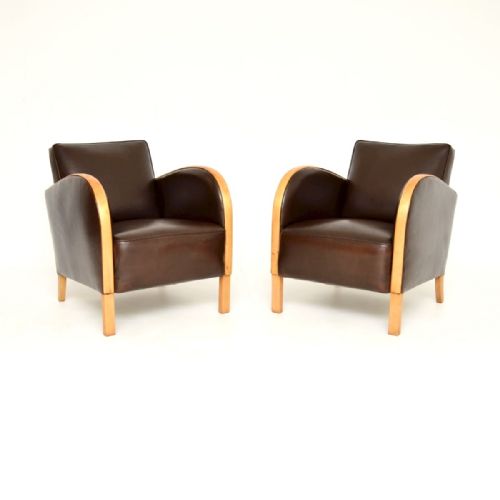
When searching for antique birch armchairs, buyers encounter a distinct mix of Scandinavian seating and British vernacular forms. Swedish pieces dominate the selection, spanning nineteenth-century Biedermeier through to Art Deco designs of the nineteen-thirties. Satin birch grain provides a pale, shimmering surface that defines these regional styles.
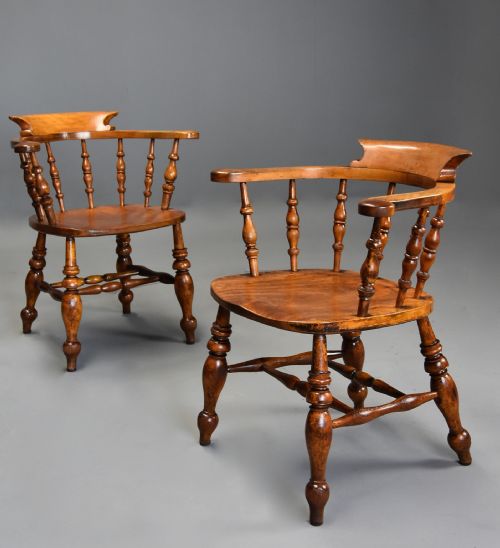
Alongside continental designs, British workshop pieces appear in the form of smokers bows, Windsor chairs, and rocking chairs. Elm frequently combines with birch in these domestic seating forms. Makers such as William Birch contributed sturdy armchair constructions during the Victorian and later eras.
The selection ranges from early nineteenth-century Karl Johan influenced chairs to twentieth-century carved and upholstered examples. Many survive as pairs, offering matching forms with distinct wood figuring. Bergère styles with woven cane panels also feature within the archive of past and current pieces.
Materials and construction
Makers utilised solid birch, tiger birch, and satin birch veneers over secondary timbers to achieve striking grain patterns. Ebonised details often provide contrast against the pale blonde wood of Biedermeier frames. Elm appears alongside birch in vernacular Windsor and smokers bow armchairs.
Upholstery materials include traditional leather, woven fabrics, and cane panels set into wooden frames. Brass accents and carved wooden elements finish the structural joinery of nineteenth and twentieth-century examples.
Listings span the nineteenth and twentieth centuries, uniting Swedish Biedermeier, Art Deco, and British vernacular forms in birch and elm.
Judging quality in birch seating
Quality rests primarily on the choice and figuring of the birch veneer or solid timber. Satin birch and tiger birch variants display intense chatoyancy that elevates plain wooden surfaces. The depth of the natural patina accumulated over decades dictates the visual weight of the piece.
Structural integrity and the retention of original ebonised highlights or carved details separate standard workshop output from exceptional examples. The harmony between original upholstery materials, such as leather or bergère cane, and the timber frame determines the historical cohesion of the armchair.
William Birch
The Antique Birch Armchairs Glossary
- Satin Birch
- A dense timber featuring a rippled figure that creates a shimmering, reflective surface when polished. It was heavily utilised in Swedish Biedermeier and Art Deco furniture design.
- Biedermeier
- A influential Central European style spanning the nineteenth century known for clean lines and emphasis on wood grain rather than heavy ornamentation. Swedish interpretations frequently employed pale birch.
- Smokers Bow
- A robust nineteenth-century Windsor-style armchair with a low, rounded back and turned spindles. These often incorporated birch seats and elm frames.
- Bergère
- A closed armchair with a wooden frame and woven cane panels forming the back and sides. This form appears frequently in Swedish satin birch seating.
- Karl Johan
- A Scandinavian neoclassical style bridging the empire and Biedermeier periods. It is characterised by restrained classical forms executed in birch.
Antique Birch Armchairs: Frequently Asked Questions
Are antique birch armchairs comfortable for daily use?
Most upholstered varieties offer supportive sprung or padded seating suitable for regular sitting. Stiff wooden vernacular models rely on contoured backs and wide arms for posture.
Buyers often select cushioned Art Deco or Biedermeier variants for living spaces, while firm Windsor styles suit studies or reading corners.
How do I care for satin birch surfaces?
Gentle dusting with a soft, dry cloth preserves the fragile nineteenth-century polish and delicate veneer. Avoid placing pale birch furniture in direct sunlight to prevent the golden tones from darkening.
Natural wax applied sparingly maintains the sheen without building up heavy residues on figured grain.
What is the difference between Biedermeier and Art Deco birch chairs?
Biedermeier pieces from the nineteenth century rely on smooth, curved wooden frames and polished wood grain without excessive decoration. They emphasise structural simplicity and domestic comfort.
Art Deco examples from the nineteen-thirties introduce geometric lines, contrasting elm elements, and bolder proportions while retaining the pale birch aesthetic.
Did British and Swedish makers use birch differently?
British workshops typically employed birch alongside elm in structural, vernacular seating like smokers bows and rocking chairs. These pieces prioritized rugged daily utility.
Swedish cabinetmakers focused heavily on satin birch veneers, creating refined salon armchairs and bergères driven by decorative elegance.