


Swedish Grace Armchairs
These Swedish grace armchairs bring together crisp Scandinavian design and rich birch timbers for an interior that feels both grounded and elegant.
What these pieces are
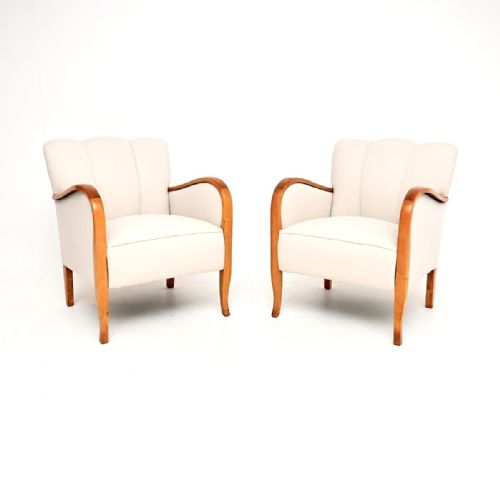
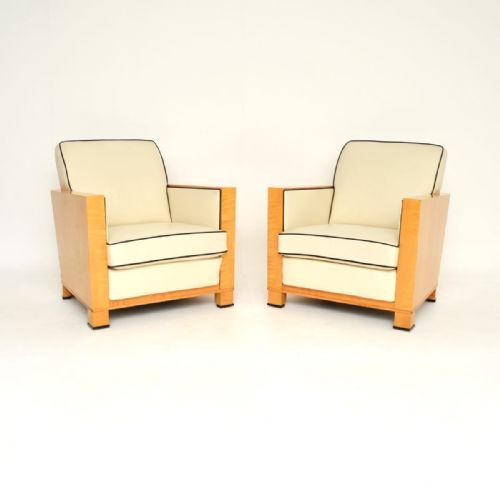
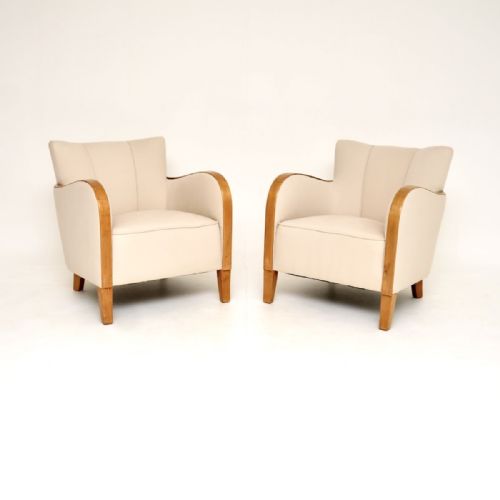
Swedish grace armchairs belong to the Swedish Art Deco movement, carrying dates from the nineteen-twenties and nineteen-thirties. Buyers searching for swedish grace armchairs find matched pairs upholstered in leather or fabric.
The dominant forms are club armchairs built with generous proportions and supportive seating. These pieces originate directly from Sweden, representing a distinct Scandinavian approach to modern seating.
How they were made
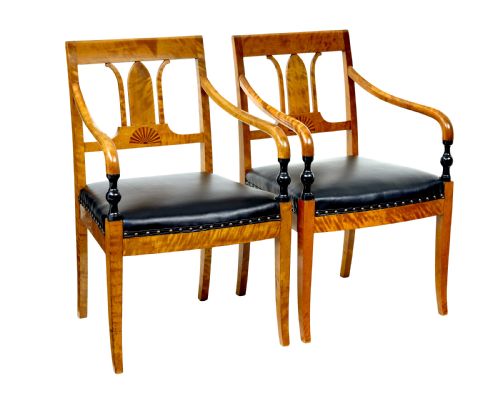
Cabinetmakers constructed these frames using native Scandinavian hardwoods such as birch, flame birch, satin birch, and elm. Selected sections of timber display striking grain patterns across the visible wooden elements of the frame.
Makers integrated ebonised wood details to contrast against the pale blonde tones of the main birch structures. Traditional upholstery techniques finished the interiors, housing the leather and fabric coverings within the timber frames.
Retail Price Guide 2026
Typical UK retail prices for swedish grace armchairs, calculated from the Sellingantiques database of over a million retail prices indexed since 2003. This retail price guide relies exclusively on Sellingantiques data; no external sources or auction records are used, so the figures do not describe the wider market.
Even the modest elm tree provides timber sophisticated enough to share a room with satin birch.
What varies in quality
Execution of the woodwork separates standard workshop production from finer studio output, particularly where ebonised elements meet the primary timber. The choice of original or period-appropriate leather and fabric upholstery further defines the tier of each armchair.
The Swedish Grace Armchairs Glossary
- Satin Birch
- A pale hardwood with a lustrous, reflective grain structure. It serves as a primary surface veneer on Swedish Art Deco seating.
- Flame Birch
- Timber featuring a wavy, fiery grain pattern resembling flickering flames. Cabinetmakers use this to create dramatic visual movement on prominent chair surfaces.
- Ebonised Wood
- Timber treated with a dark stain or chemical process to imitate ebony. This finish provides sharp chromatic contrast against pale birch frames.
- Swedish Art Deco
- A design movement bridging classicism and modernism during the interwar decades. It emphasises clean architectural lines alongside luxurious native woods.
Frequently Asked Questions
What periods do these armchairs date from?
The available inventory originates from the nineteen-twenties and the nineteen-thirties. These dates place the chairs squarely within the Swedish Art Deco era.
Production during this timeframe focused on clean geometry combined with luxurious native timbers like birch. Pieces from both decades share a distinct Scandinavian aesthetic.
Which woods are used in these chairs?
Makers relied heavily on birch, utilising variations including satin birch, flame birch, and standard birch. Elm and ebonised wood also appear across the frames.
The pale blonde quality of the birch timber defines the visual character of these pieces. Darker ebonised elements provide contrast against the lighter wood surfaces.
Are these armchairs sold individually?
The current selection consists entirely of matched pairs rather than single chairs. This configuration allows for balanced placement in a living space.
Matching pairs share identical wood types, upholstery materials, and construction details from the same period of manufacture.
What upholstery materials cover the frames?
Upholstery options recorded in the inventory include both leather and various fabrics. These materials cover the substantial frames of the club armchair designs.
The choice of covering complements the warm tones of the underlying satin birch or elm structures.