
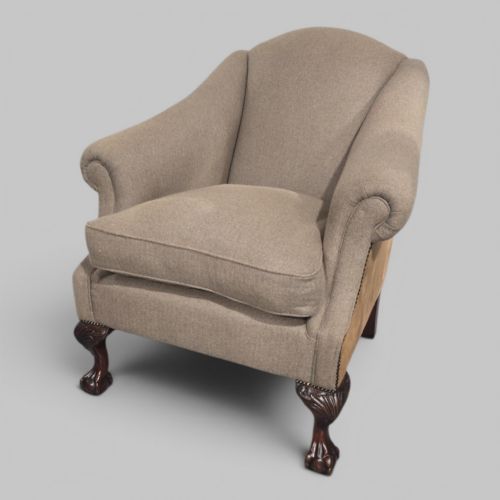


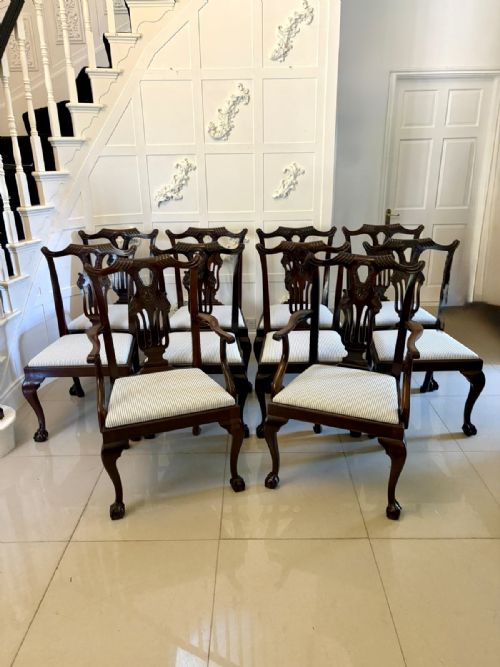


Carved Claw Foot Armchair
A carved claw foot armchair brings solid timber and firm upholstery together in a seat built to anchor a room.
Carved Claw Foot Armchair
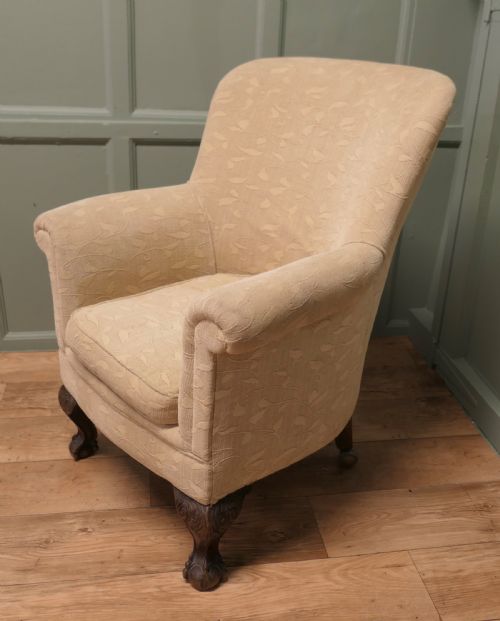
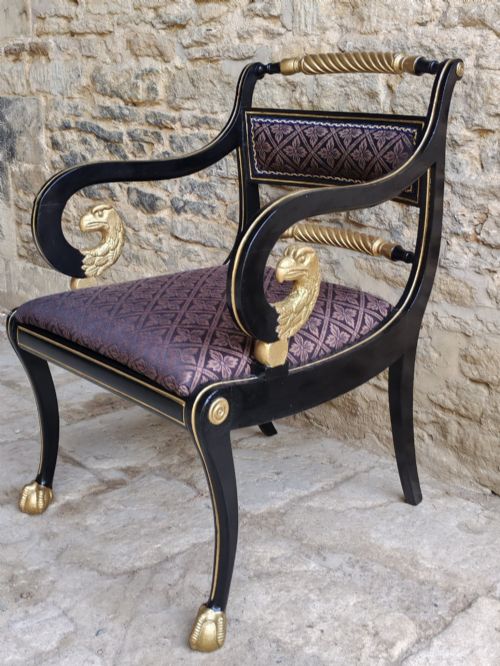
A carved claw foot armchair is a seating form defined by its distinct terminals, taking the shape of talons gripping a sphere or carved paw feet resting low to the floor. These chairs appear across several centuries and revivals, moving from formal 18th Century dining carvers and library seats to heavy Victorian and Edwardian upholstered lounge chairs.
On this page, buyers meet a varied selection spanning the 18th Century, Regency period, Victorian era, and early 20th Century revivals. The form ranges from single library chairs in mahogany and walnut to large pairs of leather club chairs and extensive dining sets.
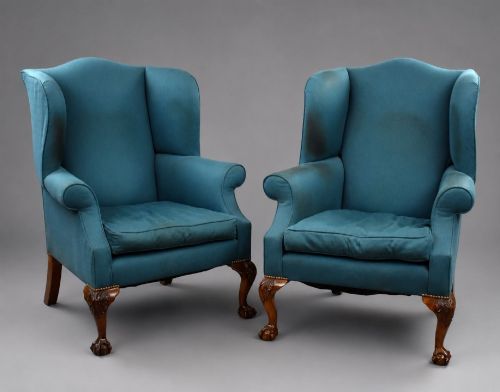
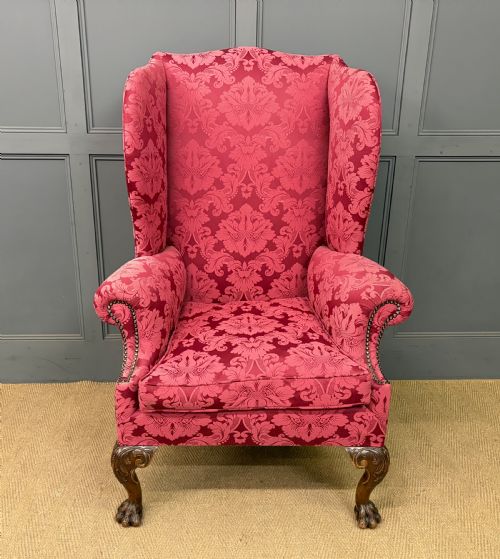
The timber frames show heavy carving traditions, particularly in Chippendale style and Georgian revival pieces where acanthus leaves and ball and claw feet dominate. While many are single library or reading chairs, others belong to larger parlour suites or dining sets complete with matching carvers.
How they were made
Makers shaped these frames primarily from dense hardwoods like mahogany, walnut, and oak, often turning and carving solid timber for the legs and arm supports. Joinery relied on traditional pinned mortise and tenon construction to sustain the downward pressure of the user.
Upholstered versions combined webbing, springs or stuffing, and secondary foundations beneath outer layers of leather, damask, velvet, or fabric. Detail work involved hand-carving the claw and ball motifs directly into the timber foot or mounting distinct brass elements.
One eccentric Chinese export corner armchair brings a remarkably curvaceous hardwood design into the mix.
What varies in quality
The depth and crispness of the timber carving dictate much of the distinction between standard production and top work. Sharp talon definition and well-proportioned knuckle joints on the arm supports show superior hand execution by the cabinetmaker.
Timber selection and frame integrity further separate the examples. Heavy, well-figured mahogany or walnut without major structural compromise retains stability through centuries of use, while the quality of original leather or textile upholstery alters the preservation state.
Howard and Sons·George Bullock·George Smith
The Carved Claw Foot Armchair Glossary
- Claw and ball
- A foot motif carved to resemble a bird talon grasping a round sphere, popular in 18th Century and revival furniture. This detail provides a strong visual anchor at the base of the chair leg.
- Carver
- An armchair designed with open arms, traditionally placed at the head of a dining table or paired with matching side chairs. These pieces often feature more elaborate arm terminals and carved woodwork.
- Library chair
- A heavy, substantial armchair built for reading rooms, typically featuring upholstered arms and deep seating. Many examples from the Regency and Victorian periods utilise leather coverings for durability.
- Chippendale style
- A decorative revival drawing on the mid-18th Century designs of Thomas Chippendale, characterised by carved ribbon backs, cabriole legs, and claw and ball feet. These pieces were frequently reproduced during the 19th and early 20th centuries.
- Wing back
- An armchair featuring protective side panels attached to the arms and back to block drafts. This form appears across 18th Century and later revival periods upholstered in leather or heavy fabric.
Carved Claw Foot Armchair: Frequently Asked Questions
What is a carved claw foot armchair?
A carved claw foot armchair is a wooden seat featuring distinct foot terminals shaped like animal paws or bird talons grasping a ball. These chairs appear across multiple historical periods and revival styles.
They function as standalone library chairs, desk seats, or part of larger dining sets and parlour suites.
How do I identify the period of an armchair?
Dating relies on the combination of timber species, construction methods, and stylistic cues like carving depth. 18th Century originals show different joinery and timber ageing compared to Victorian or Edwardian revivals.
Comparing leg profiles and arm shapes against known design manuals helps narrow down the exact decade.
Where should I place a library chair?
A library chair suits studies, living rooms, or reading corners where its substantial frame can anchor the space. These chairs require sufficient floor area to let the carved legs and arms remain visible.
Pairing them with a low reading lamp or side table creates a functional seating arrangement.
Are leather or fabric seats better?
Leather provides a durable surface that develops a rich patina over time, making it common on library and club chairs. Fabric and damask offer softer textures and varied patterns suited to formal drawing room suites.
Selection depends on the intended room use and whether the upholstery is original or a later replacement.