
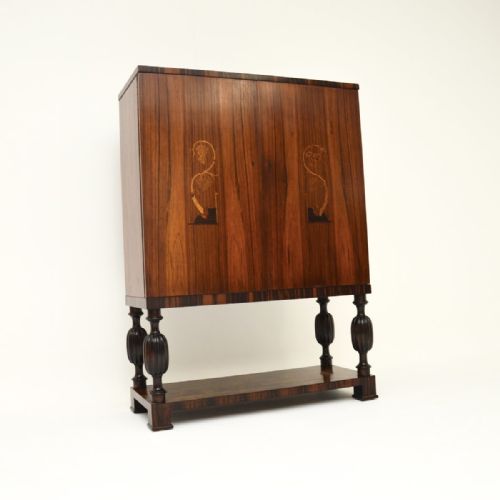
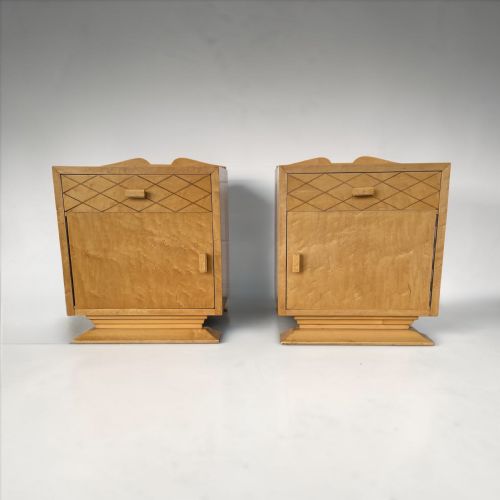
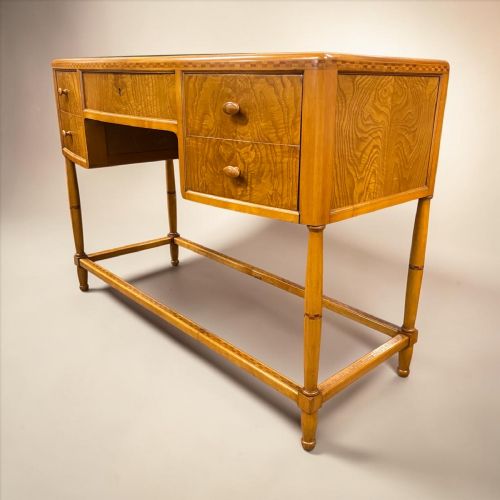
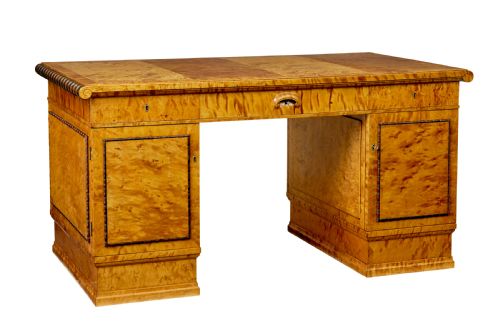


Swedish Art Deco Furniture
These Swedish art deco furniture pieces bring clean Scandinavian lines and rich northern timbers into modern rooms with quiet authority.
Swedish Art Deco Furniture
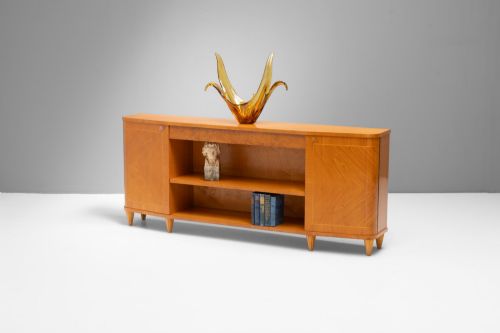
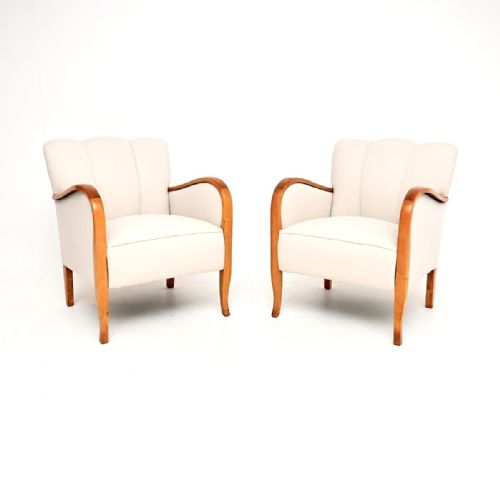
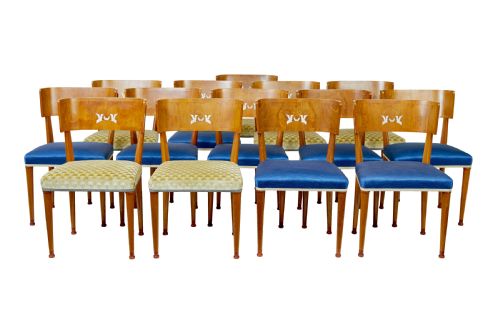
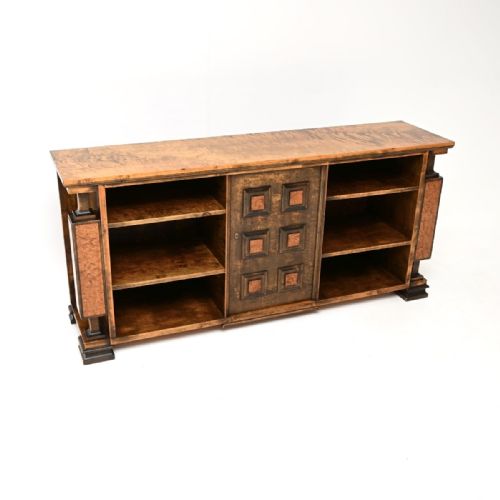
When buyers search for swedish art deco furniture, they encounter a focused selection of seating, storage and tables spanning the early twentieth century. Cabinets, armchairs, and dining chairs dominate the forms currently listed on this page.
The aesthetic bridges traditional Scandinavian craft and modernist geometry, emerging primarily around nineteen thirty. Pieces range from bedside tables and pedestal desks to console tables and coffee tables.
Originating predominantly from the nineteen twenties and nineteen thirties, with occasional nineteen ten examples, these works showcase northern European design sensibility. Collectors find both individual statement items and matched pairs.
How they were made
Maker workshops utilised native northern timbers such as birch, satin birch, and flame birch, often applying fine veneer over structural woods. Walnut, rosewood, and elm provide deep contrast through careful grain matching and inlay work.
Detailing relies on subtle brass mounts, carved wooden elements, and fabric upholstery rather than heavy ornamentation. Surface treatments preserve the natural warmth and figuring of the timber.
Swedish Art Deco Furniture Retail Price Guide 2026
Typical asking prices for swedish art deco furniture among the pieces listed under this phrase on Sellingantiques today, from the lower quarter to the upper quarter. They describe what is for sale here now, not the wider market.
Listings feature items exclusively from the early twentieth century, spanning the nineteen tens, twenties, and thirties.
What varies in quality
Quality rests in the selection of timber veneers and the precision of the joinery rather than surface embellishment. The handling of figured grains like satin birch and burr elm defines the visual hierarchy.
Proportion and restraint separate standard domestic furniture from exceptional modernist design. The integration of brass fittings and inlaid sections reveals the level of workshop execution.
Sandberg & Co·Otto Schulz for Boet
The Swedish Art Deco Furniture Glossary
- Satin Birch
- A pale, highly reflective northern European timber with a silky sheen. It serves as a signature surface material across Scandinavian seating and cabinetry.
- Klismos
- An ancient Greek chair form reinterpreted by twentieth-century designers with curved legs and a flared backrest. These appear in dining chair configurations.
- Veneer
- A thin layer of decorative wood applied to a stable core structure. This technique allows workshops to display dramatic grain patterns without structural distortion.
- Swedish Grace
- A transitional design movement bridging neoclassical elegance and early modernism in Sweden during the nineteen twenties. It informs the refined proportions seen in many of these cabinets and tables.
- Centre Table
- A freestanding table designed to be viewed from all sides rather than pushed against a wall. Examples feature inlaid wooden surfaces and balanced geometric pedestals.
Swedish Art Deco Furniture: Frequently Asked Questions
What periods do these pieces date from?
The selection spans the early twentieth century, with the vast majority originating from nineteen thirty and nineteen twenties production. An occasional nineteen ten example represents the earlier transition towards these modernist forms.
Craftsmen working during these decades combined traditional joinery with emerging Scandinavian design principles, creating the characteristic aesthetic of the period.
Which timbers are most common?
Birch in various forms, including satin birch, flame birch, and standard veneer, forms the foundation of most items. Elm and burr elm provide darker, heavily figured alternatives for cabinets and tables.
Additional species such as walnut and rosewood appear in inlaid sections and specialist storage pieces, adding chromatic depth to the northern palette.
How do I care for birch veneer surfaces?
Maintain these timber surfaces by keeping them away from direct sunlight and extreme humidity fluctuations, which can affect the underlying veneer. Dust gently with a dry, soft cloth and avoid chemical polishes.
Natural oils in the wood benefit from occasional professional waxing designed for antique furniture, preserving the subtle sheen of the satin birch.
Are these pieces suitable for daily use?
Cabinets, desks, and coffee tables function effectively in contemporary interiors while retaining their historical character. Sturdy construction in birch and elm ensures they withstand normal household demands.
Chairs and seating require consideration of their original upholstery and structural framing, making them ideal for moderate daily interaction rather than heavy contract use.