



Satin Birch Armchairs
Satin birch armchairs bring striking timber grain and sculptural forms to a room, offering both comfortable seating and strong decorative presence.
Satin Birch Armchairs
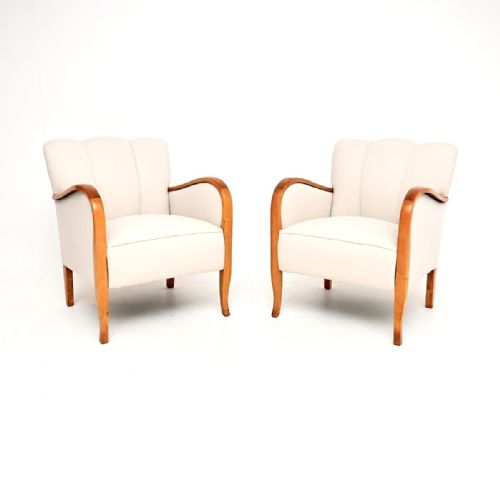
Satin birch armchairs combine robust seating forms with the pale, lustrous timber grain characteristic of Scandinavian cabinet-making. Buyers exploring satin birch armchairs frequently encounter matched pairs originating from Sweden, often structured around distinct historical periods.
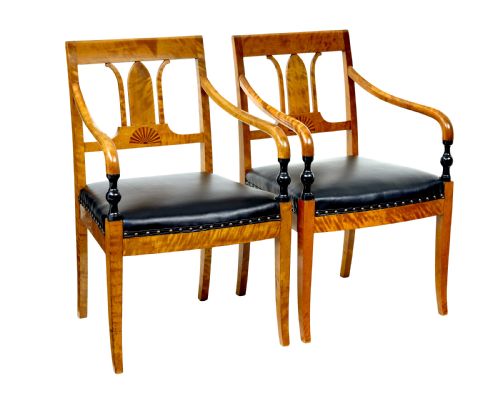
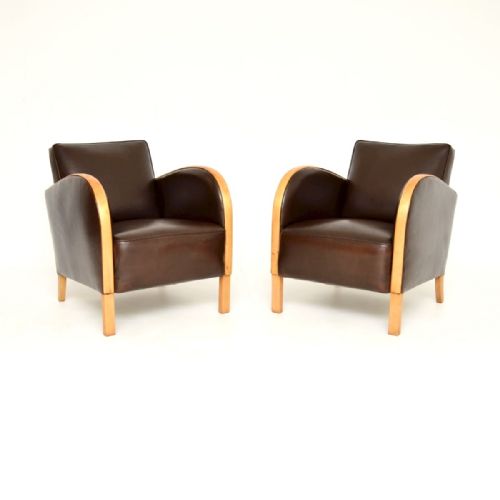
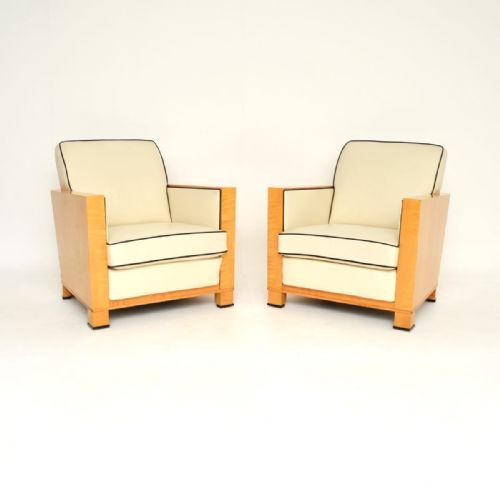
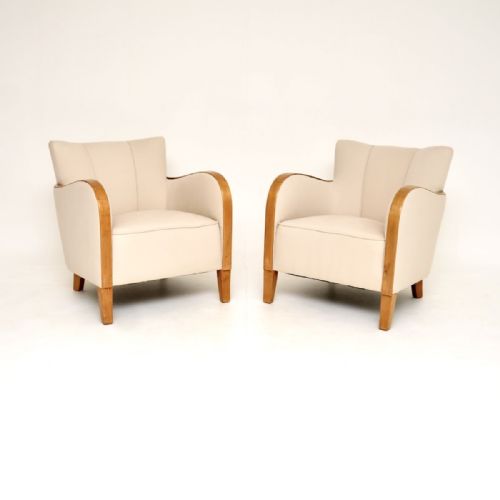
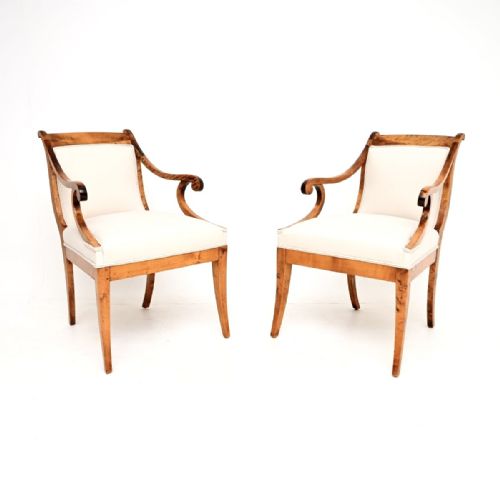
The selection ranges across several notable stylistic movements, with Swedish Art Deco and Biedermeier examples appearing alongside nineteenth-century variations. These seating pieces span from the mid-nineteenth century through to the early twentieth century, incorporating diverse regional influences.
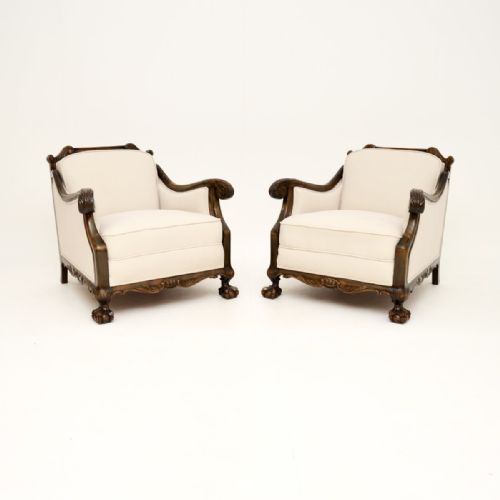
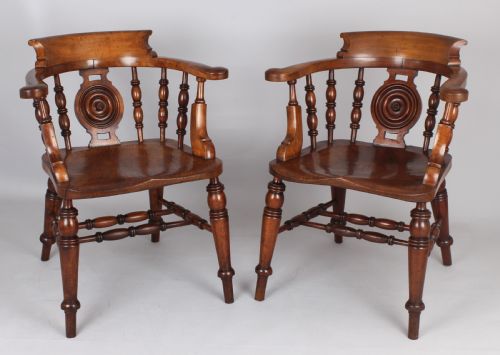
Formations include smokers bow configurations, bergère designs, and upholstered lounging chairs. Many survive in pairs, reflecting how they were originally commissioned for formal parlours and drawing rooms.
How they were made
Makers utilised solid woods and applied veneers of satin birch and flame birch to achieve dynamic, figured surfaces across the frames. Ebonised wood details frequently provide sharp visual contrast against the pale blonde tones of the primary timber.
Upholstery techniques combined traditional stuffing methods with high-grade leather or woven fabric coverings. Frames were shaped through steam bending and careful hand carving, particularly evident in Karl Johan and Art Deco iterations.
Satin Birch Armchairs Retail Price Guide 2026
Typical asking prices for satin birch armchairs among the pieces listed under this phrase on Sellingantiques today, from the lower quarter to the upper quarter. They describe what is for sale here now, not the wider market.
Listings feature satin birch armchairs spanning from the mid-nineteenth century through to 1930, predominantly originating from Sweden.
What varies in quality
The visual impact of the timber grain dictates much of the distinction between pieces, with matched flame birch veneers requiring exceptional skill to align across curved surfaces. The depth of the natural chatoyancy in the wood surface separates standard joinery from superior cabinet-making.
The integrity of the structural frame and the retention of original surface finishes significantly influence the character of each piece. Superior examples maintain crisp carving details and harmonious proportions between the wooden chassis and the upholstered elements.
The Satin Birch Armchairs Glossary
- Satin birch
- A timber featuring a natural golden sheen and fine grain pattern, highly prized by Scandinavian makers for decorative furniture veneers.
- Biedermeier
- A influential Central European and Scandinavian design style spanning the nineteenth century, known for clean lines and emphasis on utility combined with beautiful wood figures.
- Bergère
- An enclosed upholstered armchair with wooden framing exposed around the sides and back, frequently utilising cane or fabric panels.
- Karl Johan
- A Scandinavian neoclassical style bridging the empire and Biedermeier periods, named after the Swedish monarch and characterised by restrained classical motifs.
- Ebonised
- Wood treated with a chemical stain or finish to imitate ebony, providing dark accents that highlight lighter surrounding timbers.
Satin Birch Armchairs: Frequently Asked Questions
What periods do these armchairs come from?
The pieces span the nineteenth and early twentieth centuries, with significant representation from the mid-nineteenth century onwards.
Art Deco and Biedermeier eras form the primary chronological groups seen in the collection.
Are these chairs usually sold as pairs?
Many examples survive and are presented as matching pairs, reflecting how seating was historically commissioned for parlours.
Single items and occasional sets of four also appear within the available selections.
What materials are used besides birch?
Designers incorporated contrasting elements such as ebonised wood to highlight the pale timber framework.
Upholstery materials typically consist of leather or woven fabric coverings supported by traditional padding.
Where were these chairs made?
The vast majority originate from Sweden, representing regional interpretations of broader European decorative movements.
Swedish cabinet-makers specialised in utilising native birch timbers for high-status seating.