
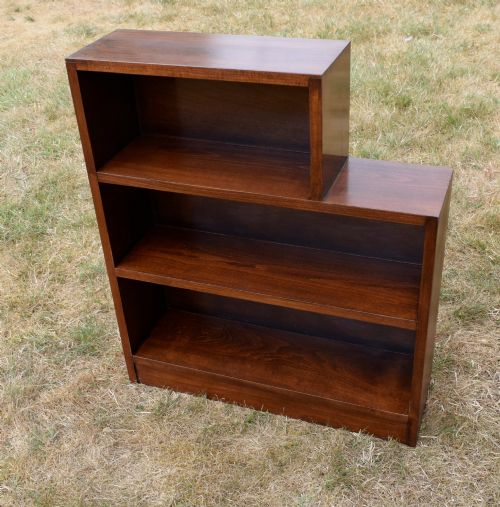
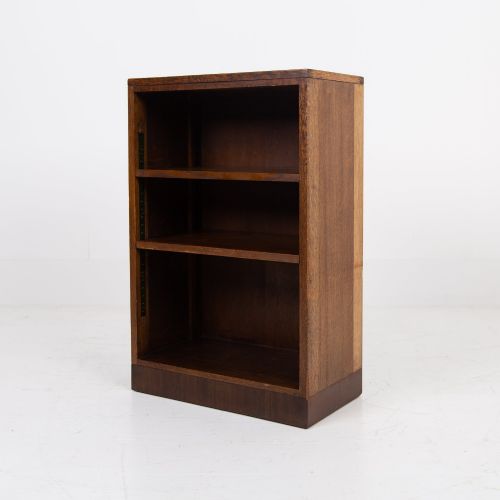
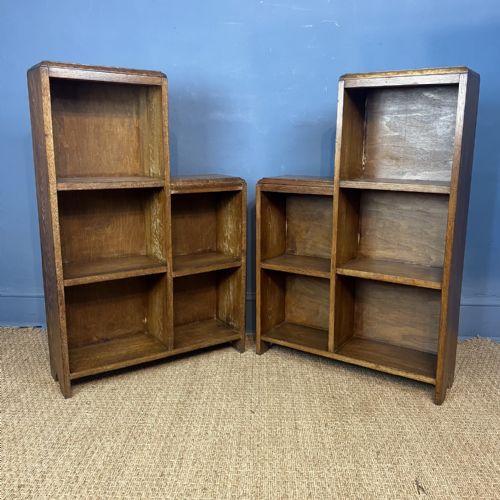
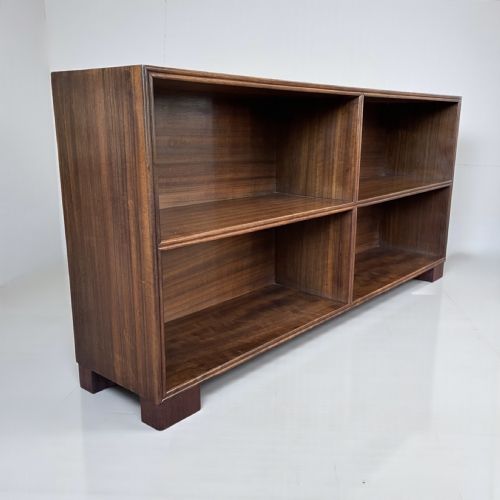
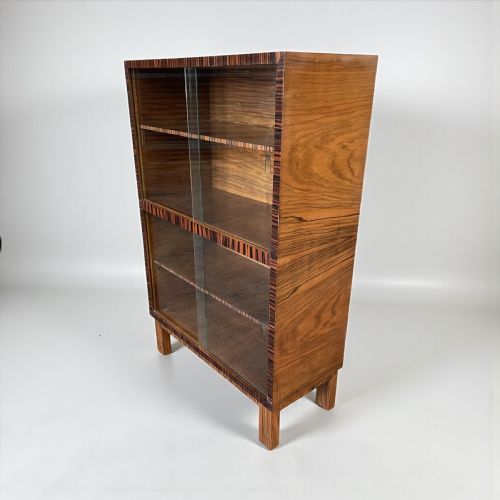


Art Deco Low Bookcase
An art deco low bookcase brings streamlined twentieth-century character to modern rooms while keeping everyday reading close at hand.
Art Deco Low Bookcase
An art deco low bookcase provides accessible storage through horizontal proportions that suit rooms with lower ceilings. These pieces usually date from the nineteen-thirties and combine architectural restraint with practical shelving.
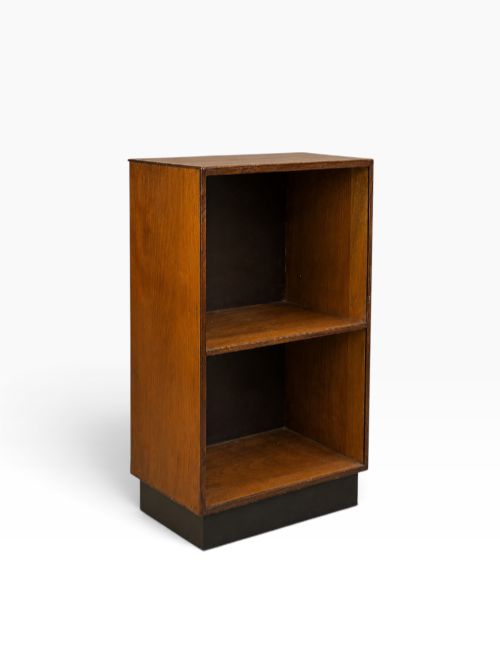
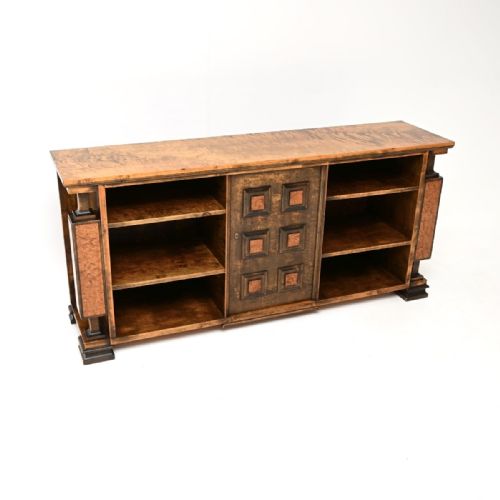
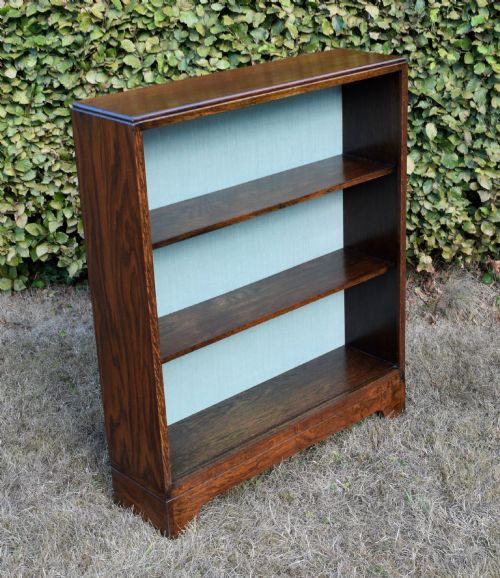
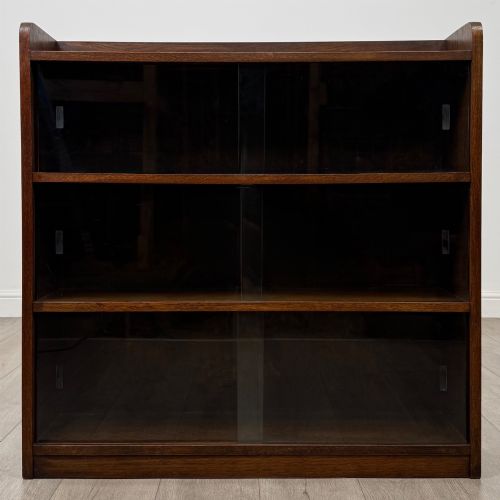
The selections on this page feature open shelf configurations alongside glazed cabinets and paired units. Swedish and English examples demonstrate the distinct regional interpretations of the style during the interwar period.
Lower heights distinguish these items from tall library furniture, allowing the top surface to function as a display area for decorative objects or lamps. Oak and walnut bodies dominate the selection, often enriched with contrasting veneers.
How they were made
Cabinet makers utilised dense timber frames faced with decorative veneers such as satin birch, burr elm, sycamore and walnut to create striking grain patterns across the front. Solid oak and mahogany also form the foundational structure for many open and closed variants.
Glazed doors, brass fittings and leather top inserts appear across the selection, showing attention to secondary materials that complement the primary wood. Ebonised finishes offer a contrasting dark surface texture on specific twentieth-century forms.
The inventory ranges from simple open oak compartments to glazed sycamore and walnut cabinets dating from the nineteen-thirties.
What varies in quality
The choice of face veneer dictates much of the visual hierarchy, with book-matched burr elm or satin birch sitting at the upper end of cabinet-making ambition. Simpler solid oak iterations rely on clean geometric lines rather than decorative figure.
Attribution to documented designers or distinct regional workshops elevates certain pieces above standard commercial production. Construction methods, from tightly fitted glazing bars to balanced timber selection, separate standard workshop output from finer cabinet work.
Maurice Adams·Betty Joel·Heals
The Art Deco Low Bookcase Glossary
- Veneer
- A thin layer of valuable wood applied to a base timber surface to provide decorative grain patterns. This technique allowed makers to display dramatic burr walnut or satin birch across large flat panels.
- Burr
- A tree growth that produces intricate, swirling patterns in the timber grain. Furniture makers prized these sections for prominent display on cabinet doors.
- Ebonised
- Wood treated with a finish to imitate ebony, producing a dense black surface. This treatment appears on select twentieth-century items to create stark visual contrast.
- Open bookcase
- A shelving unit without doors that provides direct access to books. These pieces often feature tiered or stepped tops typical of the period.
Art Deco Low Bookcase: Frequently Asked Questions
How tall is a low bookcase?
These pieces generally sit below standard eye level, allowing the top surface to remain clear for lamps or ornaments.
Their reduced height keeps rooms feeling open while providing accessible storage for everyday volumes.
Are these bookcases open or glazed?
The selection includes both open shelving units and variants fitted with glass doors.
Enclosed cabinets protect delicate bindings from dust, whereas open versions offer immediate access.
What woods were used in nineteen-thirties bookcases?
Makers utilised a wide palette including oak, walnut, mahogany, sycamore and birch.
Exotic veneers like burr elm frequently featured on cabinet fronts to create distinct geometric patterns.
Where were these bookcases made?
Origin records point primarily towards British workshops alongside Scandinavian cabinet makers.
Swedish pieces often showcase lighter timbers like satin birch and clean functionalist lines.