

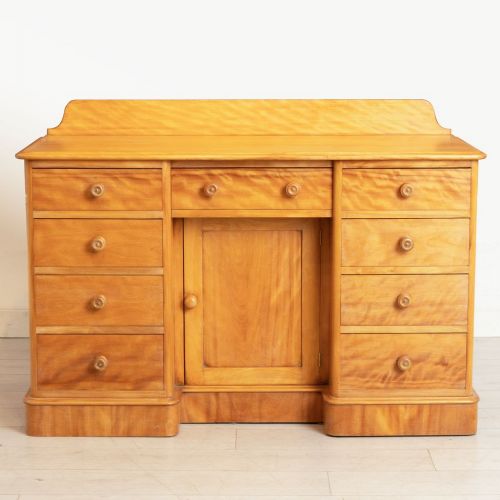


Satin Birch Cabinet
When you search for a satin birch cabinet, you enter a world of pale, figured timber built for Victorian bedrooms and Scandinavian interiors.
Satin Birch Cabinet
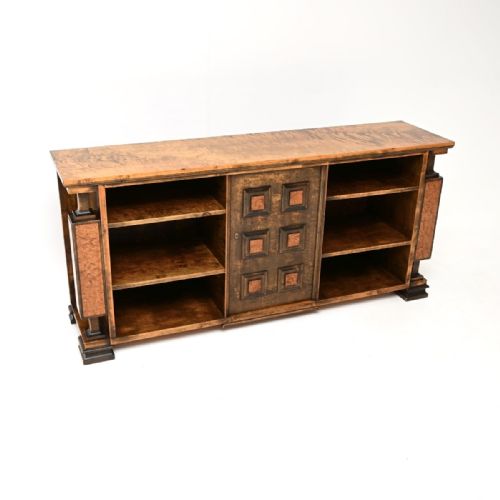
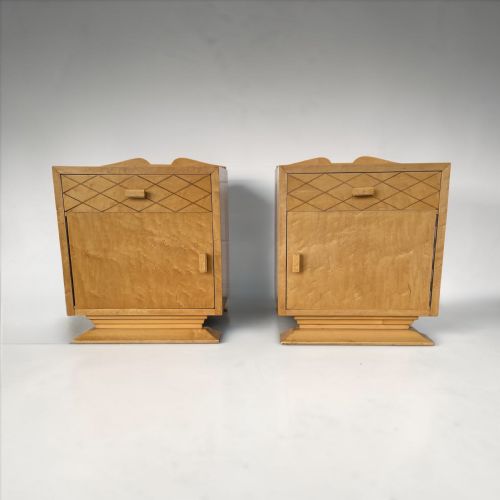
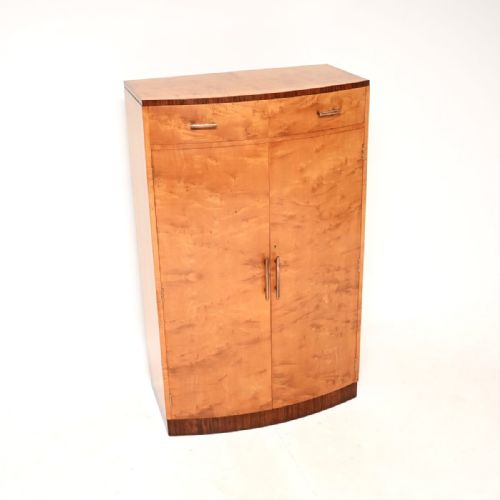
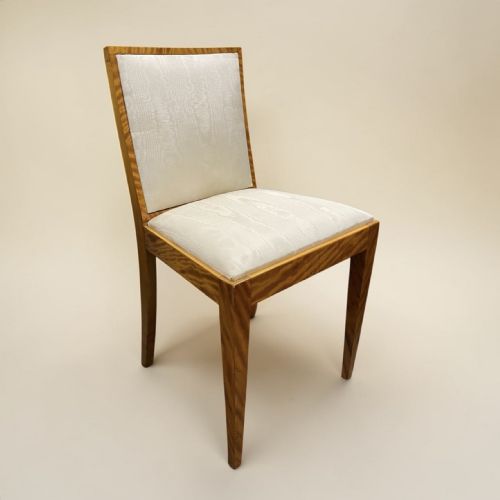
A satin birch cabinet encompasses a diverse range of furniture forms, appearing frequently as bedside units, larger display bookcases, and compact storage pieces. These items span the nineteenth century through the 1940s, drawing heavily from Victorian British workshops and Scandinavian design traditions.
The most common incarnation on this page is the bedside cabinet or small cupboard, often found in pairs. Alongside these, larger pieces such as wardrobes, chests of drawers, and bookcases emerge from Swedish and British makers working in Biedermeier, Art Deco, and Empire Revival styles.
Materials and Construction
Craftsmen relied on birch and its figured variant, satin birch, frequently laid as veneers over secondary woods like pine or combined with contrasting timbers such as walnut and ebonised wood. Marble tops also feature on select nineteenth-century bedside cabinets, providing a durable and decorative surface.
Joinery methods reflect the periods of production, utilising solid framing alongside carefully matched veneer panels to highlight the natural grain patterns of the wood. Brass hardware and occasional inlaid details complete the construction of these storage pieces.
Some nineteenth-century bedside cabinets spent their early mornings holding heavy porcelain washbasins before retiring to gentleman's quarters as quiet lamp stands.
Evaluating Craftsmanship
Quality rests in the selection of the timber veneer and the precision of the cabinetmaker's joinery. Pieces featuring highly figured, luminous grain patterns paired thoughtfully with contrasting woods stand apart from simpler iterations.
Structural integrity and the retention of original hardware, marble tops, and interior fittings define the upper tier of surviving examples. The distinction lies in whether the proportions and decorative details remain harmonious and unaltered over time.
Bath Cabinet Makers·Holland and Sons·Sandberg and Co·Otto Schulz for Boet·Oscar Nilsson Nordiska Kompaniet·Trevor Page Norwich
The Satin Birch Cabinet Glossary
- Satin birch
- A timber derived from the birch tree featuring a distinctive shimmering, chatoyant grain closely resembling satinwood.
- Biedermeier
- A prominent Central European style spanning the nineteenth century known for clean lines, domestic utility, and emphasis on wood grain over ornament.
- Compactum
- A large fitted wardrobe designed to contain multiple internal compartments, hanging space, and drawers within a single carcass.
- Secretaire
- A cabinet or chest incorporating a pull-down writing flap that conceals a fitted interior of small drawers and pigeonholes.
- Aesthetic Movement
- A late nineteenth-century design current promoting art for art's sake, often resulting in furniture with simplified forms and contrasting dark inlay.
Satin Birch Cabinet: Frequently Asked Questions
How do I clean satin birch?
Dust surfaces regularly with a soft, dry cloth to prevent accumulation. Avoid modern silicone polishes that can degrade nineteenth-century finishes.
Apply a traditional beeswax sparingly when the wood appears dry, buffing gently to maintain the natural lustre of the figured grain.
Are bedside cabinets usually found in pairs?
Many bedside pieces survive as matched pairs, particularly those originating from Victorian British homes and Scandinavian bedrooms. Single cabinets also appear frequently.
Collectors seeking symmetry often look specifically for paired configurations, though individual cabinets function well as standalone lamp tables.
How do I date a cabinet?
Examine the secondary woods inside drawers and the carcass construction methods used by the maker. Victorian pieces often use pine linings and hand-cut dovetails.
Stylistic markers such as Art Deco geometric lines or heavy Biedermeier proportions also help narrow the decade of manufacture.