


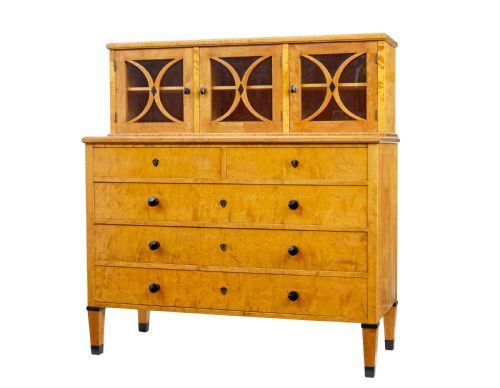

Blond Wood Display Cabinet
A blond wood display cabinet brings warmth and clean light to a room, showing off porcelain or glassware behind clear glass panels.
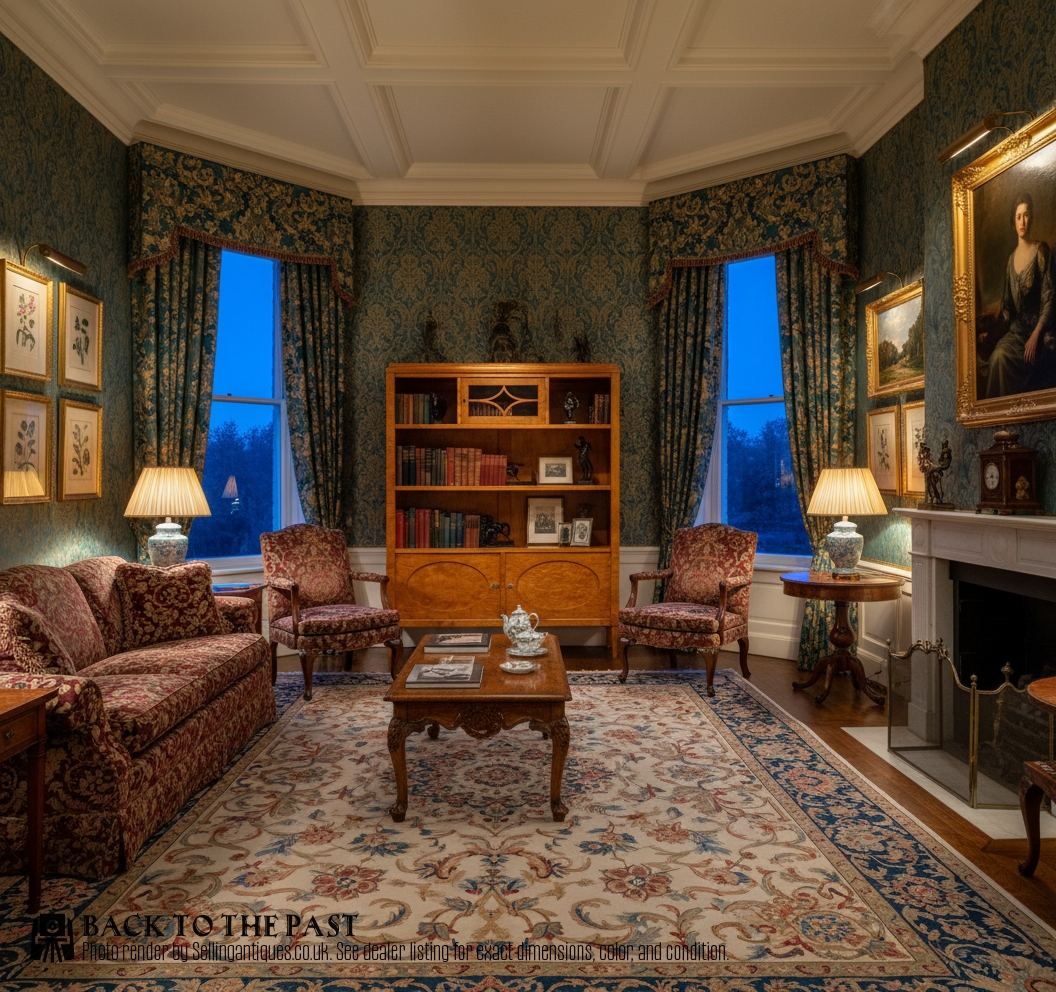
Blond Wood Display Cabinet
A blond wood display cabinet offers pale timber surfaces that frame books and ornaments without dominating a scheme. These pieces range from shop display cabinets to tall glazed bookcases and cabinets on chests.
The version most commonly met on this page is the light-toned Scandinavian or Art Deco creation from the early twentieth century. These incorporate birch, sycamore, or satin birch alongside glass doors and metal fittings.
Makers and designers from Sweden, England, and France worked within styles spanning Victorian, Art Nouveau, and Empire Revival. The resulting forms serve equally well for modern living spaces and period interiors.
Materials and construction
Cabinet makers utilised pale timbers including birch, sycamore, satin birch, and bird's-eye maple to build these light-hued storage pieces. Burr walnut and burr elm frequently provided contrasting grain patterns across door panels and drawer fronts.
Structural framing relied on solid timber carcassing veneered with figured woods, complemented by glazed doors and occasional ormolu mounts. Interior shelving supported books or display items behind secure glass enclosures.
Blond Wood Display Cabinet Retail Price Guide 2026
Typical asking prices for blond wood display cabinet among the pieces listed under this phrase on Sellingantiques today, from the lower quarter to the upper quarter. They describe what is for sale here now, not the wider market.
Several pieces hail from Sweden, proving that Nordic light has been chased with pale birch furniture for over a century.
Judging quality and merit
The distinction between standard utility items and exceptional cabinet work lies in the choice of timber figure and veneer matching. Master workshops selected burr veneers with intense grain movement and arranged them symmetrically across the surface.
Proportion and hardware integration define the superior examples in this category. Finely cast ormolu mounts, well-fitted glass doors, and balanced architectural silhouettes elevate a functional cabinet into an accomplished piece of design.
Epstein·Sandberg & Co
The Blond Wood Display Cabinet Glossary
- Birch
- A pale hardwood favoured by Scandinavian cabinet makers for its fine grain and luminous surface quality. It takes a smooth polish that highlights natural blond tones.
- Burr veneer
- A thin slice of timber cut from a tree growth or burl, displaying complex swirling patterns. Craftsmen matched these patterns across cabinet doors for decorative effect.
- Sycamore
- A dense, light-coloured wood often utilised in Art Deco furniture for contrasting inlay and pale surfaces. Its pale hue maintains the brightness of a room scheme.
- Ormolu
- Gilded bronze mounts applied to furniture for decorative accent, particularly prominent in French Empire Revival pieces. They add metallic contrast to the surrounding timber.
Blond Wood Display Cabinet: Frequently Asked Questions
What rooms suit a blond wood display cabinet?
These pale timber cabinets work particularly well in drawing rooms, dining spaces, and studies where natural light is valued. Their neutral tones blend easily with both minimalist modern settings and traditional interiors.
The glass doors protect collections of books, ceramics, or glassware while keeping them fully visible. This combination of storage and display makes them practical for everyday living.
How do I care for antique timber furniture?
Maintain these surfaces by dusting regularly with a dry, soft cloth and avoiding silicone-based polishes. Keep the timber away from direct heat sources and strong sunlight to prevent the veneers from drying out.
Applying a traditional beeswax polish occasionally will nourish the wood and maintain its natural lustre without building up heavy residue.
How do I distinguish Art Deco from Victorian examples?
Art Deco cabinets rely on clean geometric lines, contrasting wood veneers such as sycamore and walnut, and restrained ornamentation. They project a streamlined aesthetic typical of the interwar period.
Victorian and earlier pieces often feature heavier architectural mouldings, turned columns, and rich figuring like bird's-eye maple or burr walnut. Their proportions tend to be more traditional and enclosed.
Are these cabinets suitable for heavy book storage?
While many pieces double as bookcases with sturdy internal shelving, the primary design focus often includes display elements and glass doors. Shelves should be assessed for thickness and support before loading them densely with heavy volumes.
Lighter display items and books combined make the safest use of adjustable wooden shelving found in antique cabinets.