



Birch Cabinet on Chest
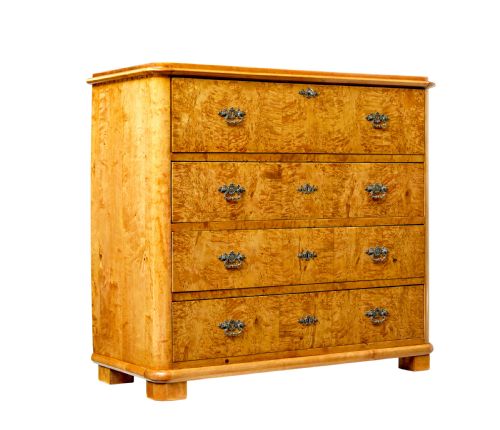
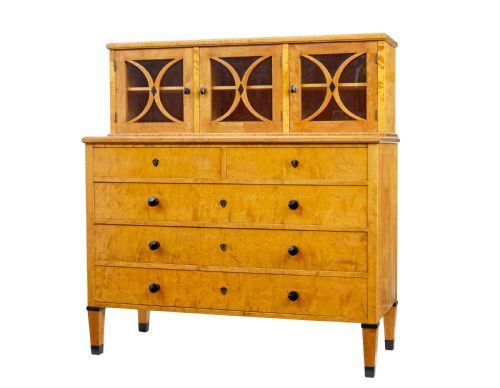
A birch cabinet on chest pairs a refined upper storage compartment with a solid chest of drawers below, offering striking grain patterns and practical storage for any interior.
Birch Cabinet on Chest
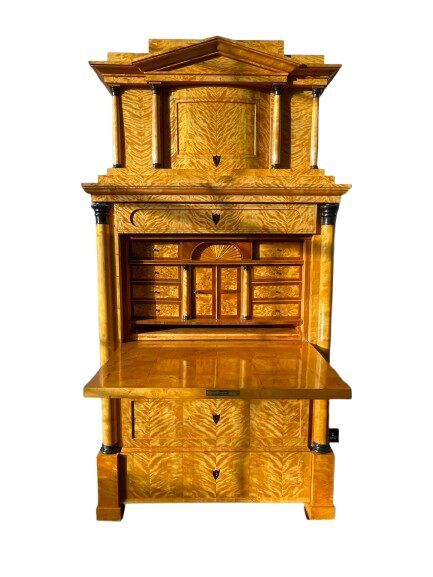
When searching for a birch cabinet on chest, buyers encounter nineteenth-century Scandinavian and Victorian examples that combine display or enclosed shelving with robust drawer space. The forms range from late nineteenth-century Swedish Art Nouveau designs to grand Biedermeier secretaires and chests with cupboards fitted to the top.
The material palette centres on birch, satin birch, burr birch, and masur birch, frequently complemented by secondary timbers like pine and contrasting ebonised wood details. These pieces originate primarily from nineteenth-century workshops in Sweden and Britain, reflecting regional tastes for pale, highly figured timbers.
How they were made
Cabinet makers utilised solid birch, birch veneer, and burr birch over pine carcasses, selecting timber specifically for its dramatic, undulating grain patterns. Surfaces were carefully smoothed and polished to highlight the natural golden hues of the wood, while structural stability was maintained through traditional joinery.
Hardware details typically include brass or metal handles and escutcheons, which punctuate the pale timber surfaces. Ebonised wood was occasionally applied to create stark visual contrasts, aligning with Biedermeier and Art Nouveau stylistic preferences.
Table boxes made of burr birch bring small-scale drama to a room.
What varies in quality
The standard of a birch cabinet on chest is determined by the selection and bookmatching of the veneer, particularly on burr and masur birch examples where the grain creates a dramatic visual display. Superior pieces exhibit seamless integration between the upper cabinet and lower chest, maintaining proportion and balance.
Execution of internal fittings, such as secretaire drawers, pigeonholes, and cupboard compartments, distinguishes finer workshop production from simpler utilitarian items. The preservation of original surface finishes and mounts also heavily influences the overall integrity of the piece.
Holland and Sons
The Birch Cabinet on Chest Glossary
- Masur birch
- A natural growth variation of the birch tree producing a densely spotted and swirling grain pattern. It was widely utilised by Scandinavian cabinet makers for high-status furniture.
- Biedermeier
- A central European style from the mid-nineteenth century prioritising clean lines, minimal ornamentation, and the natural beauty of wood veneers. It heavily influences Swedish furniture of this period.
- Secretaire
- A desk form featuring a fitted drop-front writing drawer that conceals smaller compartments and pigeonholes. It often forms the central section of a larger cabinet or chest.
- Satin birch
- A timber derived from specific birch trees yielding a lustrous, light-reflecting surface resembling satin. It gained particular favour in nineteenth-century British and Scandinavian furniture.
- Ebonised wood
- Timber treated with a chemical stain or black finish to imitate ebony. It serves as a dark contrast against pale birch veneers on nineteenth-century pieces.
Birch Cabinet on Chest: Frequently Asked Questions
What is a birch cabinet on chest?
A birch cabinet on chest is a composite nineteenth-century storage item uniting an upper cupboard or cabinet section with a lower chest of drawers. These pieces showcase pale northern European timbers and provide dual functionality for display and concealment.
Most examples originate from Swedish or British workshops, employing satin birch, burr birch, and pine. They span styles from Biedermeier to Art Nouveau.
How do I date a birch cabinet?
Dating relies on examining the construction methods, timber preparation, and stylistic markers such as hardware and veneer selection. Nineteenth-century pieces frequently feature hand-cut dovetails and regional Scandinavian proportions.
Comparing the secondary woods, such as pine, and the specific application of birch veneer helps narrow the period. Art Nouveau and Biedermeier stylistic cues further anchor the manufacturing decade.
How should I clean satin birch furniture?
Satin birch surfaces require gentle maintenance using a soft, dry cloth to remove dust without abrasive polishes. Preserving the nineteenth-century finish depends on avoiding excessive moisture and direct sunlight.
Microfibre cloths and occasional applications of appropriate natural wax help maintain the lustre of the timber. Professional conservation is recommended for addressing structural or surface wear.
Where were these cabinets made?
The listings demonstrate a strong concentration of nineteenth-century production in Sweden, alongside British Victorian manufacturing. Scandinavian cabinet makers excelled in utilising native burr and masur birch timbers.
Workshop traditions in these regions favoured clean structural forms that emphasised the decorative qualities of pale wood. British makers also adopted satin birch for fine cabinets and press designs.