
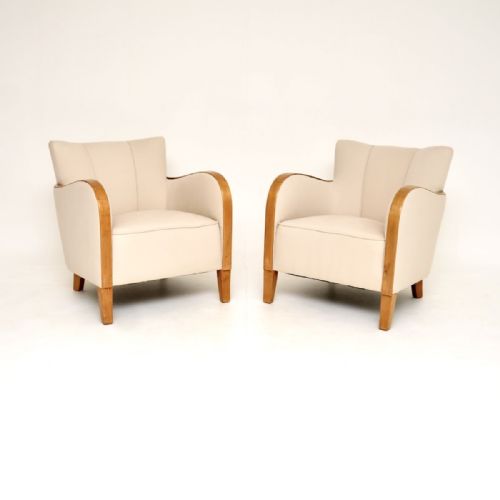
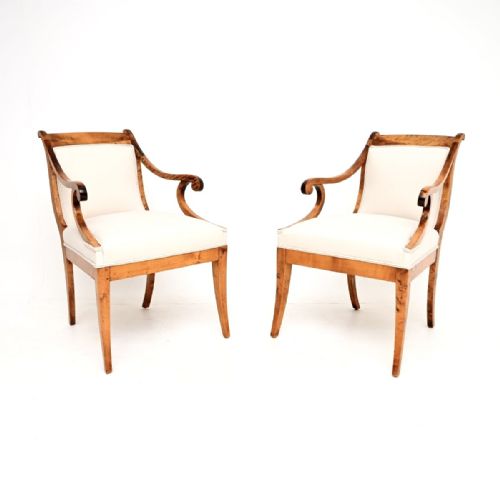


Blond Wood Armchairs
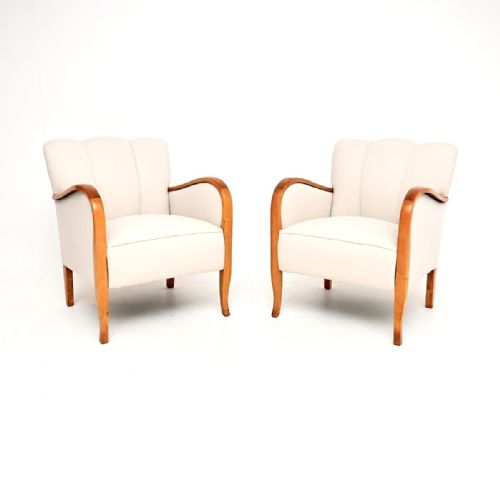
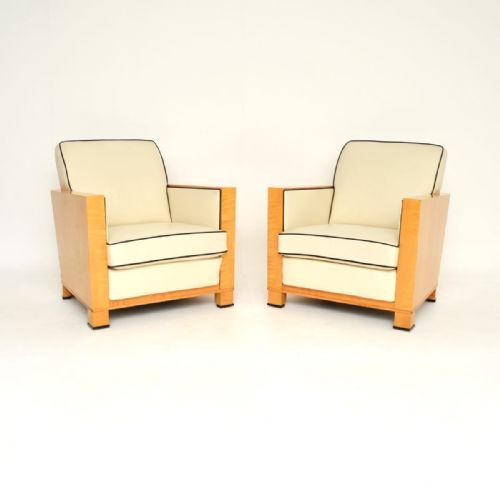
These blond wood armchairs bring striking pale grain and clean Scandinavian lines to a room, offering both comfort and strong decorative presence.
Blond Wood Armchairs
The most common forms you will meet are pairs of armchairs and lounge chairs from the Art Deco period, particularly Swedish pieces. Alongside these, you find nineteenth-century Biedermeier chairs, Karl Johan influenced birch pieces, and occasional or nursing chairs.
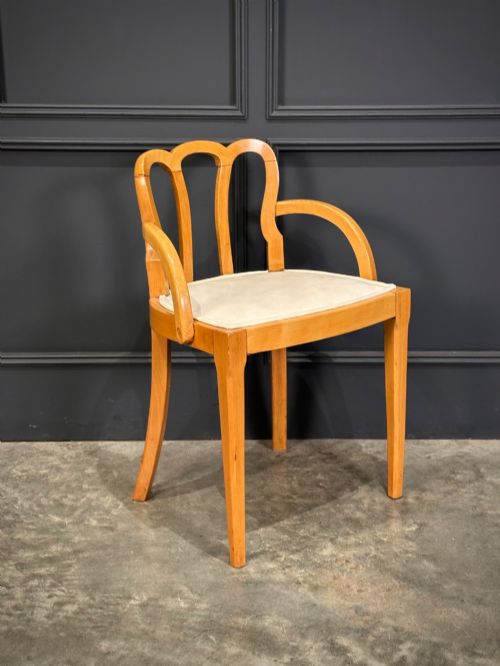
These chairs combine pale wood frames with upholstery in leather or fabric. They suit interiors that favour light-toned wood and restrained, elegant silhouettes.
How they were made
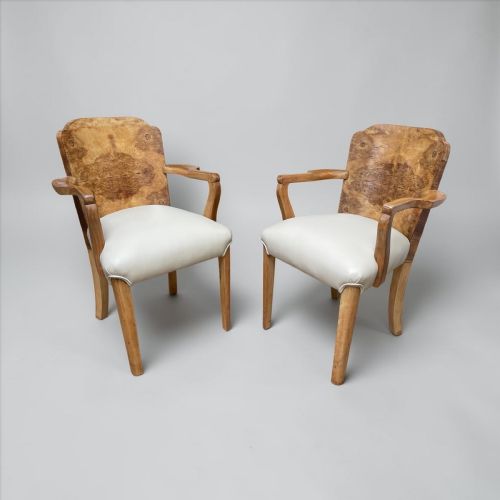
Makers utilised pale timbers, primarily birch and satin birch, often selecting figured veneers like burr birch and burr walnut to create patterned surfaces on the frames. Satinwood and elm also appear in the construction, showing a preference for light-coloured hardwoods.
Upholstery played an integral role, with original or replacement coverings in leather and various fabrics softening the wooden structures. Frames incorporate carved details in some early twentieth-century Swedish examples, balancing the smooth expanses of grain.
The listings feature birch, satin birch, burr birch, satinwood, elm, and bleached walnut across nineteenth and twentieth-century periods.
What varies in quality
The visual strength of the grain separates ordinary examples from finer pieces, particularly where burr birch or satin birch veneer has been matched across the arms and back. Superior pieces display thoughtful timber selection that highlights the natural figuring of the wood.
Construction methods and the integration of upholstery also define the tier of a chair, from simple occasional seating to substantial club armchairs. The crispness of the carving and the balance of the proportions indicate the skill of the maker.
Hary and Lou Epstein
The Blond Wood Armchairs Glossary
- Satin Birch
- A pale timber with a satiny sheen and fine grain, frequently utilised in Swedish Art Deco furniture.
- Biedermeier
- A nineteenth-century Central European style known for utilitarian comfort and clean lines, influencing later Scandinavian designs.
- Karl Johan
- A Scandinavian neoclassical style dating to the nineteenth century, characterised by restrained classical motifs and birch frames.
- Burr Birch
- Wood taken from a tree growth that produces intricate, swirling patterns in the grain, prized for veneering.
- Art Deco
- A twentieth-century design style favouring streamlined forms and sleek materials, strongly represented here by Swedish makers.
Blond Wood Armchairs: Frequently Asked Questions
What periods do blond wood armchairs come from?
The listings span the nineteenth and twentieth centuries, with a heavy concentration of pieces dated around nineteen thirty. You will also find examples from eighteen sixty and nineteen hundred.
Nineteenth-century pieces include Biedermeier and nursing chairs, while the twentieth-century items are predominantly Art Deco designs from Sweden.
Are these chairs sold in pairs?
Many of the selections available on this page are offered as pairs, particularly the Swedish Art Deco armchairs and club chairs.
Single items such as nursing chairs, desk armchairs, and occasional chairs also appear individually within the listings.
What woods are used for these armchairs?
The primary material across the range is birch, including satin birch and burr birch. Other timbers visible in the construction include satinwood, elm, and bleached walnut.
These pale woods are frequently paired with leather or fabric upholstery.
How do I identify a Biedermeier armchair?
Biedermeier chairs from the nineteenth century generally feature warm birch timbers and comfortable, functional forms without excessive ornamentation. They reflect a nineteenth-century aesthetic focused on domestic comfort.
Compare them against the more streamlined, geometric lines of the nineteen thirty Art Deco pieces.