

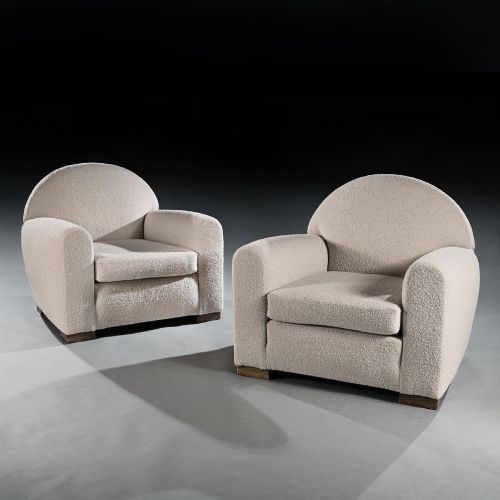


Art Deco Barrel Chairs
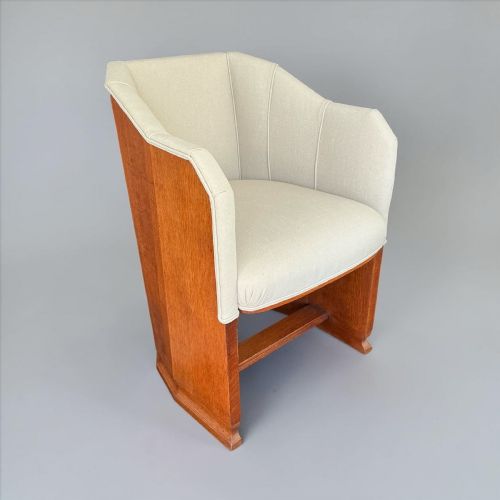
Art deco barrel chairs wrap you in a rounded, supportive silhouette that defines the sculptural seating of the period.
Art Deco Barrel Chairs
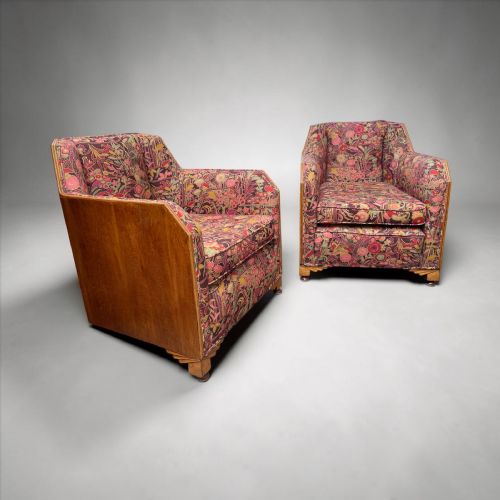
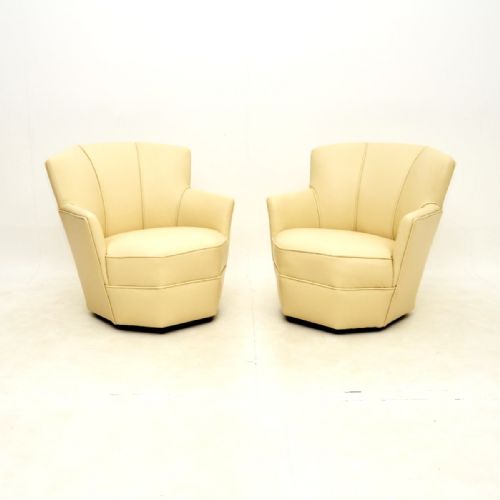
Art deco barrel chairs comprise low armchairs, club chairs, occasional seats and cocktail chairs defined by their curved, enclosing backs. These pieces span production from the Victorian era and the nineteen-twenties up to nineteen-forty, reflecting a considerable sweep of twentieth-century design.
The versions you meet most frequently on this page date from the nineteen-thirties and carry the distinct geometric lines or rounded profiles of French and English modernism. You will also encounter pairs alongside single armchairs, offering flexible options for seating arrangements in a room.
How they were made
Construction relies upon solid timber frames, frequently utilising oak or veneered wood to shape the characteristic curved barrel back. These internal structures provide the robust skeleton necessary to support deep upholstery and daily use.
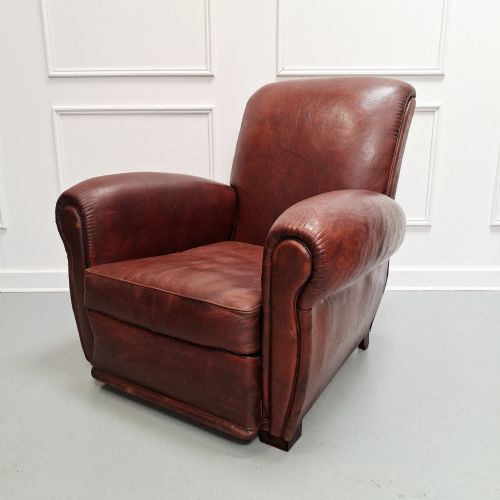
Surface finishes and seating surfaces combine leather, fabric and textile upholstery with occasional cane inserts, whilst brass details sometimes accent the woodwork. The juxtaposition of smooth hide or woven textiles against polished timber defines the physical presence of these chairs.
Listings span periods from Victorian times through the nineteen-twenties, thirties, and forties, showcasing leather, fabric, wood, and brass.
What varies in quality
The distinction between standard workshop production and superior output rests in the fluidity of the woodwork and the integrity of the frame. Chairs bearing attributions to notable makers demonstrate a higher grade of craftsmanship in their joinery and proportions.
Material selection significantly influences the overall character of each piece, from finely grained veneers to substantial leather hides. The cohesion between the framing timber and the chosen upholstery dictates the enduring appeal of the armchair.
Hille·Hary and Lou Epstein
The Art Deco Barrel Chairs Glossary
- Barrel back
- A seating design featuring a solid, semi-circular backrest that curves continuously around the user. This enclosed shape offers both physical comfort and a distinct silhouette.
- Club chair
- A deep, upholstered armchair designed for relaxation, typically featuring low arms and a padded seat. French iterations often utilise supple leather for a soft finish.
- Veneered wood
- A thin layer of superior timber applied over a base wood foundation to create decorative exterior surfaces. This technique allows for striking grain patterns across curved forms.
- Cane seat
- A woven plant material surface set into the wooden frame of a chair seat. It provides a lightweight, resilient base that contrasts with solid upholstery.
Art Deco Barrel Chairs: Frequently Asked Questions
What defines art deco barrel chairs?
These seats are characterised by their curved, enclosing backrests that wrap around the user in a continuous sweep. They often feature low profiles and distinct upholstery tailored to twentieth-century modernism.
Design influences range from French Parisian styles to Anglo Indian teak and cane variations, spanning several decades of manufacturing.
How were these armchairs used originally?
They served as comfortable lounging seats in drawing rooms, smoking rooms and modern domestic interiors. Their compact proportions made them versatile for conversation areas.
Later iterations functioned specifically as cocktail chairs or occasional seating in period apartments and townhouses.
How do I care for leather upholstery?
Leather surfaces require regular dusting and occasional conditioning to maintain suppleness and prevent the hide from drying out over time. Keeping them away from direct heat sources preserves the natural material.
Vintage leather develops a characteristic patina with handling, which forms part of the historical appeal of mid-century club chairs.
How do I date these chairs?
Dating relies upon examining the underlying construction methods, timber types, and stylistic cues such as the geometry of the woodwork. Pieces often align with specific decades from nineteen-twenty through to nineteen-forty.
Attributions to known makers or specific regional styles also provide clear chronological markers for individual pieces.