



Fluted Back Armchair
A fluted back armchair offers deep enveloping comfort and distinct architectural lines, making it a focal point in any traditional or period room.
What They Are
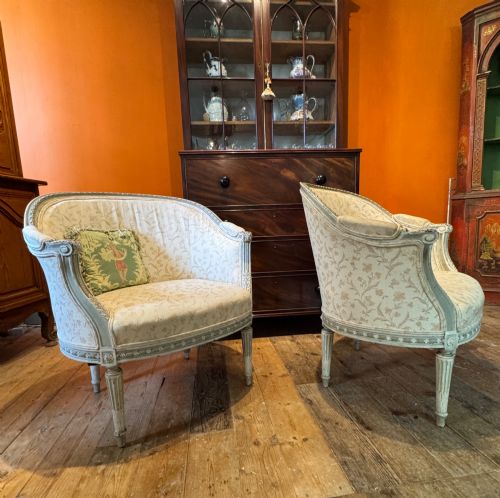
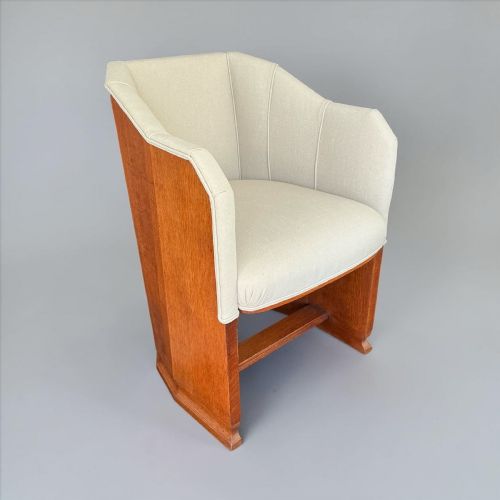
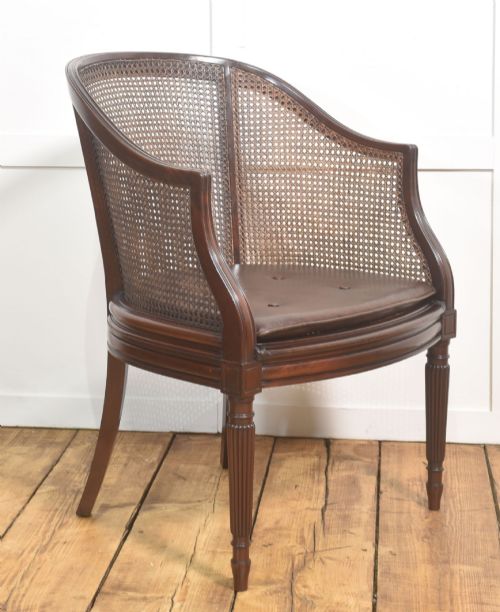
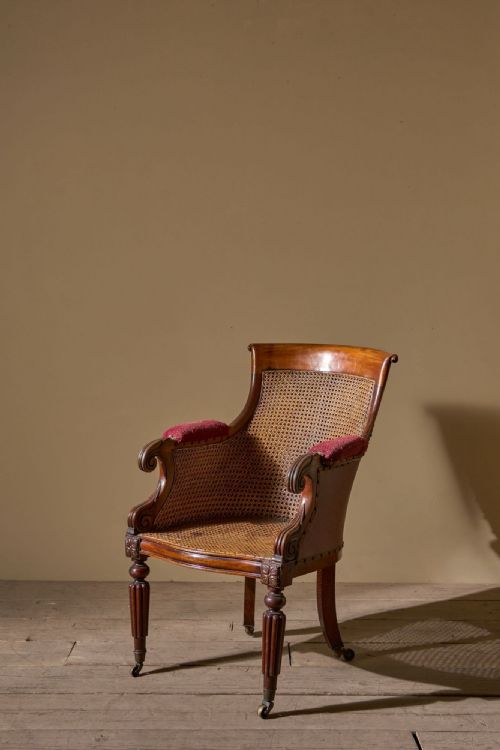
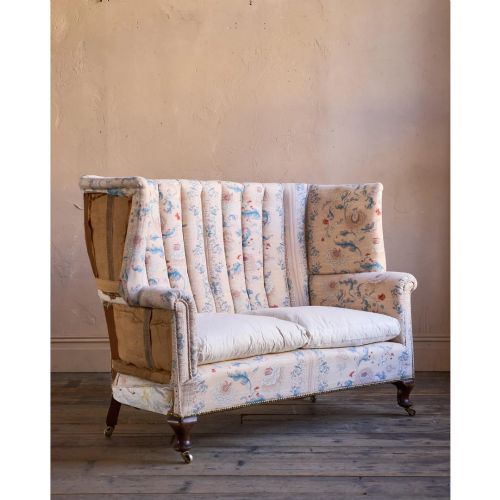
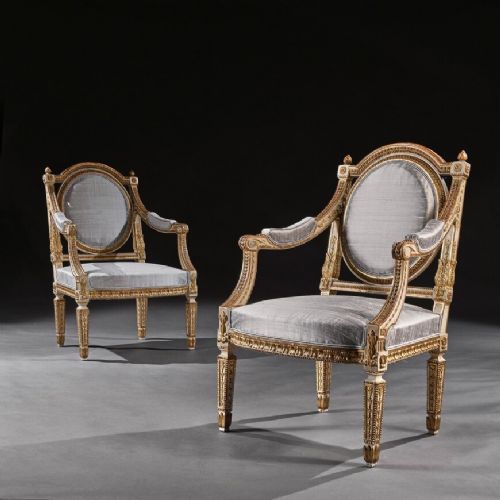
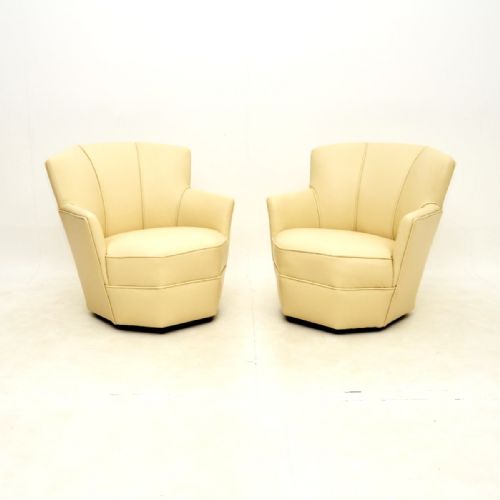
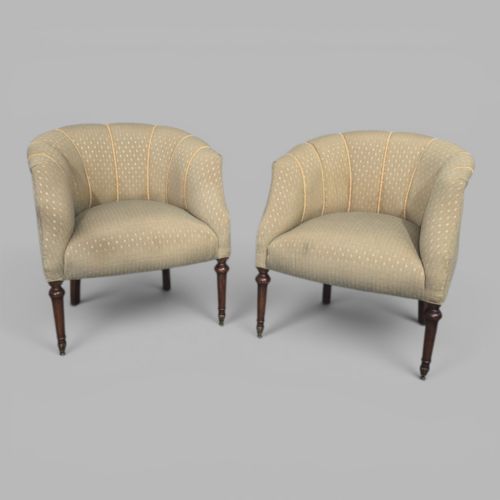
A fluted back armchair is a seating form defined by vertical channels or ridges carved into the wooden frame or stitched directly into the upholstery. These chairs appear across several distinct historical eras, ranging from the Georgian and Victorian periods through the Edwardian era and into the Art Deco style of the nineteen thirties.
Buyers browsing this selection frequently encounter variations known as barrel back armchairs, tub armchairs, and spoon back designs. The physical forms vary from compact nineteenth century walnut pieces to larger upholstered seating created during the early twentieth century.
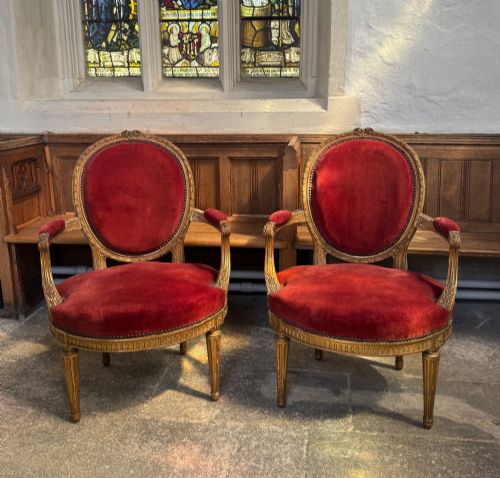
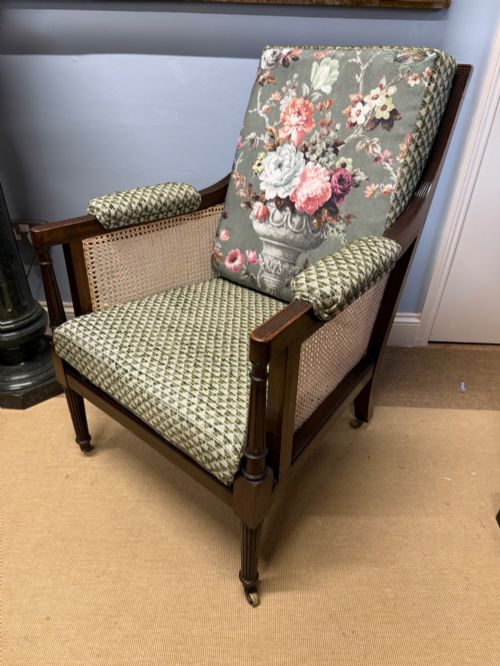
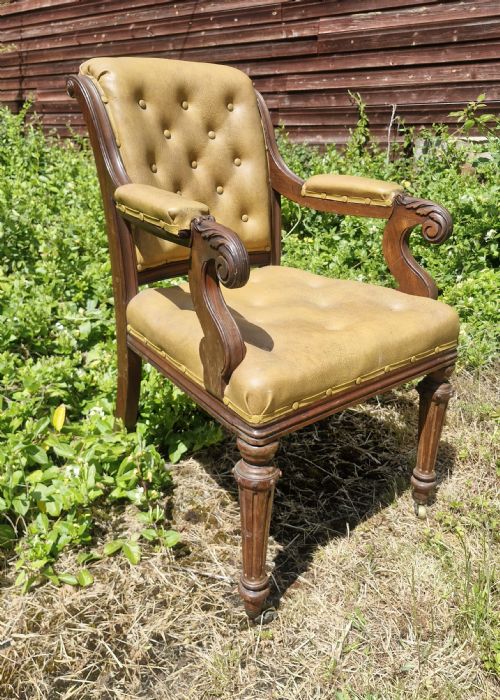
Originating largely within British domestic interiors, these chairs combine supportive curved backs with solid timber frames. The selection on this page shows pieces constructed with diverse coverings including leather, velvet, linen, and standard fabric.
How They Were Made
Makers constructed the foundational frames of these armchairs using traditional timbers such as oak, walnut, and general wood. Skilled artisans shaped the curved profiles and turned the wooden legs by hand, ensuring structural integrity beneath the upholstery.
The characteristic fluting was achieved either through direct woodwork on the frame or via precision stitching in the fabric and leather coverings. Upholsterers filled the interior spaces with traditional stuffing materials before securing the final layers of linen, velvet, or leather.
Retail Price Guide 2026
Typical UK retail prices for fluted back armchair, calculated from the Sellingantiques database of over a million retail prices indexed since 2003. This retail price guide relies exclusively on Sellingantiques data; no external sources or auction records are used, so the figures do not describe the wider market.
The listings here feature oak, walnut, brass, leather, velvet, and linen across Victorian, Edwardian, Georgian, and Art Deco periods.
What Varies in Quality
The distinction between standard examples and superior pieces rests in the execution of the woodwork and the precision of the upholstery channels. Crisp, evenly spaced fluting requires a high level of craftsmanship whether carved into solid timber or gathered in textile.
Material selection also dictates the tier of the piece, with dense hardwoods like walnut and premium coverings such as supple leather or heavy velvet marking out the better examples. Original frames that retain their structural firmness without modification represent the higher end of the range.
The Fluted Back Armchair Glossary
- Fluting
- Vertical parallel grooves carved into wood or stitched into fabric. This technique creates a ribbed textural effect along the backrest.
- Barrel back
- A seating design where the back and arms form a single continuous curved semicircle. It wraps around the sitter for enclosed support.
- Tub armchair
- A fully upholstered chair with low sides that curve upward to form a continuous backrest. The rounded profile resembles an open barrel or tub.
- Spoon back
- An upholstered chair back shaped like the bowl of a spoon, typically featuring a padded centre surrounded by a visible wooden frame.
- Turned legs
- Furniture supports shaped on a lathe to create decorative circular profiles. Makers often embellish these with fluted or reeded details.
Frequently Asked Questions
What is a fluted back armchair?
A fluted back armchair is a traditional seating form characterised by vertical channelled details on the backrest. These vertical ridges provide both structural rigidity and a distinct decorative texture.
Such chairs appear in various historical periods from the Georgian era through to the nineteen thirties, encompassing styles like Art Deco, Edwardian, and Victorian.
How do I identify the period of an armchair?
Dating relies heavily on observing the timber species, leg turning, and overall upholstery silhouette. For instance, nineteenth century examples often feature walnut frames and barrel shapes, whereas nineteen thirties pieces display Art Deco styling.
Examining the construction methods underneath the fabric reveals the age of the foundational joinery.
Where should I place a barrel back armchair?
These chairs suit living rooms, studies, and bedrooms where their curved profiles can be viewed from multiple angles. Their enclosed backs provide intimate seating corners.
Pairing them with a reading lamp or placing them beside a fireplace allows the architectural lines of the fluted back to stand out.
What materials are used for the upholstery?
Upholstery materials span leather, velvet, linen, and standard fabric depending on the era and style of the specific piece. Art Deco and Victorian pieces frequently utilise heavier textiles or hide to accentuate the channelled backrest.
Original coverings sit alongside pieces that have undergone later re-upholstery.