
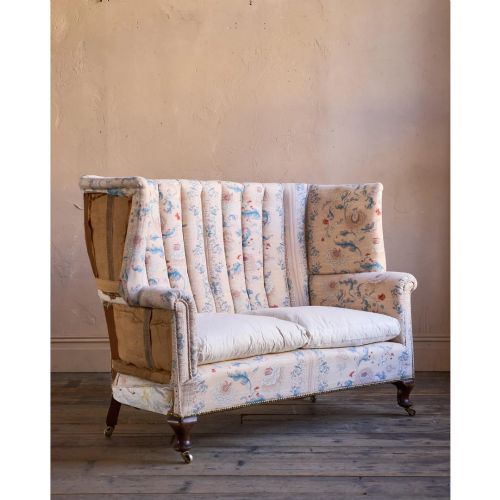


Channel Tufted Armchair
A channel tufted armchair offers deep comfort and structural presence, making it a robust seating choice for any traditional interior.
What They Are
A channel tufted armchair brings distinct vertical upholstery lines and supportive high backs to domestic seating. These pieces span the 19th century, Edwardian era, and the 1920s, showing how seating evolved to prioritise comfort.
The most common forms found here are barrel back armchairs that wrap around the sitter. They appear in Georgian, Victorian, Edwardian, Art Deco, and English Country House styles.
How They Were Made
Framing relies on solid timbers such as mahogany and general wood, providing a sturdy skeleton for the upholstered upper sections. Metal studs sometimes secure the textile edges to the wooden frame.
Makers used fabrics like velvet and general textiles to cover the stuffing and create the characteristic fluted channels. Brass accents and hardware also appear on certain examples.
Retail Price Guide 2026
Typical UK retail prices for channel tufted armchair, calculated from the Sellingantiques database of over a million retail prices indexed since 2003. This retail price guide relies exclusively on Sellingantiques data; no external sources or auction records are used, so the figures do not describe the wider market.
Materials in these listings span timber, mahogany, wood, brass, velvet, textile, fabric, and metal studs.
What Varies in Quality
The precision of the vertical fluting dictates the visual harmony of the piece, with tightly maintained channels showing superior upholstery skill. The choice of visible timber, from rich mahogany to standard wood, shifts the overall elegance.
Structural integrity rests on the original frame construction and how well the barrel back curves have been maintained over decades of use.
The Channel Tufted Armchair Glossary
- Barrel back
- A seating design where the padded backrest curves continuously around into the arms. This form envelops the sitter and provides draught protection.
- Channel tufting
- An upholstery technique featuring vertical stitched tubes packed with padding. It creates distinctive parallel ridges across the backrest.
- Mahogany
- A durable tropical hardwood favoured for quality furniture frames during the nineteenth century. Its deep reddish-brown tone ages gracefully.
- Edwardian
- A stylistic period spanning the early twentieth century before the First World War. Furniture from this era often reinterprets earlier Georgian lines with lighter proportions.
Frequently Asked Questions
What is a channel tufted armchair?
A channel tufted armchair is an upholstered seat characterised by vertical stitched flutes running up the backrest. This design provides both structural rigidity and plush cushioning for the sitter.
Such chairs often feature a curved barrel back configuration that wraps around the body. They emerge across the nineteenth and early twentieth centuries in various period styles.
How do I date a barrel back chair?
Dating relies on examining the timber frame, upholstery techniques, and stylistic clues from the feet and legs. Mahogany frames and specific wood turnings often point toward nineteenth-century origins.
Later Edwardian and Art Deco examples adopt slightly different proportions and textile choices. Comparing these details against known period markers clarifies the age.
Where do I place one in a room?
These armchairs work well as reading chairs in a study or as statement pieces in a living room. Their curved backs look striking when placed away from walls rather than pushed flat against them.
Matching the timber tone to surrounding furniture helps integrate the piece into an English Country House or traditional interior scheme.
What materials are used for the upholstery?
Upholstery commonly involves plush velvet or woven textile fabrics stretched tightly over internal padding. Metal studs occasionally accent the boundaries where fabric meets wood.
Brass elements can also feature in the construction or decorative detailing. The combination of timber framing and soft textiles defines their tactile appeal.