

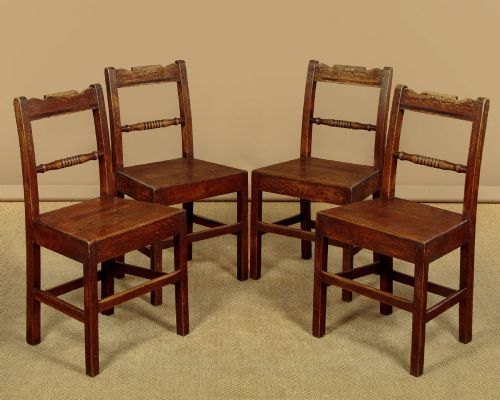
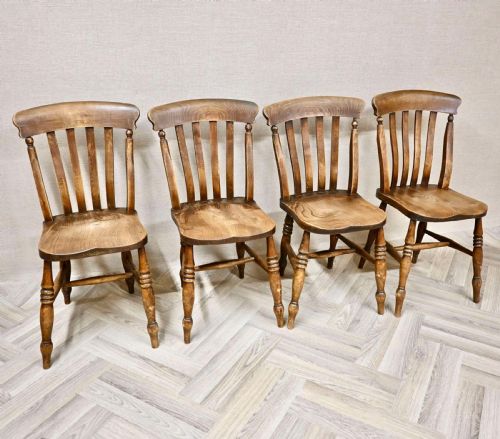
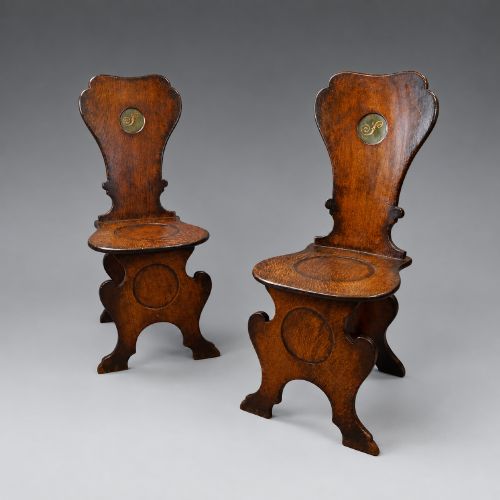
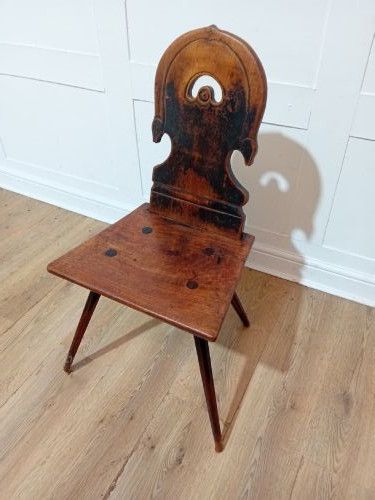

Traditional Oak Side Chairs
Traditional oak side chairs bring honest timber and sturdy construction to daily seating, shaped by centuries of English domestic life.
Traditional Oak Side Chairs
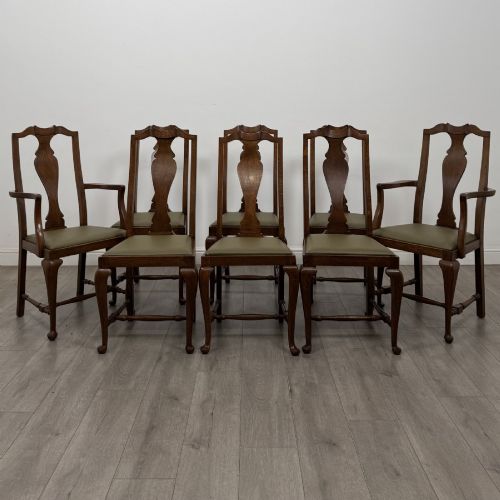
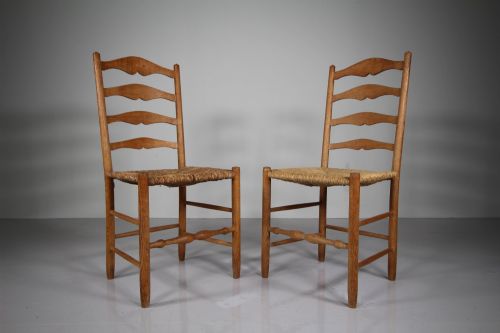
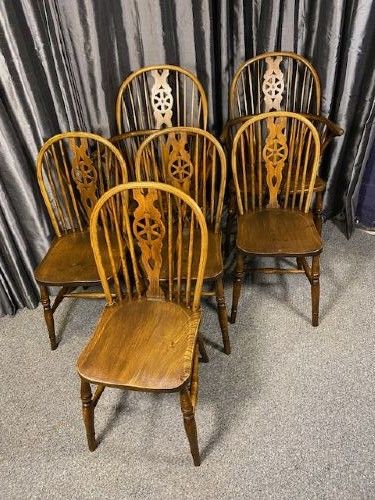
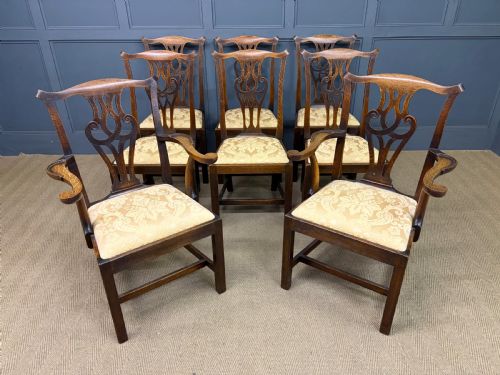
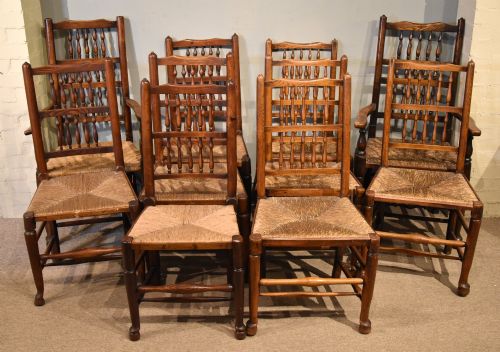
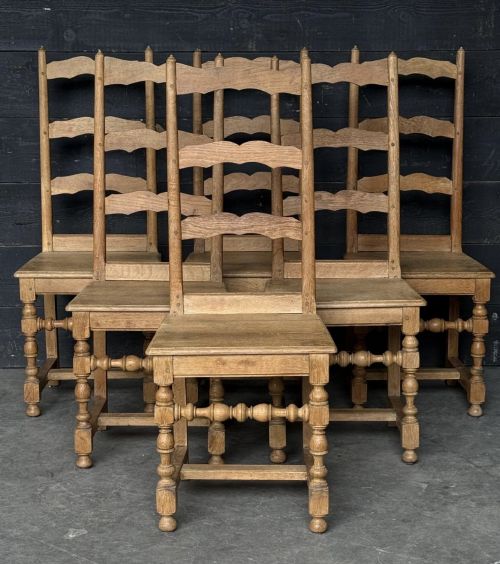
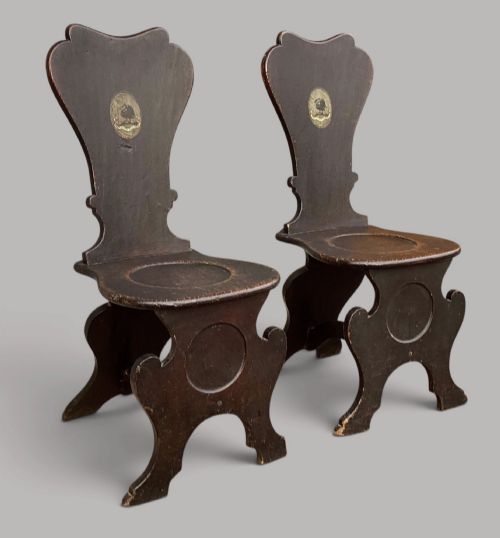
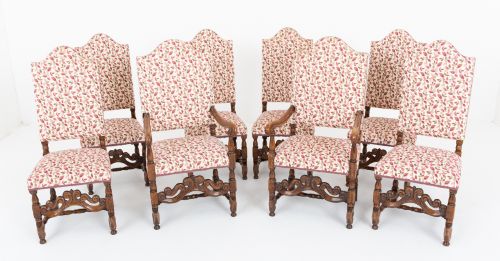
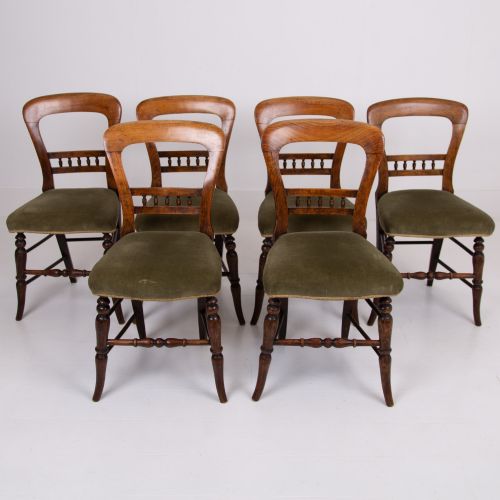
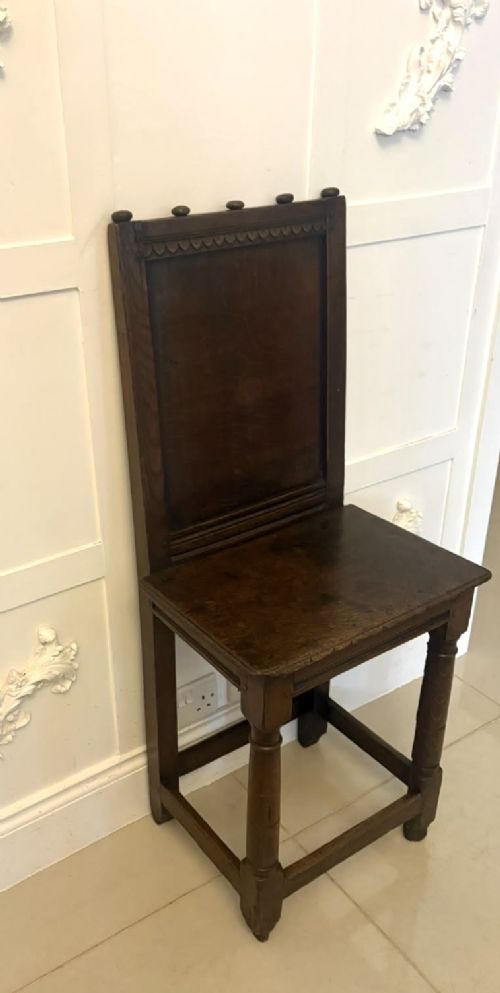
Traditional oak side chairs comprise dining seats, hall furniture, and farmhouse kitchen designs spanning from the eighteenth century through the Edwardian period and the nineteen-thirties. Buyers searching for traditional oak side chairs will encounter sturdy regional forms such as Windsor country kitchen chairs, ladder backs, and upholstered dining sets.
The selection ranges from simple vernacular spindle backs to revival styles influenced by the Jacobean, Gothic, and Queen Anne aesthetics. Many examples survive in matched sets or assembled harlequin groups gathered over time for domestic use.
Origins stretch across English country workshops, Scottish makers, and Welsh carpentry traditions, utilising local timbers to create robust seating intended for heavy daily service. These forms prioritise functional strength and straightforward joinery over delicate ornament.
Materials and construction methods
Makers built the primary frames of traditional oak side chairs using seasoned English oak, frequently supplemented with elm for seats and beech for turned spindles. Secondary woods and framing elements relied on the local availability of timber in regional workshops.
Joinery depended on traditional mortise and tenon joints, bobbin turning, and steam-bending for curved Windsor backs. Seat surfaces often featured carved solid wood, woven rush, or leather and fabric upholstery secured with brass tacks.
Traditional Oak Side Chairs Retail Price Guide 2026
Typical asking prices for traditional oak side chairs among the pieces listed under this phrase on Sellingantiques today, from the lower quarter to the upper quarter. They describe what is for sale here now, not the wider market.
Several Windsor chairs bear the scars of nineteenth-century kitchen hearths, where cooks sat close to the fire tending bubbling pots.
Distinctions in construction and finish
Quality rests on the integrity of the original joinery, the thickness of the timber, and the survival of the genuine surface patina developed through long use. Sets that retain their original matched frames and unblemished structural pegs command greater attention than those altered or excessively restored.
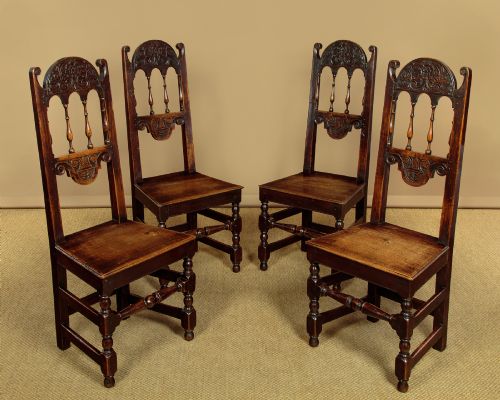
The finesse of hand-carving on regional pieces, such as Scottish or Jacobean revival examples, separates standard utility seating from finer artisan work. Upholstered variants depend on the quality of the underlying frame and the historical appropriateness of the covering material.
The Traditional Oak Side Chairs Glossary
- Side chair
- A chair without arms, designed primarily for dining tables or secondary placement around a room. These form the majority of traditional seating arrangements.
- Windsor chair
- A chair built with a solid wooden seat into which the legs and back spindles are separately tenoned. Regional variations include comb backs and low-back kitchen designs.
- Bobbin turning
- A form of woodturning characterised by a series of rounded, spool-like shapes carved along the length of a stretcher or leg. This technique appears frequently on seventeenth-century revival and nineteenth-century vernacular pieces.
- Harlequin set
- A collection of chairs that share a similar period, style, or material but were not originally manufactured together as a single batch. Dealers assemble these groups to match traditional dining table requirements.
- Ladder back
- A chair back featuring horizontal wooden slats between the upright stiles. These vernacular country chairs often incorporate rush or wooden-slat seats.
Traditional Oak Side Chairs: Frequently Asked Questions
What defines a traditional oak side chair?
Traditional oak side chairs are un-armed seating pieces constructed primarily from oak timber, following historical English joinery and vernacular design traditions. They encompass regional farmhouse chairs, formal dining sets, and decorative hall chairs.
These pieces derive their character from solid wood construction, visible grain, and regional building methods developed across the eighteenth, nineteenth, and early twentieth centuries.
How do I care for antique oak chairs?
Antique oak benefits from stable indoor humidity and occasional application of traditional beeswax to nourish the timber and preserve the historic surface finish. Avoid placing them near direct heat sources or in strong sunlight.
Routine dusting with a soft, dry cloth prevents grime accumulation without risking the aged patina built up over decades of domestic use.
Are harlequin sets authentic?
Harlequin sets consist of individual chairs sharing common stylistic traits, materials, and periods that have been gathered together into a cohesive dining group. This practice allows buyers to acquire larger seating sets that match visually.
While not originally manufactured as a single unified batch, harlequin sets reflect historical collecting habits and practical dining requirements.
How can I tell the period of an oak chair?
Dating relies on observing construction marks, tool traces, timber selection, and stylistic details such as turning patterns or upholstery methods. Georgian and Victorian pieces often show distinct joinery signatures compared to Edwardian or later revival versions.
Examining the underside of the seat and the wear patterns on the feet provides further clues regarding the age and origin of the chair.