

English Country Kitchen Chairs
English country kitchen chairs are sturdy domestic seats crafted from native timbers, offering a functional slice of rural history for daily use.
English Country Kitchen Chairs
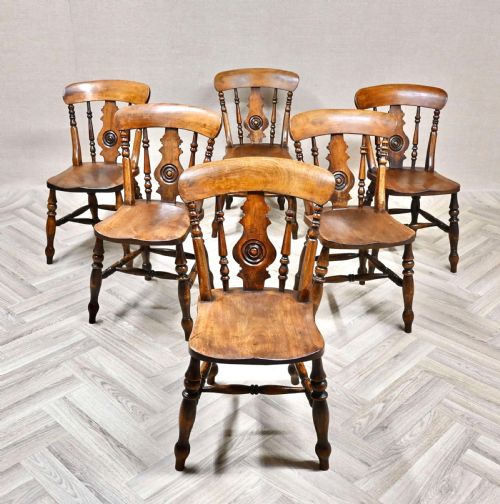
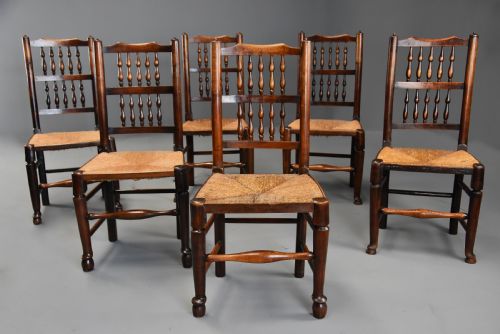
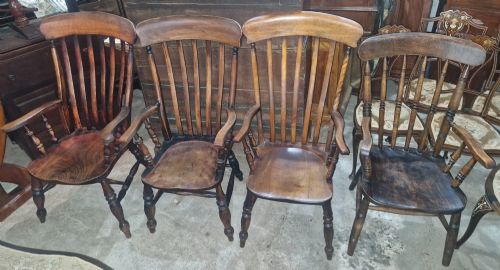
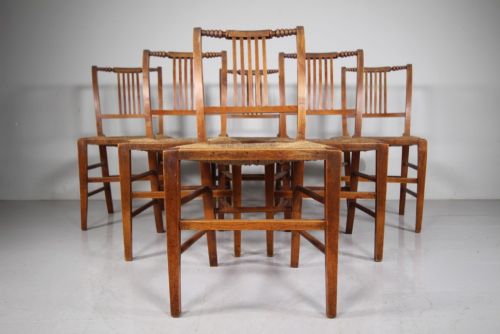
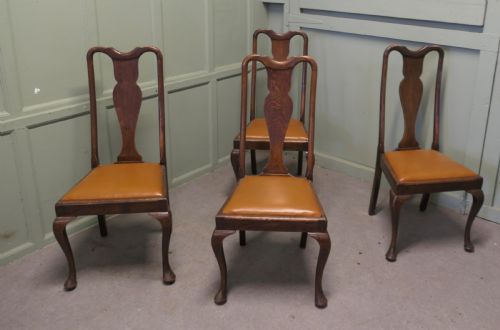
English country kitchen chairs comprise dining chairs, armchairs, and side chairs made primarily during the nineteenth and early twentieth centuries. These seats span Victorian, Edwardian, and earlier vernacular traditions rooted in rural domestic life.
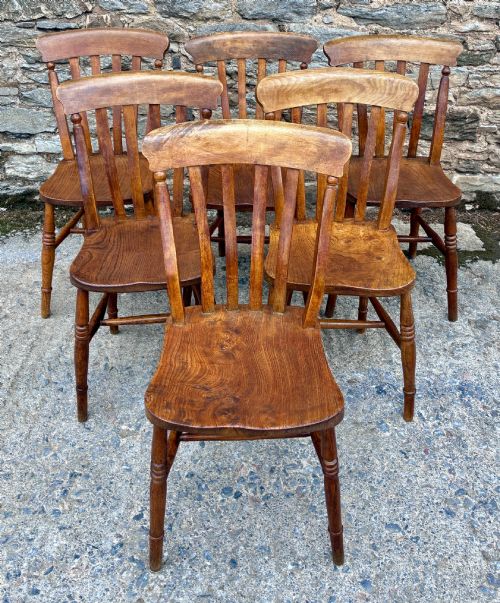
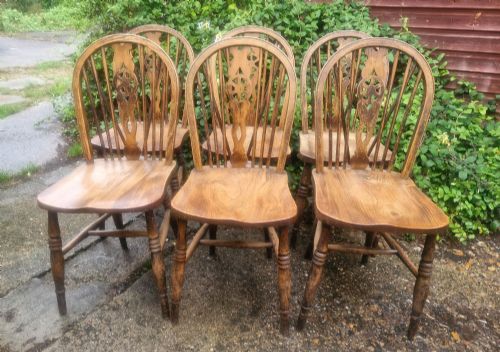
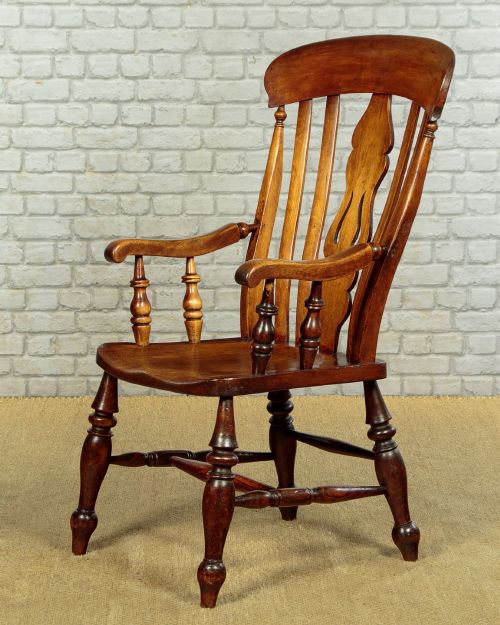
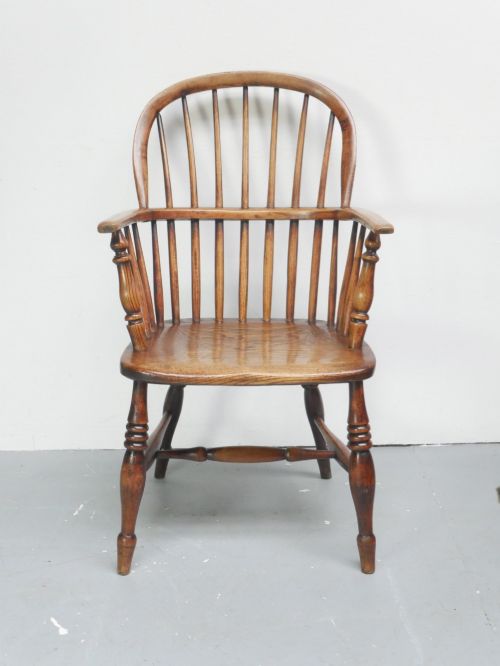
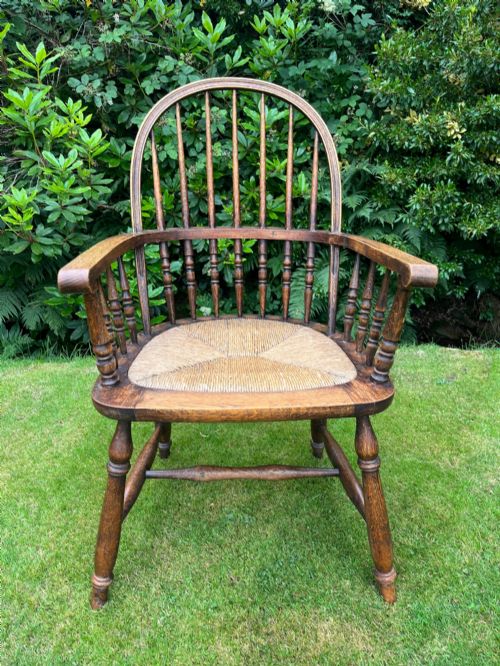
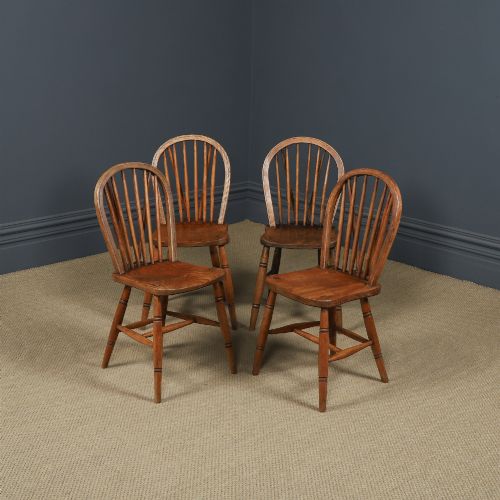
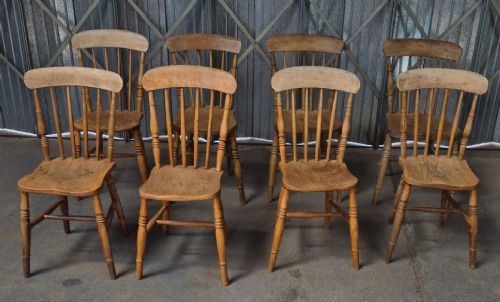
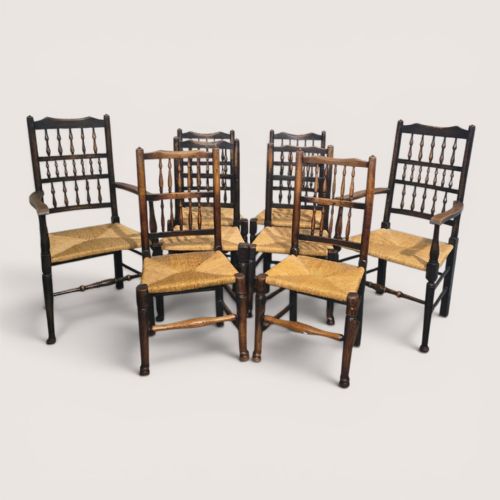
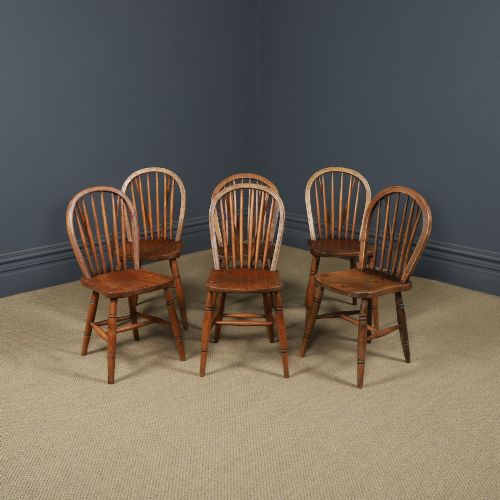
The most common forms encountered are Windsor chairs, ladderbacks, and spindlebacks. These pieces appear in single examples, pairs, or matched sets suitable for dining tables.
Makers utilised regional variations, such as Thames Valley styles or Lancashire formats, resulting in distinct local characteristics.
What Varies in Quality
Quality rests on the integrity of the timber combination and the depth of the seat carving. Deeper, sculpted elm seats demonstrate superior initial craftsmanship compared to flat boards.
The balance of the turning and the tightness of the component joints dictate structural survival. Pieces retaining their original stretchers, such as crinoline stretchers on early Windsor armchairs, hold higher integrity.
Patina and surface wear tell the history of use. Original timber surfaces untouched by excessive stripping preserve the visual depth that collectors value.
English Country Kitchen Chairs Retail Price Guide 2026
Typical asking prices for english country kitchen chairs among the pieces listed under this phrase on Sellingantiques today, from the lower quarter to the upper quarter. They describe what is for sale here now, not the wider market.
Many a nineteenth-century farmhouse chair bears the subtle depression of generations sitting down to supper.
Worksop
The English Country Kitchen Chairs Glossary
- Windsor chair
- A wooden chair built with a heavy solid seat into which the legs and back spindles are separately inserted. This design creates a robust hybrid of stick construction and plank seating.
- Lathe back
- A chair back incorporating flat, vertically arranged wooden slats shaped on a lathe. These slats offer rigid support compared to thin rounded spindles.
- Wheelback
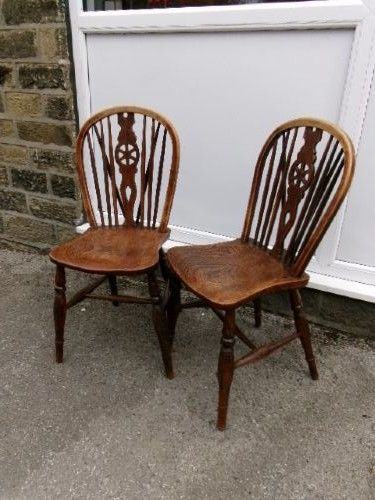
- A Windsor chair variant featuring a pierced wooden splat carved in the shape of a wagon wheel. This decorative motif became popular during the nineteenth century.
- Crinoline stretcher
- A curved under-framing brace connecting the legs of an armchair. It provides lateral reinforcement and resembles the shape of a mid-nineteenth-century hooped petticoat.
- Rush seat
- A seating surface woven from dried marsh rushes. This technique provides a yielding texture on traditional ladderback chairs.
English Country Kitchen Chairs: Frequently Asked Questions
How do I identify a Windsor chair?
A Windsor chair is distinguished by its heavy solid wood seat, which acts as the central anchor for the legs below and the back spindles above. Unlike framed chairs, the structural components are tenoned directly into the plank.
This method produces a resilient frame that accommodates varied back designs like hoops, bows, and wheelbacks.
Can I mix these chairs around a dining table?
Mixing vernacular seating is an established tradition in country interiors. Harlequin sets and matched groups allow different regional forms, such as spindlebacks and ladderbacks, to sit together.
Unified materials like elm seats and ash frames provide visual consistency across mixed chair types.
What woods were used for these chairs?
Makers relied on native British hardwoods that were locally available. Elm was chosen for seats because its interlocking grain resisted splitting when sat upon.
Ash and beech provided strong, pliable timber for steam-bent hoops and turned legs.
How should I care for antique wood seats?
Maintain the timber by keeping chairs away from direct heat sources and sudden humidity shifts. Regular application of suitable wax feeds the dry wood and preserves the historical surface.
Avoid harsh chemical cleaners that strip the accumulated patina built up over generations.