

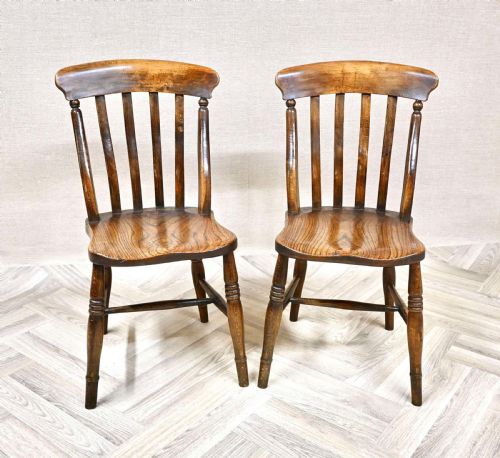
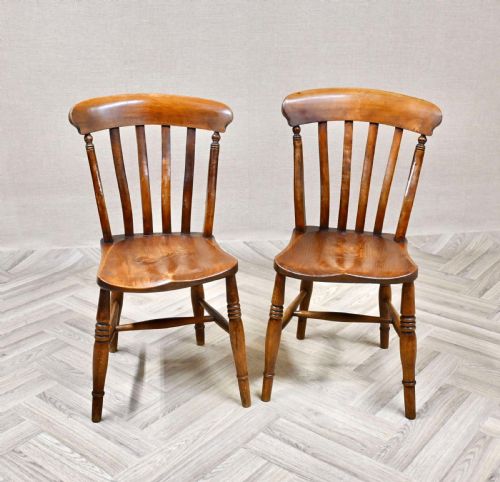
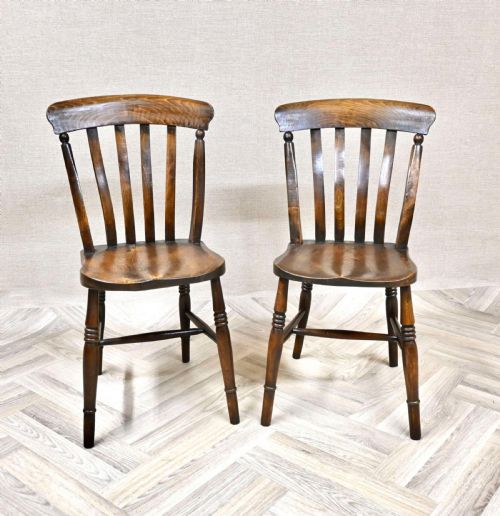
Traditional Wooden Kitchen Chairs
Traditional wooden kitchen chairs are honest working seats shaped by country makers using native timbers like elm, beech, and ash.
Traditional Wooden Kitchen Chairs
Traditional wooden kitchen chairs are practical seating forms designed for daily domestic use in rural and farmhouse settings. When you search for traditional wooden kitchen chairs, you encounter various utilitarian designs spanning the Georgian, Victorian, and Edwardian periods.
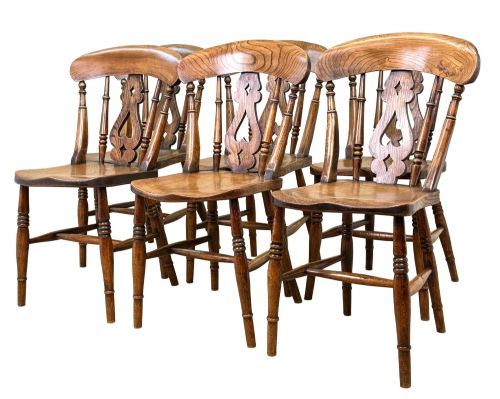
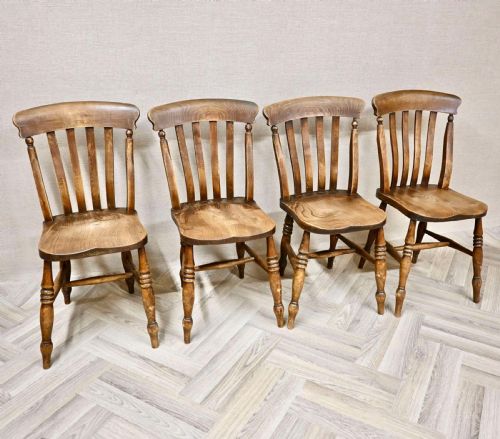
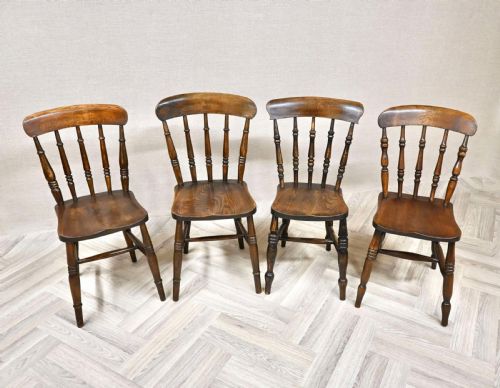
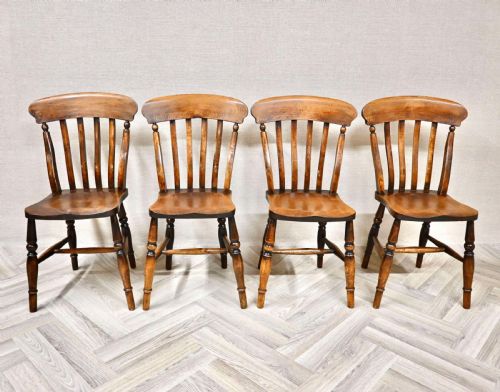
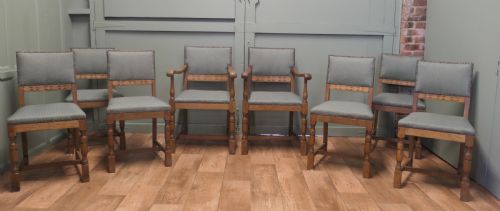
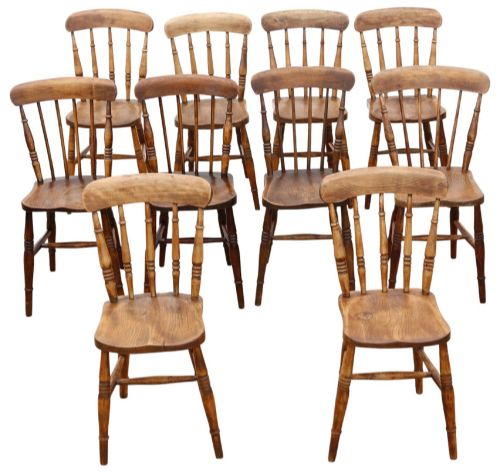
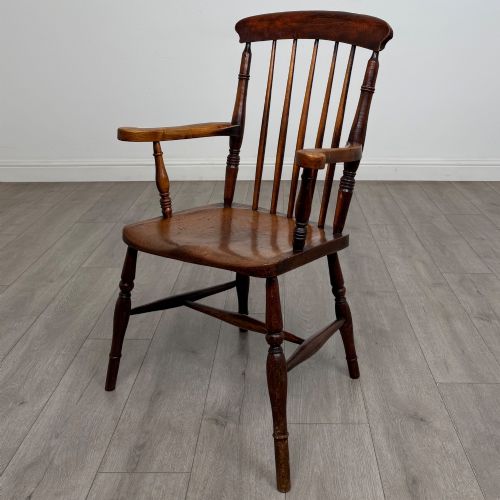
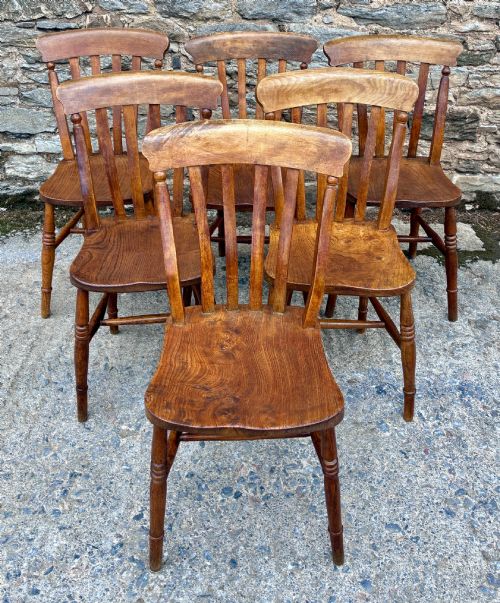
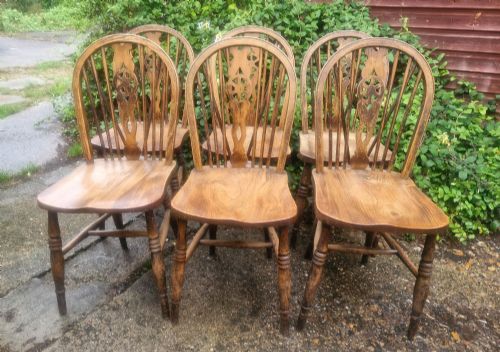
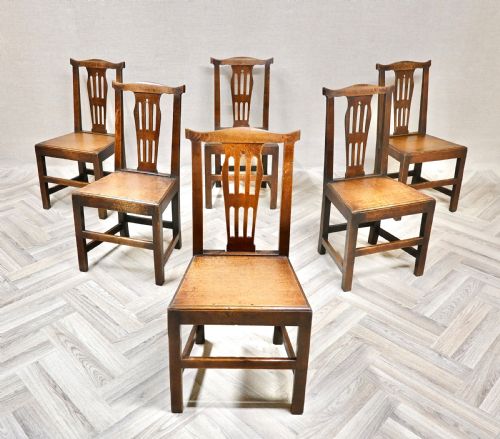
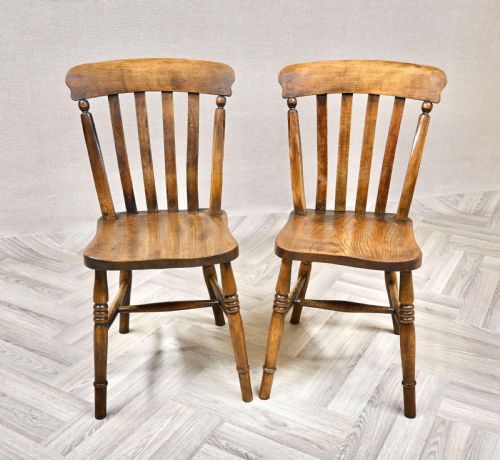
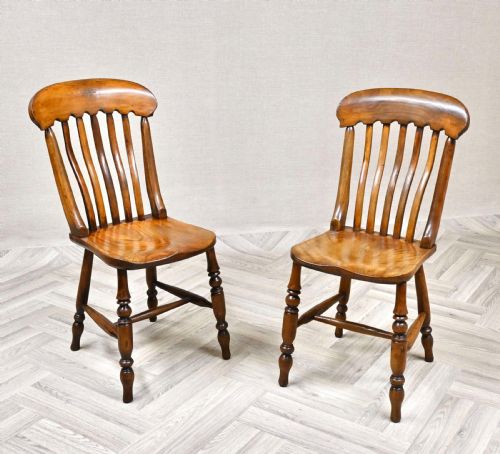
The selections available here rely heavily on regional country styles, including Windsor armchairs, lathbacks, wheelbacks, and stick backs. These pieces range from single armchairs to substantial harlequin dining sets gathered over generations.
Most examples originate from English rural traditions, with specific regional variations such as Thames Valley or Welsh forms appearing frequently. Makers utilised sturdy native hardwoods to build seats that survive centuries of heavy household use.
Materials and construction methods
Makers constructed traditional wooden kitchen chairs using a combination of solid timbers chosen for specific structural properties. Elm frequently formed the scooped saddle seats because its interlocking grain resisted splitting under pressure.
Turned beech, ash, and oak provided sturdy spindles, legs, and bow frames for Windsor and stick back designs. Rush seating also appears on specific rustic dining chairs, woven tightly over wooden frames.
Traditional joinery relied on wedged tenons and steam-bent components to lock the uprights securely into the thick wooden seats. This direct method of construction created resilient joints that tightened under the weight of the sitter.
Listings feature pieces spanning the Georgian, Victorian, and Edwardian eras, constructed primarily from elm, beech, oak, and ash.
Judging quality in country seating
Quality in traditional wooden kitchen chairs rests on the harmony of proportions and the integrity of the timber. Better examples display carefully sculpted elm seats with deep, comfortable hollows rather than flat, utilitarian boards.
The turning of the spindles and legs reveals the skill of the original country carpenter, with crisp details distinguishing superior work from plain production. Matched sets maintained over decades carry a visual cohesion that elevates them above assembled harlequin groups.
Wear patterns tell a silent story of age and use, where smooth patination on the arms and crest rails indicates genuine history. Retaining original wedged construction without excessive modern intervention marks the best surviving specimens.
The Traditional Wooden Kitchen Chairs Glossary
- Windsor chair
- A wooden chair built with a thick solid seat into which the legs and back sticks are directly tenoned. These regional classics formed the backbone of rural English seating.
- Lathback
- A chair back featuring horizontal wooden slats or laths riveted between the upright posts. This sturdy variation offered robust support for daily kitchen use.
- Harlequin set
- A collection of dining chairs that share a general style and period but vary slightly in detail, having been gathered together over time. Such groups offer character rather than strict uniformity.
- Wheelback
- A Windsor chair variation featuring a pierced splat carved in the shape of a spoked carriage wheel. This decorative motif gained immense popularity during the Victorian era.
- Stick back
- A chair constructed with multiple slender turned spindles forming the backrest rather than a solid central splat. The design distributes weight evenly and simplifies construction.
Traditional Wooden Kitchen Chairs: Frequently Asked Questions
How do I care for wooden kitchen chairs?
Feed the dry timber periodically with traditional beeswax to maintain a natural lustre and prevent the wood from splitting.
Keep these chairs away from direct heat sources and sudden temperature shifts to protect the historic joints.
Are these chairs suitable for daily dining?
Solid timber country chairs were engineered precisely for heavy daily domestic labour around the farmhouse table.
Their robust construction handles everyday family meals with ease, provided the structural joints remain tight.
What is a harlequin set?
A harlequin set brings together individual chairs sharing similar periods, materials, and regional styles rather than originating from one workshop.
This method allows buyers to acquire a larger dining group with matching visual weight and diverse artisan details.
How do I spot a Thames Valley chair?
Thames Valley workshop pieces often display refined turning, highly figured elm seats, and distinctive pierced splats.
Regional makers in these southern English counties produced chairs with notable elegance compared to coarser northern varieties.