



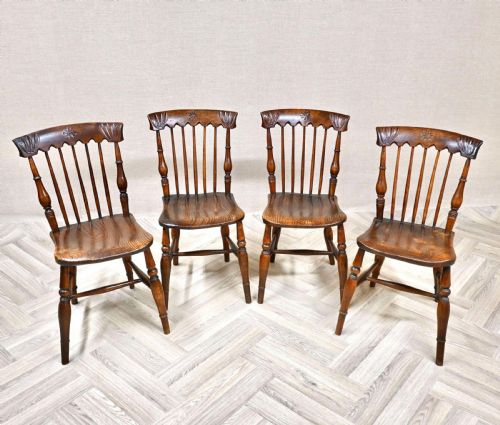
Dark Wood Kitchen Chairs
These dark wood kitchen chairs are honest timber seating built for everyday domestic life, offering enduring warmth and character to any interior.
What these pieces are
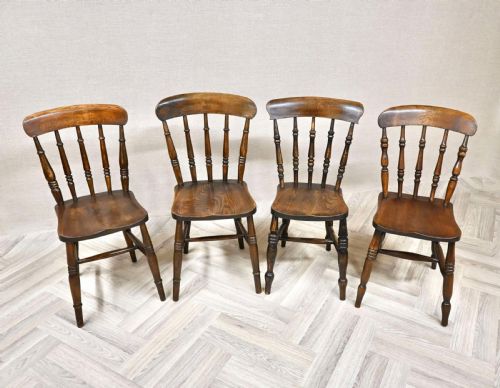
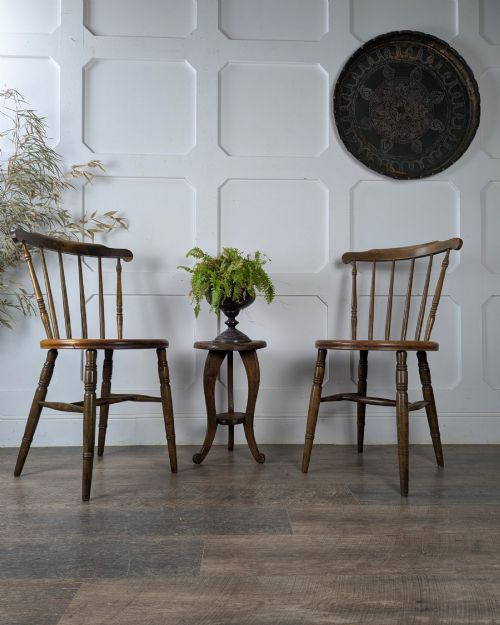
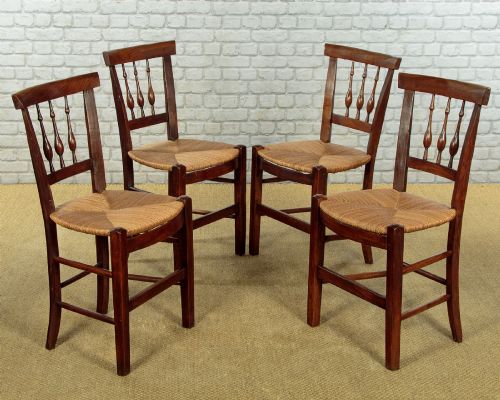
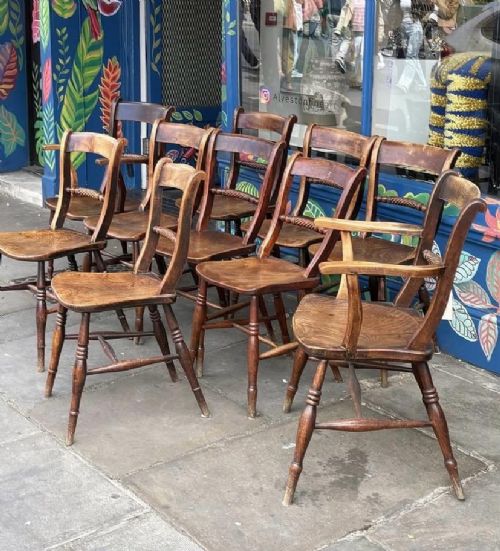
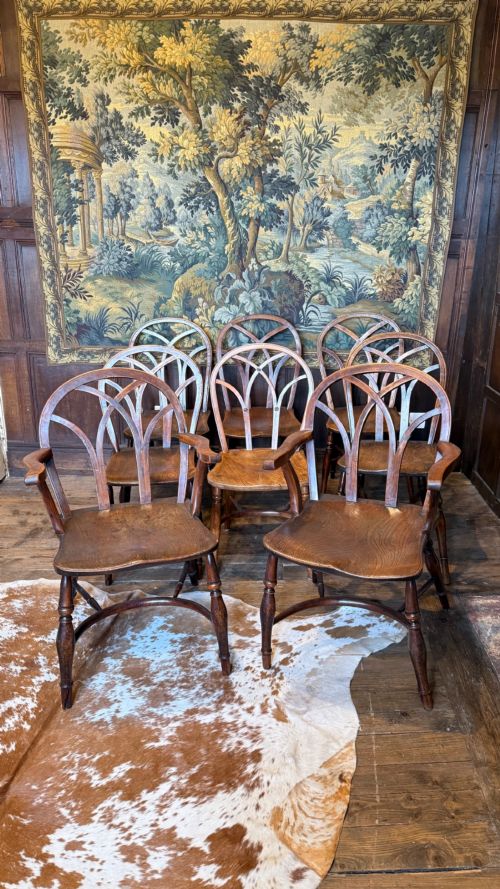
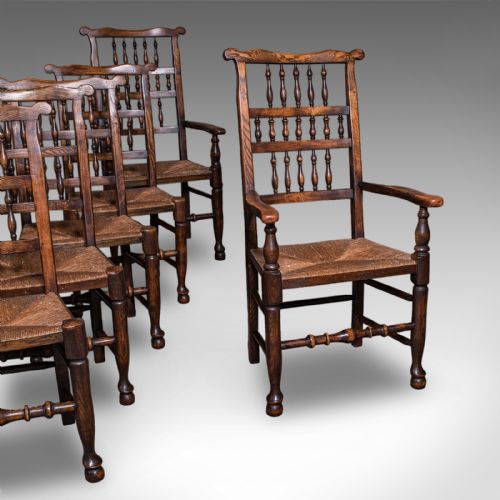
When you search for dark wood kitchen chairs, you encounter robust seating designed for daily use rather than formal display. The selection here spans the nineteenth century up to nineteen twenty, taking in styles such as Victorian country, English country, and Victorian farmhouse.
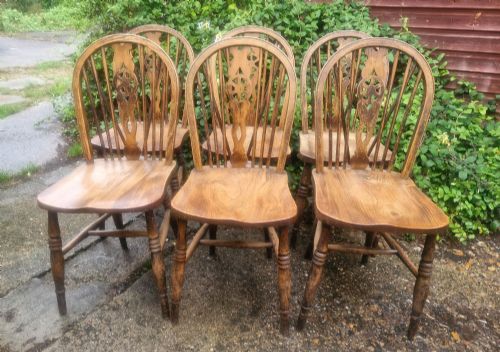
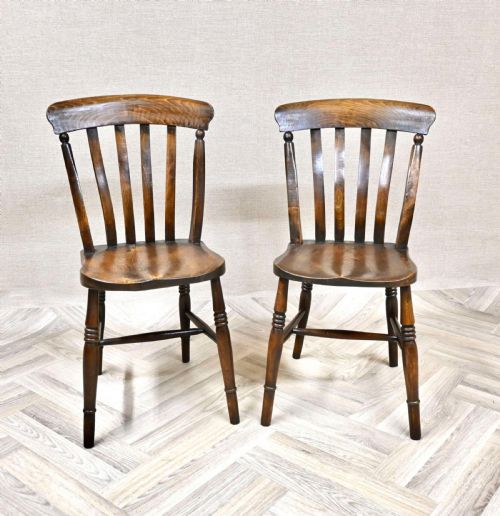
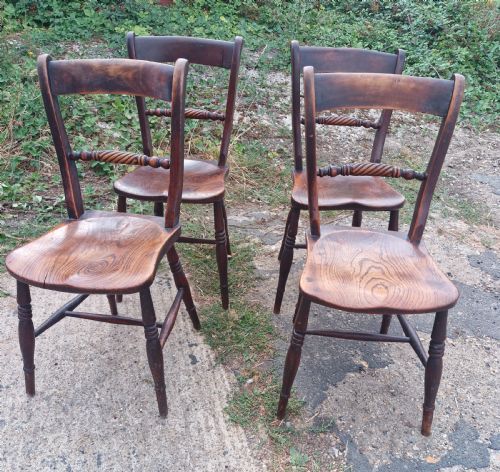
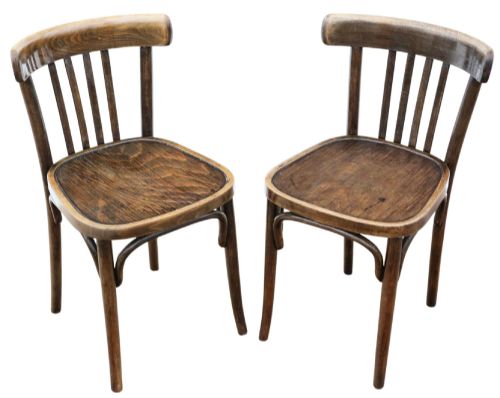
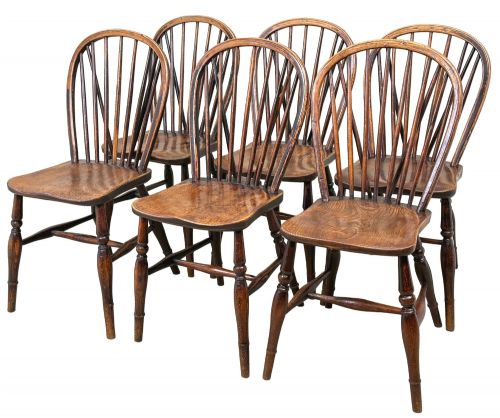
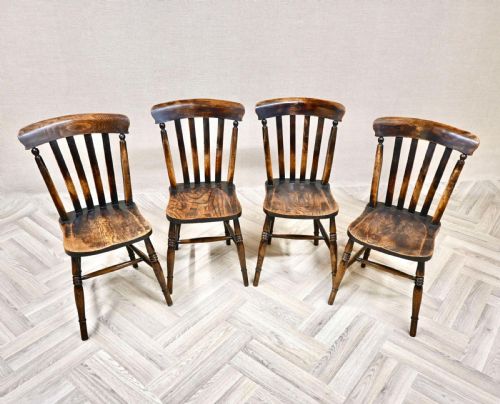
The forms you are most likely to meet on this page are dining chairs configured as sets or pairs, including Windsor wheel back and lathback designs. These items reflect the utilitarian needs of past households, fashioned from substantial native timbers.
Originating from British domestic contexts, these kitchen dining chairs display the straightforward construction methods characteristic of regional furniture makers. Their dark wood patination comes from decades or centuries of use and exposure in working interiors.
How they were made
Makers utilised a combination of native hardwoods such as elm, beech, oak, yew, and ash to construct these solid timber chairs. Different parts of the chair required specific timbers, with resilient woods chosen for spindles, legs, and seats.
Construction relied on traditional joinery techniques, bringing together turned components, steam-bent elements, and solid hardwood seats. The grain and natural figure of the timber remain visible beneath the darkened surface patination.
Retail Price Guide 2026
Typical UK retail prices for dark wood kitchen chairs, calculated from the Sellingantiques database of over a million retail prices indexed since 2003. This retail price guide relies exclusively on Sellingantiques data; no external sources or auction records are used, so the figures do not describe the wider market.
Many of these sturdy kitchen chairs bear the subtle indentations of nineteenth-century sitters who sat rather too firmly.
What varies in quality
Quality in these chairs rests upon the selection of timber and the harmony of the original components. Finer examples show thoughtful shaping to the solid seats and well-turned spindles that maintain their structural integrity.
The depth of the natural wood patination and the preservation of original surfaces distinguish superior items from those altered over time. Consistency across a set of dining chairs also dictates the standing of the pieces within the range.
The Dark Wood Kitchen Chairs Glossary
- Windsor
- A traditional chair type featuring a solid wooden seat into which the legs and back spindles are wedged directly. This design provides robust stability.
- Wheel back
- A Windsor chair variation featuring a pierced splat carved or shaped in the outline of a spoked wagon wheel. It is a hallmark of nineteenth-century country seating.
- Lathback
- A chair back constructed from horizontal wooden slats or laths secured between upright posts. This style offers a supportive and sturdy rest.
- Patina
- The surface sheen and darkening developed by timber over long periods through handling, polishing, and ageing. It reveals the true history of the material.
- Hardwood
- Timber derived from broadleaved trees, including elm, beech, oak, yew, and ash. These dense woods supplied the durable structure required for kitchen furniture.
Frequently Asked Questions
What periods do these chairs come from?
The available selection spans the nineteenth century, including specific dates like eighteen fifty, eighteen eighty, and nineteen twenty.
These dates place the furniture firmly within the Victorian era and the early twentieth century, reflecting traditional country craftsmanship.
Which woods were used for making them?
Makers constructed these chairs from a variety of solid hardwoods including elm, beech, oak, yew, and ash.
Different timbers were often combined within a single chair to utilise the specific strength and flexibility of each wood type.
Are these chairs sold as sets?
Listings include individual pairs as well as larger groupings, such as sets of four, five, or six matching dining chairs.
Buying a matched set provides a cohesive look for a dining table while preserving the historical character of the room.