
Antique Kitchen Seating
Antique kitchen seating brings heavy elm, ash and beech stools, benches and Windsor chairs into daily service around the hearth.
Antique Kitchen Seating
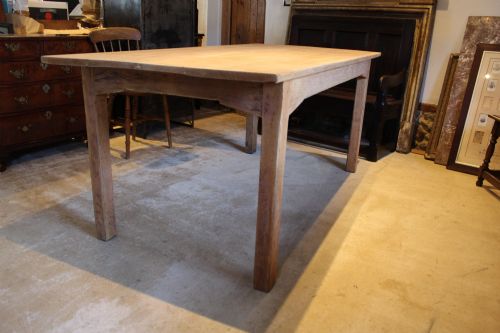
Antique kitchen seating comprises the heavy wooden chairs, stools, benches and dining tables that fitted out domestic hearths and farmhouse dining rooms across the nineteenth and early twentieth centuries. These pieces were built for utility rather than display, designed to withstand daily service in domestic and agricultural settings.
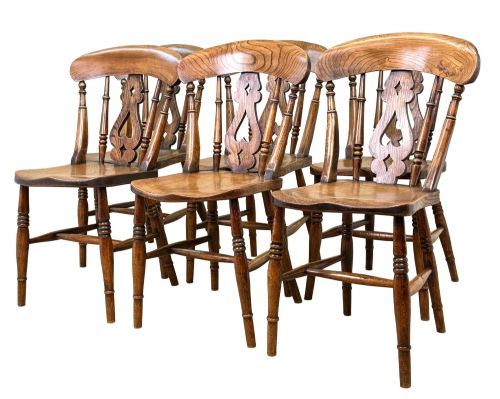
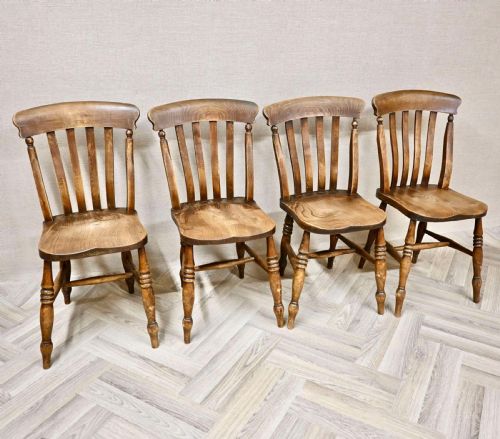
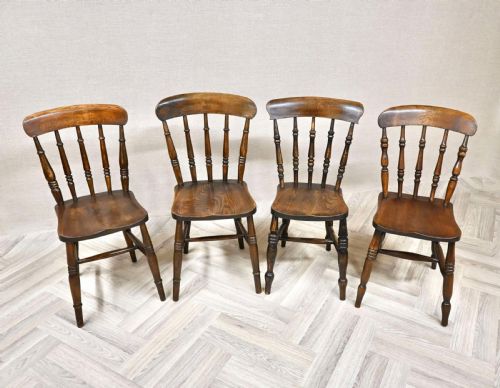
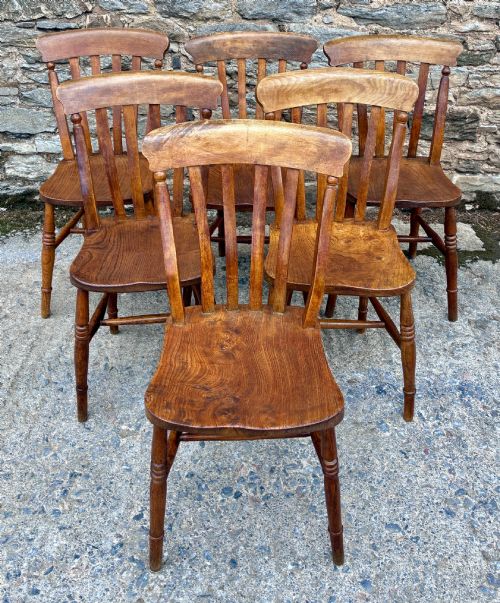
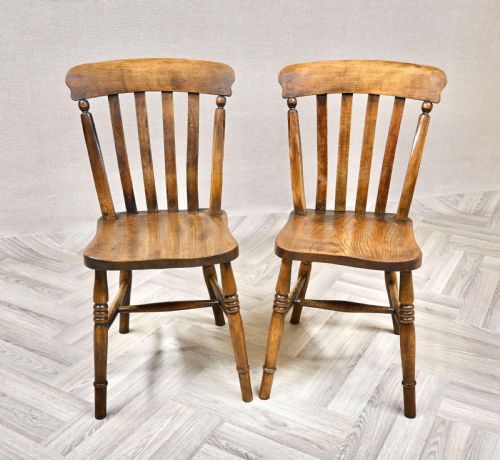
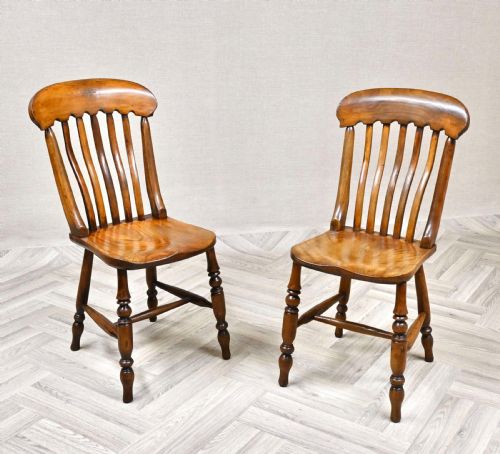
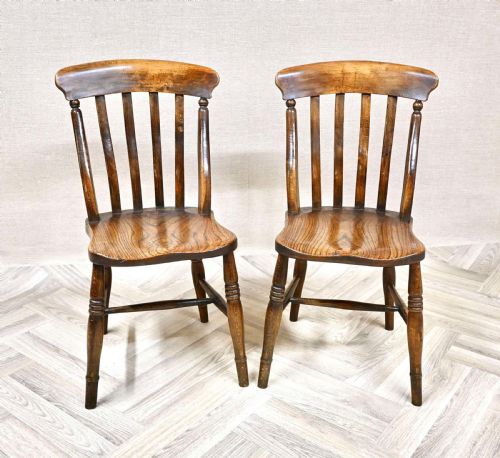
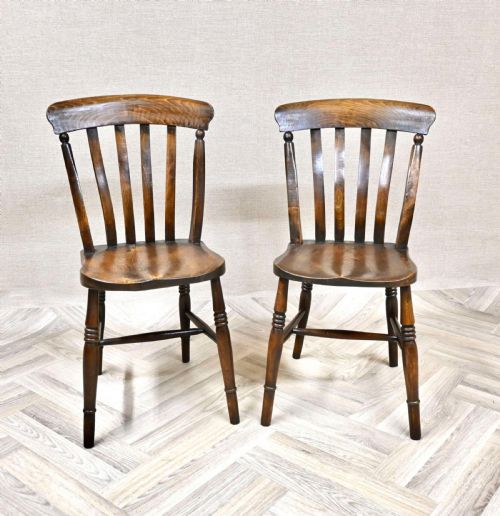
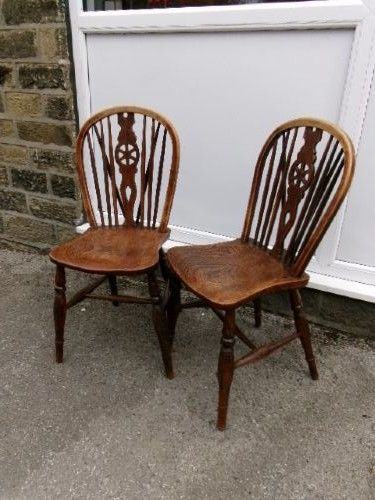
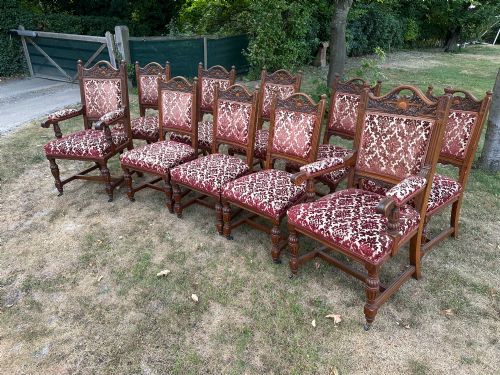
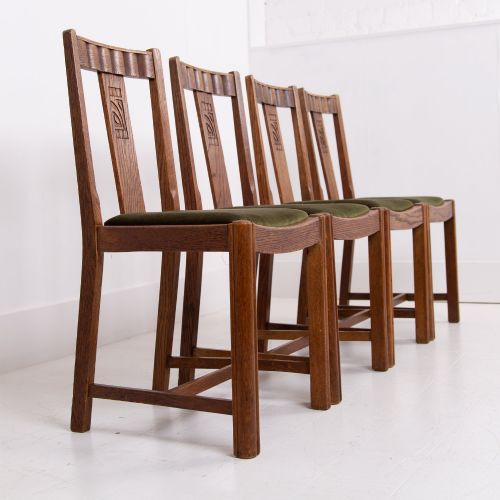
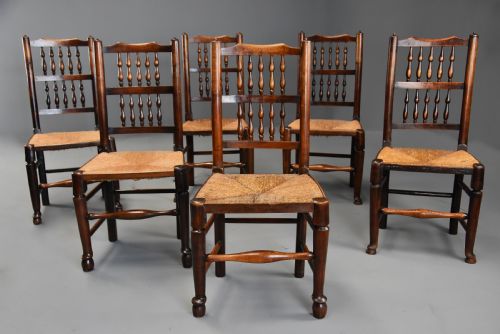
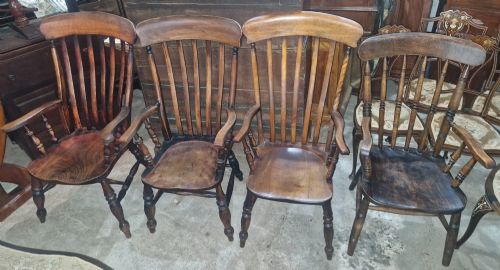
The version most commonly met on this page is the Windsor chair, alongside ladderbacks, lathe backs and rush seat stools originating from Victorian, Edwardian and Georgian periods. Sets range from individual carvers and pairs to matched groupings of four, six and ten.
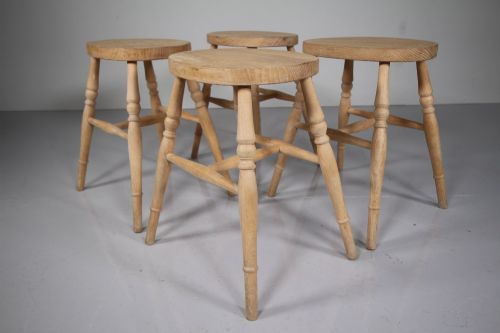
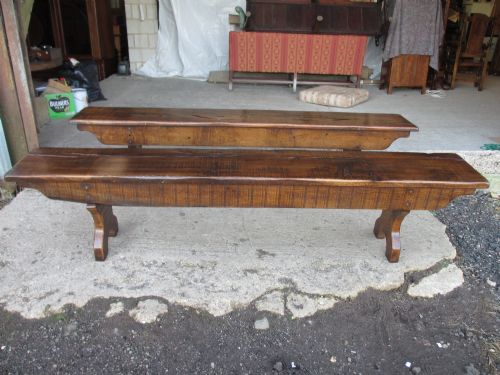
Makers utilised native timbers such as elm, ash and beech, shaping them into robust frames with saddle seats and spindle backs. Regional variations across English country workshops produced distinct regional styles, from high stools to long pine benches.
How they were made
Craftsmen built these chairs using solid native timbers, pairing elm for resilient saddle seats with ash or beech for flexible spindles and legs. Turnery lathes shaped uprights and stretchers, whilst steam-bending formed continuous hoops for stick-back designs.
Joinery relied on wedge-tenon and wedged mortise joints driven straight through the seat plank for maximum strength under heavy loads. Rush seating was woven tightly around wooden frames to provide resilient support without rigid timber panels.
Penny chairs earned their nickname from the small coin-sized roundels often stamped into their wooden seats by rural makers.
What varies in quality
Quality rests in the selection of timbers and the integrity of the original joints, where heavy elm seats and thicker ash spindles endure decades of hard use without looseness. Finer examples retain deep surface patination built up through centuries of friction and polish.
Thonet Yugoslavia·Dinco
The Antique Kitchen Seating Glossary
- Windsor chair
- A wooden chair constructed with a solid timber saddle seat into which the legs and back spindles are separately bored and wedged. These chairs form the core of traditional English country seating.
- Rush seat
- A seating platform woven from dried marsh rushes around a wooden frame. This technique yields a flexible, supportive base common in farmhouse chairs and stools.
- Lathe back
- A chair back featuring flat horizontal slats turned or shaped on a lathe. They provide sturdy back support in nineteenth-century kitchen seating.
- Carver
- An armchair designed with low wooden armrests, often used at the head of a dining table. They share matching design motifs with companion side chairs in larger sets.
- Patina
- The surface sheen and colour developed on wood through decades of handling, wax application and wear. A rich patina indicates long survival without harsh stripping.
Antique Kitchen Seating: Frequently Asked Questions
How do I spot a true Windsor chair?
Look for a thick solid wooden seat, usually elm, where the legs and back spindles pass directly through bored holes and are wedged from above. This distinct method of construction separates genuine Windsor forms from standard framed chairs.
Check for individual hand-turned spindles and a hoop or comb back shaped to fit the sitter. Variations in turning thickness and grain patterns confirm individual workshop production.
Are rush seats durable for daily use?
Rush seating is surprisingly resilient when kept dry and maintained with occasional care, lasting decades under normal dining conditions. The twisted marsh plants create a taut, flexible surface that yields comfortably to the body.
Avoid placing rush seats in damp environments or exposing them to standing liquids, which can rot the natural fibres. Genuine rush requires gentle dusting rather than wet cleaning.
What is a harlequin set of chairs?
A harlequin set is a collection of dining chairs that share similar periods, materials or overall styles but were not originally manufactured together as a single batch. These groupings often bring together individual pieces purchased over time.
Collectors appreciate harlequin sets for their varied patination and subtle turning differences while maintaining a cohesive visual rhythm around a kitchen table. They offer a practical way to acquire larger seating groups.
How do I date nineteenth-century kitchen chairs?
Dating relies on observing tool marks, timber choice, construction methods and the evolution of regional styles from Georgian through Victorian and Edwardian eras. Early pieces often display hand-adzed seats and slender, tapering spindles.
Later Victorian and Edwardian examples incorporate machine-turned components and heavier steam-bent sections. Comparing the depth of the seat dish and the wear patterns on the foot ring helps narrow the manufacturing period.