

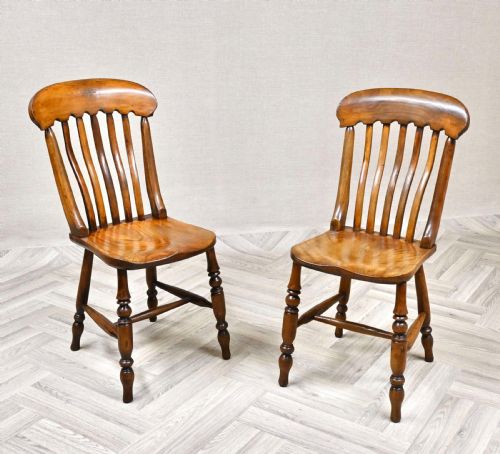
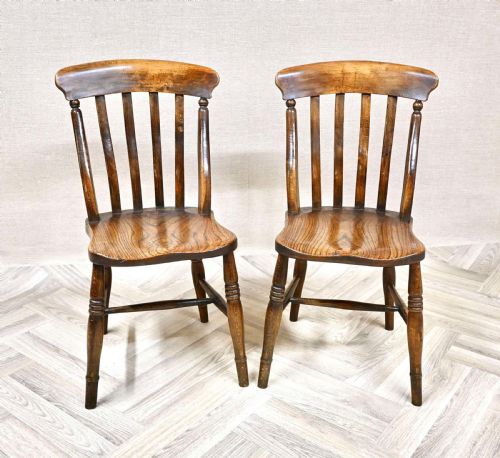
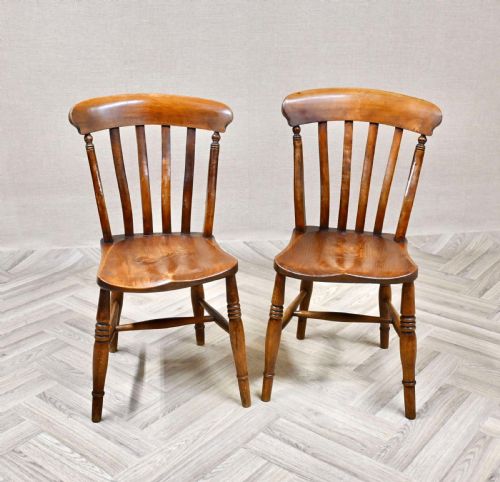
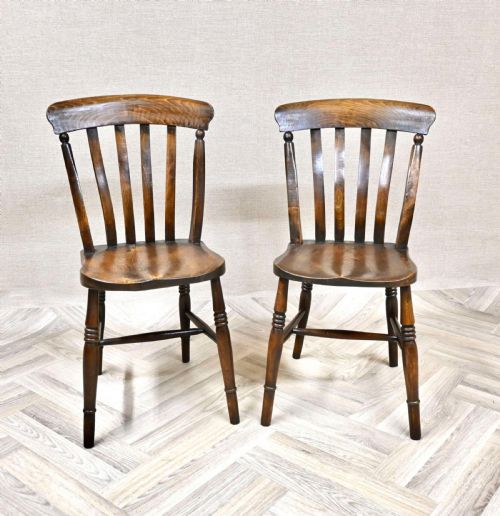
Traditional Windsor Dining Chairs
Traditional windsor dining chairs bring vernacular country seating to the table, combining saddle seats with steam-bent frames.
Traditional Windsor Dining Chairs
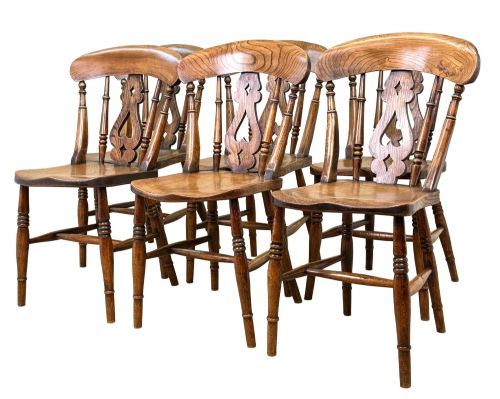
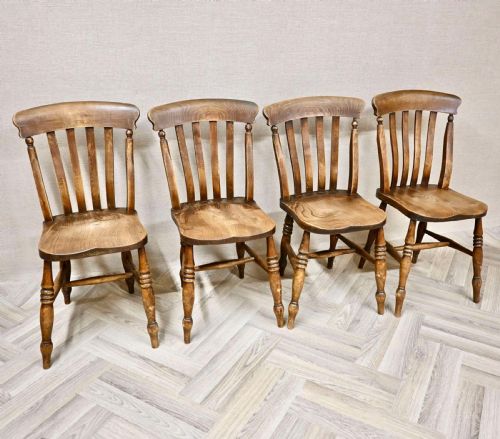
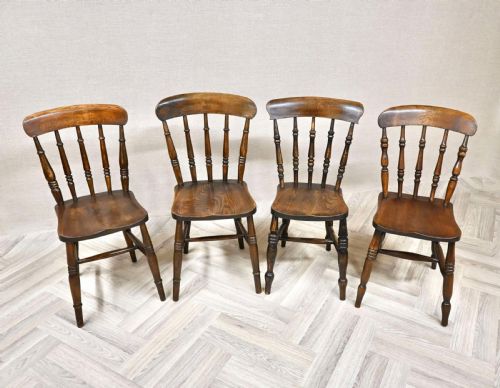
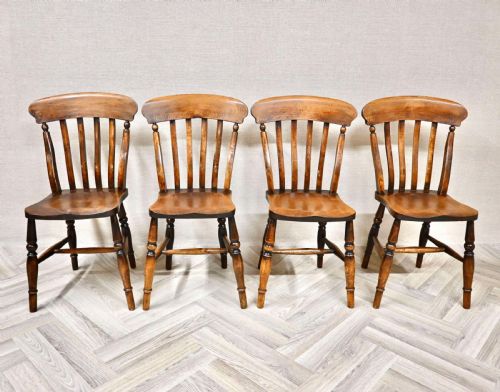
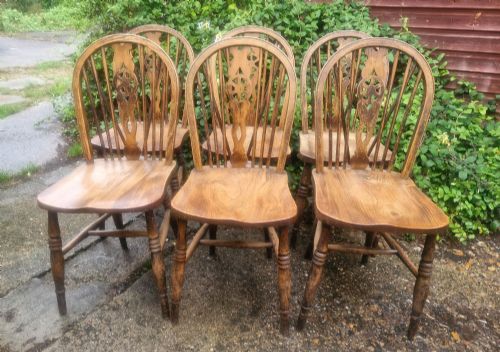
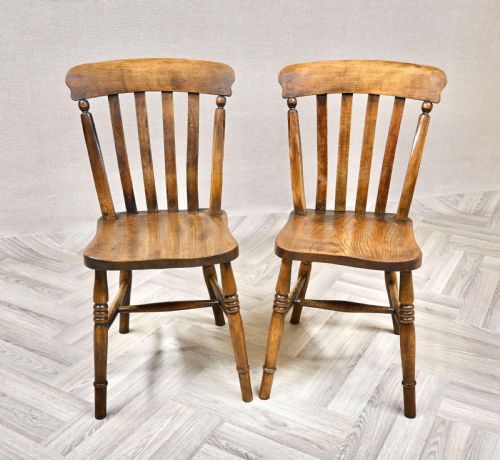
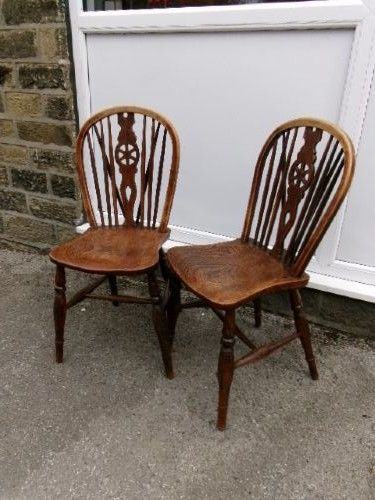
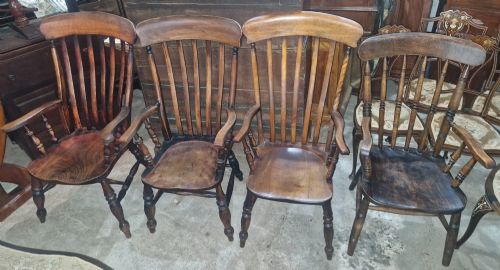
Traditional windsor dining chairs appear in forms such as wheel backs, lath backs, hoop backs, and comb backs designed for kitchen and dining use. Buyers frequently encounter sets or pairs originating from the nineteenth century alongside Victorian examples.
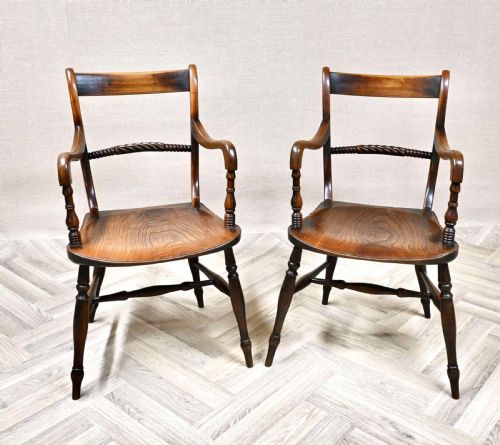
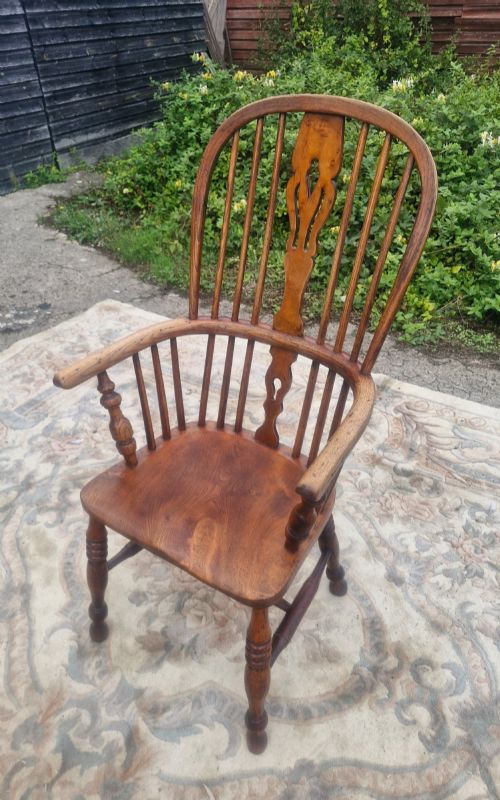
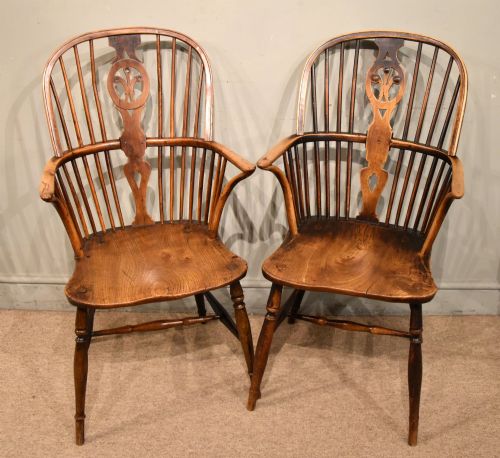
Makers shaped these pieces within regional traditions spanning English country workshops, Thames Valley production centres, and farmhouse settings. Armchairs, smokers' bows, and side chairs represent the primary object types found in this category.
Construction relies on distinct regional variations, including high backs and crinoline stretchers that support the legs. Sets range from matched groups to harlequin collections gathered over time.
Assessing quality in construction and timber
Quality separates chairs with well-figured elm seats and balanced proportions from simpler utilitarian examples. The crispness of the spindle turnings and the complexity of the back design, such as carved wheel motifs or bent-wood ropetwists, indicate higher workshop standards.
Structural integrity depends on the tightness of the wedged joints and the retention of original timber components without excessive replacement parts. Uniformity across larger sets of six or eight chairs alters the desirability for dining spaces.
Object variations include hoop backs, wheel backs, lath backs, and comb backs configured as armchairs, side chairs, and smokers bows.
The Traditional Windsor Dining Chairs Glossary
- Wheel back
- A Windsor chair variation featuring a pierced splat carved or shaped in the outline of a spoked carriage wheel. This decorative backrest became popular during the nineteenth century.
- Crinoline stretcher
- An arched underframe connecting the legs of a Windsor chair to provide rigidity. Early examples often feature this bowed wooden reinforcement.
- Comb back
- A chair design where the central vertical spindles extend upward to support a horizontal headrest resembling a hair comb. Eighteenth-century models frequently utilise this form.
- Lath back
- A chair back constructed with flat wooden slats or laths running vertically between the seat and the top rail. These slats replace individual turned spindles.
- Smokers bow
- A low-backed Windsor armchair with a continuous curved arm rail and short spindles, also known as a captain's chair. They were widely used in domestic and public interiors.
Traditional Windsor Dining Chairs: Frequently Asked Questions
How do I care for antique wooden chairs?
Maintain stable indoor humidity levels to prevent the timbers from drying out or shrinking over time. Apply microcrystalline wax periodically to nourish the surface without building up heavy residues.
Avoid placing chairs near direct heat sources or in strong sunlight, which can crack elm seats and loosen glued joints. Check the leg wedging occasionally to ensure the structure remains firm during daily use.
Can I mix different chair styles around a table?
Harlequin sets of Windsor chairs offer an authentic period look, as households historically gathered seating of similar heights and materials over many years. Matching the timber tones, such as elm and ash combinations, helps unify mismatched groups.
Keep seat heights consistent across the set to ensure guests sit comfortably at the same level. Armchairs work well placed at the head of a dining table while side chairs line the sides.
What defines a Thames Valley Windsor chair?
Thames Valley chairs are distinguished by timbers such as yew wood and elm, combined with refined turning and crinoline stretchers. Workshops in this region produced some of the most sought-after vernacular forms during the nineteenth century.
These pieces often display superior carving on the saddle seats and slender, elegant spindle arrangements. Collectors look for these regional markers to identify high-grade country craftsmanship.
How do I spot a marriage of parts?
Inspect the underside of the seat to see if the bored holes match the diameter and wood species of the leg tenons. Mismatched wear patterns or differing patination between the seat and the back assembly can indicate parts combined from separate chairs.
Original construction shows consistent ageing across all components and uniform tool marks from the original maker's workshop. Subtle discrepancies do not render a chair unusable, but they affect historical integrity.