


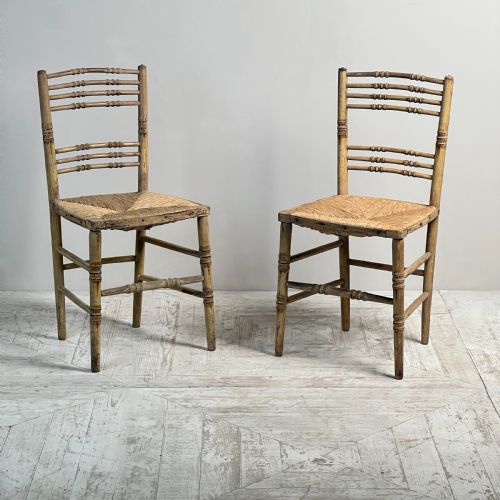


Natural Rush Seat Chairs
Natural rush seat chairs bring warmth and texture into a room through honest woodwork and woven fibre.
Natural Rush Seat Chairs
Natural rush seat chairs combine traditional seating frames in oak, elm, ash, and pine with seats woven from natural dried marsh rushes. When you search for natural rush seat chairs, you encounter forms ranging from simple dining chairs and side chairs to carvers and nursing chairs.
The selections span several distinct historical movements, including Regency faux bamboo designs, Georgian country spindlebacks, and Arts and Crafts pieces. French provincial and Scandinavian country models also appear frequently, offering ladder backs and kitchen dining chairs.
Most examples date from the nineteenth and twentieth centuries, with vernacular country styles making up the majority of available seating. These pieces suit farmhouse kitchens, country cottages, and understated modern interiors alike.
How they were made
Makers shaped the structural frames using native hardwoods such as oak, elm, ash, and pine, occasionally applying paint for decorative effect. Joinery relied on traditional pegging and turning techniques suited to heavy daily domestic use.
The seats themselves were constructed by twisting dried natural rushes around a cord core and weaving them tightly in a four-way pattern around the seat rails. This technique created a durable, supportive surface that yields slightly to the sitter while maintaining its structural tension.
Listings span multiple eras from Georgian country pieces to twentieth-century Arts and Crafts movements.
What varies in quality
Quality rests primarily in the integrity of the timber frame and the tightness of the rush weave. Finer examples display well-turned spindles, balanced proportions, and minimal shrinkage in the joints over decades of use.
The skill of the weaver dictates the longevity of the seat itself. Even tension across the rush strands and neat corner folding separate utilitarian workshop output from master cabinetmaker production.
E W Godwin·Lawrence Neal·Edward Gardener
The Natural Rush Seat Chairs Glossary
- Rush
- Dried marsh or wetland plants used for weaving flexible, durable chair seats. This material absorbs natural oils and patinates richly over time.
- Spindleback
- A chair back constructed with a series of thin, turned wooden uprights. This design lightens the visual weight of the frame while offering solid back support.
- Ladder back
- A chair back featuring multiple horizontal wooden slats between the rear posts. This regional country form allows for comfortable leaning during long meals.
- Faux bamboo
- Wood turned and carved to imitate the segmented stalks of natural bamboo. This decorative technique became popular during the Regency period.
Natural Rush Seat Chairs: Frequently Asked Questions
Can broken rush seats be repaired?
Traditional rush seating can be completely rewoven by a skilled artisan using matching natural materials. The old rush is stripped away and a fresh web is built around the original wooden frame.
Repairing the seat preserves the functional life of the antique. Professional re-weaving ensures the tension matches the historical construction methods.
Are these chairs suitable for daily dining?
Country rush seat chairs were built specifically for everyday household use in kitchens and dining rooms. The woven seats offer surprising comfort and resilience during prolonged sitting.
Inspect the joints periodically to ensure the wooden frames remain stable. Regular use actually helps maintain the suppleness of the dry rush fibres.
How do I identify a Georgian chair?
Georgian pieces from the mid-eighteenth century typically feature unpretentious elm or ash construction with simple turned spindles. The proportions focus on ergonomic comfort rather than ornate decoration.
Look for hand-tool marks and patination on the wood surfaces that indicate considerable age. These vernacular items reflect regional woodworking traditions rather than strict court styles.