
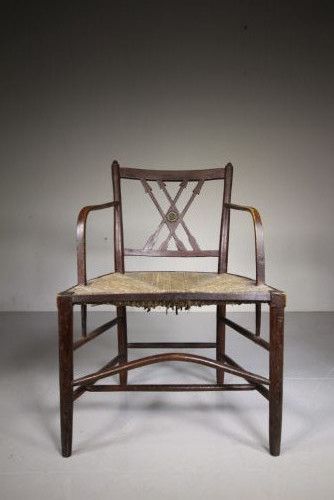
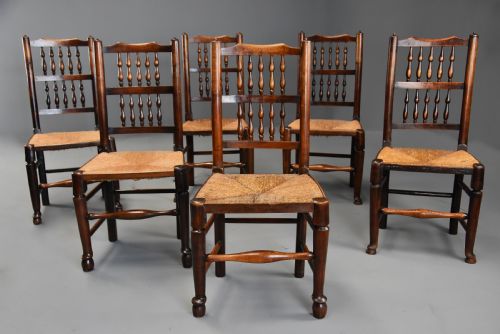
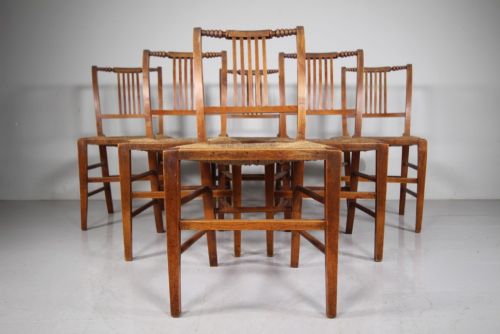
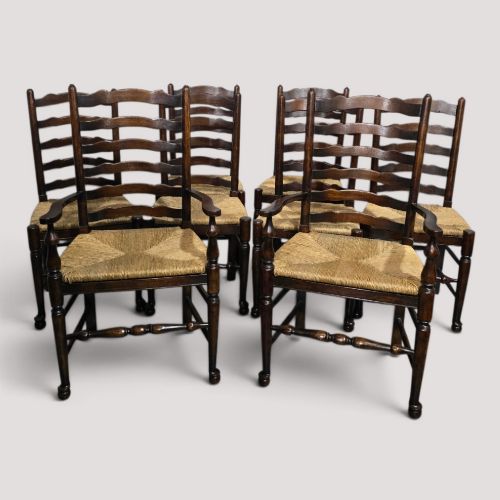
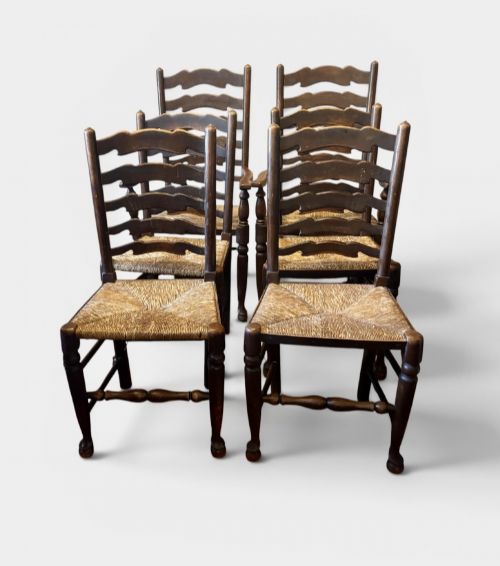


Georgian Rush Seat Chairs
Georgian rush seat chairs combine honest vernacular craftsmanship with durable woven seating, offering a tactile anchor for a rustic interior.
Georgian Rush Seat Chairs
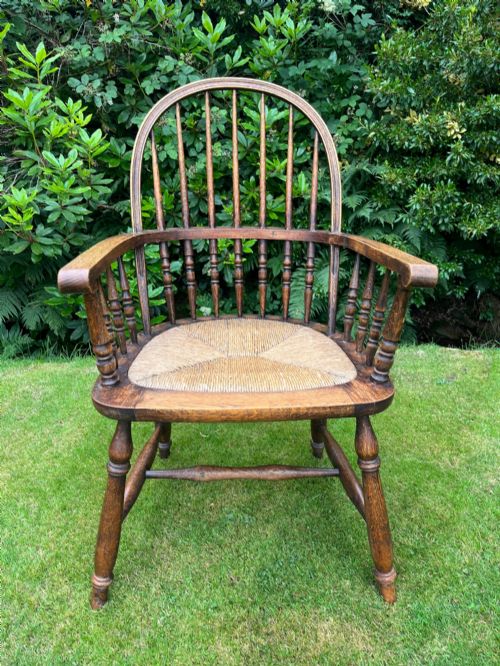
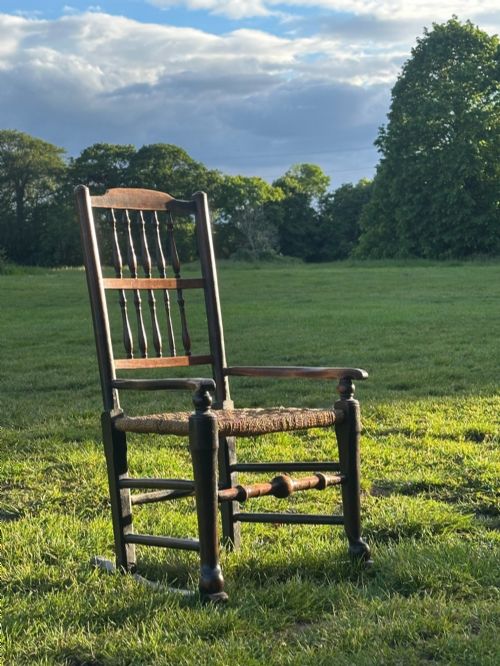
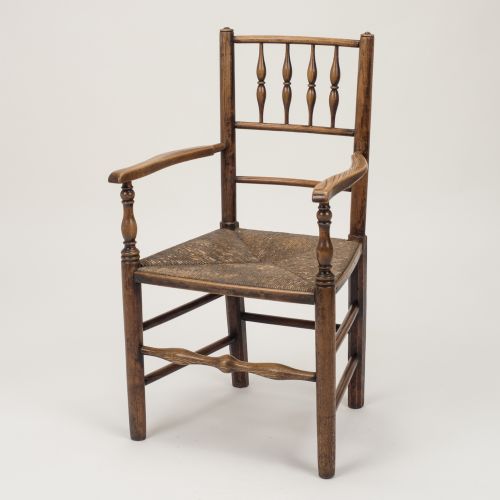
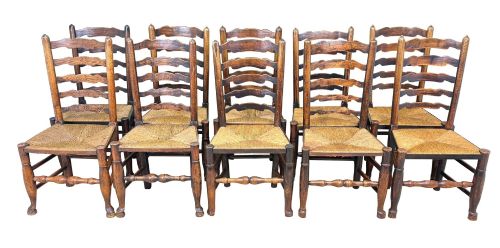
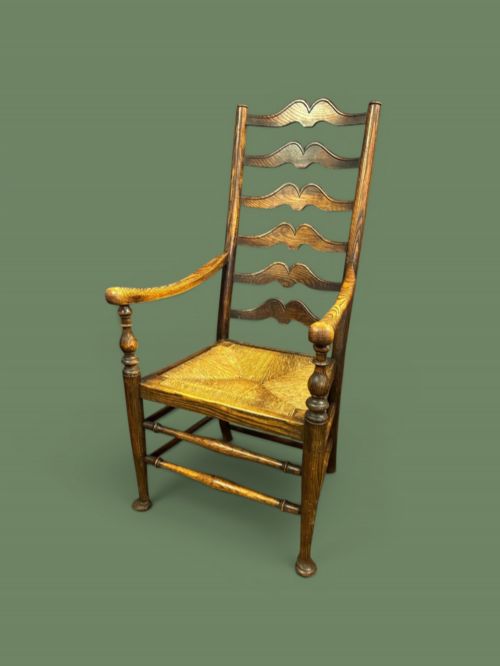
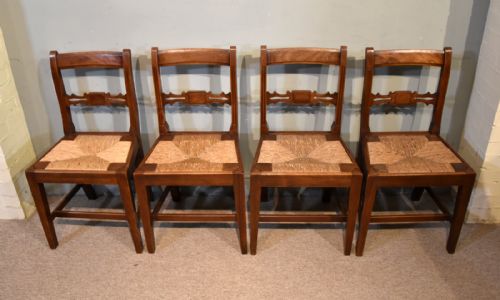
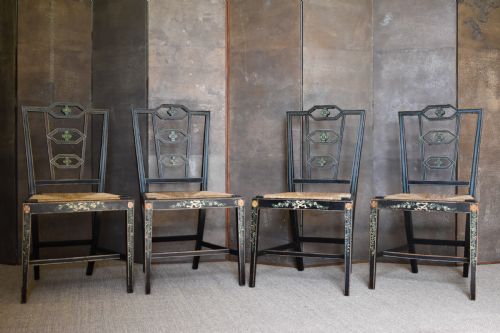
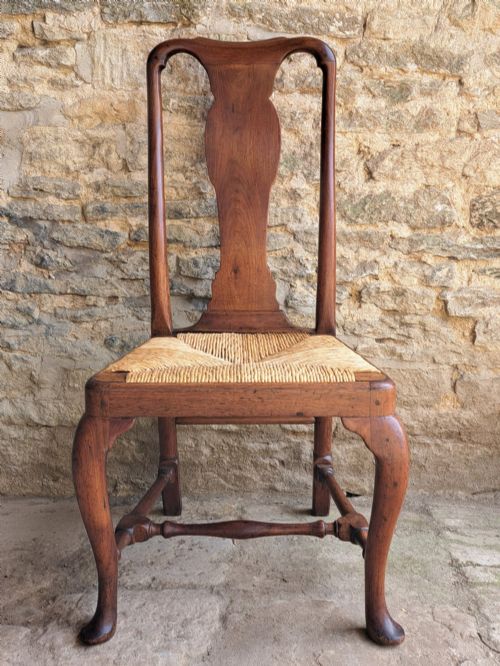
When you search for georgian rush seat chairs, you encounter practical vernacular seating designed for everyday domestic use across English country houses and farmhouses. These pieces range from single side chairs to extensive sets of dining chairs, alongside armchairs, rocking chairs, and children's seating.
The materials and construction reflect regional English traditions, notably from Lancashire, Cheshire, and Suffolk. You frequently meet ladder back, spindle back, and Windsor forms rooted in the eighteenth and nineteenth centuries.
Makers utilised local timbers available to them, resulting in sturdy chairs intended to withstand generations of hard use. Their enduring appeal lies in this unpretentious utility combined with timeworn surfaces.
How they were made
Carpenters and country joiners built these frames using native hardwoods such as elm, ash, oak, fruitwood, and beech. These timbers were often turned on pole lathes or shaped by hand to create slender spindles, sturdy legs, and curved crest rails.
The defining feature is the seat itself, woven tightly from dried marsh rush around a wooden frame. This flexible material yields slightly to the sitter, creating a resilient platform that balances comfort with hard-wearing utility.
Georgian Rush Seat Chairs Retail Price Guide 2026
Typical asking prices for georgian rush seat chairs among the pieces listed under this phrase on Sellingantiques today, from the lower quarter to the upper quarter. They describe what is for sale here now, not the wider market.
Listings feature regional variations spanning Lancashire, Cheshire, and Suffolk, incorporating elm, ash, oak, and fruitwood alongside painted finishes.
What varies in quality
The distinction between ordinary and exceptional examples rests upon structural integrity, timber selection, and surface preservation. Chairs retaining their original painted finishes or developing a deep, untouched patina command greater appreciation among collectors.
Proportion and turning detail elevate certain pieces above standard utilitarian output. Well-balanced armchairs with crisply turned stretchers and tight, uniform rush weaving demonstrate superior workshop execution.
The Georgian Rush Seat Chairs Glossary
- Rush
- A wetland plant material dried and twisted into cordage for weaving chair seats. It provides a durable, slightly springy surface.
- Ladder back
- A chair back featuring horizontal arched slats between two upright posts. This regional design dominated English country seating for centuries.
- Spindle back
- A style incorporating multiple vertical turned rods supporting the backrest. It offers lightweight strength and vernacular charm.
- Patina
- The surface sheen and colour acquired by wood through decades of handling, light, and polishing. It serves as a visual record of age.
- Vernacular
- Everyday objects designed by local craftspeople for practical utility rather than grand architectural movements.
Georgian Rush Seat Chairs: Frequently Asked Questions
How do I care for a rush seat?
Keep woven rush seats away from excessive moisture and direct heat sources, which can cause the natural fibres to dry out and snap.
Dust the weave regularly with a soft brush and apply a very light mist of water only if the room air becomes exceptionally dry, helping the material maintain its flexibility.
Can these chairs be used daily?
Most country dining chairs and armchairs were built for rigorous daily tasks and remain fully robust for contemporary seating when structurally sound.
Check that the joints remain tight and the rush is intact before placing heavy demands on eighteenth or nineteenth century frames.
How do I spot an older frame?
Look for hand-turned component irregularities, pegged joinery, and timber species consistent with regional vernacular production rather than mass-machined uniformity.
Signs of wear around the footrest areas and a deep, unforced surface finish further indicate genuine age.
What is a Dales chair?
Dales chairs refer to regional rush-seated ladder back seating originating from the northern English dales during the eighteenth and nineteenth centuries.
These pieces typically feature distinctive shaped slats and sturdy ash or oak frames adapted for farmhouse dining.