


Period Dining Room Furniture
Period dining room furniture gathers dining chairs, sideboards and serving tables from the Georgian, Regency and Victorian eras to anchor a dining space.
Period Dining Room Furniture
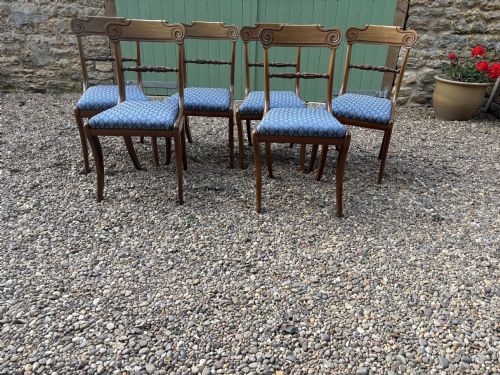
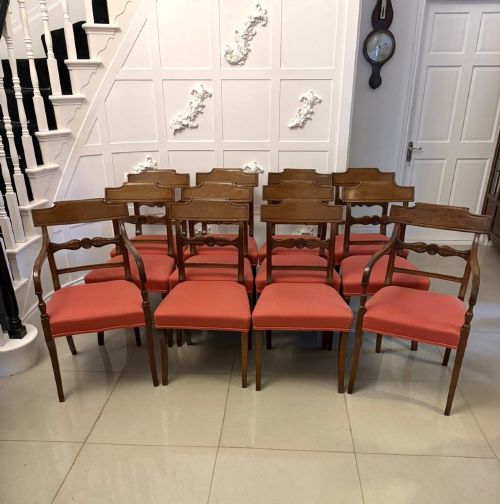
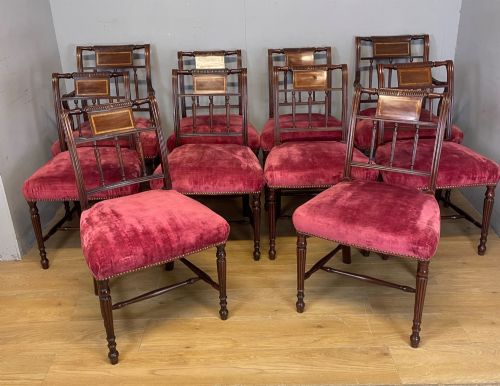
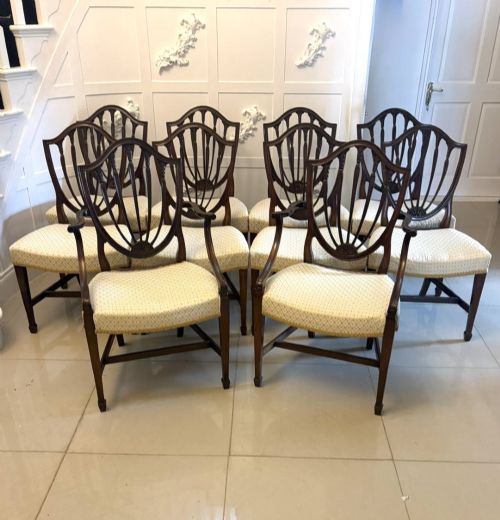
Period dining room furniture comprises seating, serving pieces and storage built across the eighteenth and nineteenth centuries. Dining chairs appear most frequently on this page, often in matched sets of four, six, eight or ten pieces.
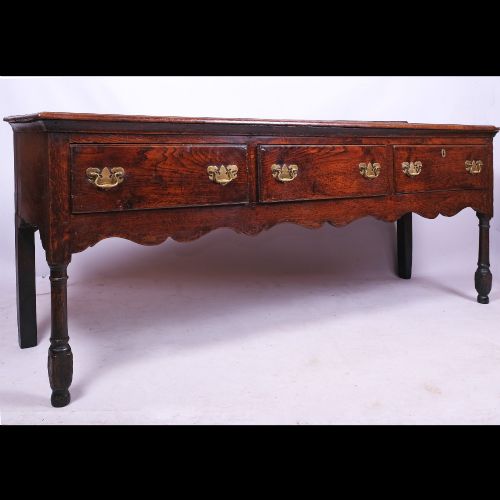
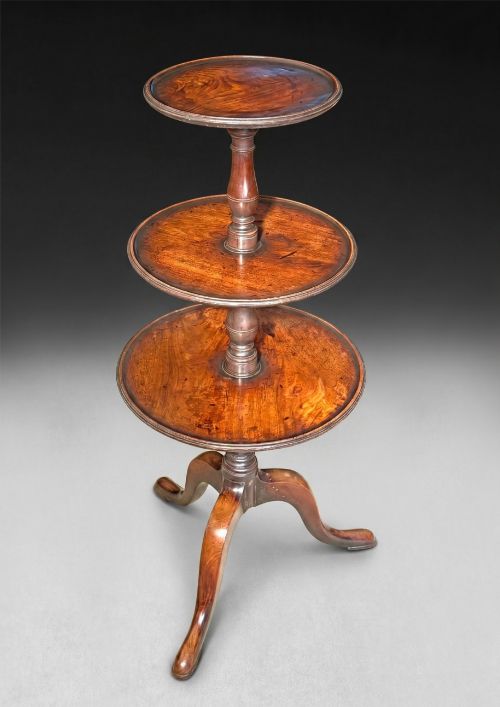
The objects span Georgian, Regency and Victorian eras, alongside later revivals of earlier styles. Forms range from pedestal sideboards and chiffoniers to dumb waiters and wine coolers.
Makers and workshops of these periods worked primarily in mahogany and rosewood, creating formal suites for dining rooms. Pieces include carver and slipper chairs alongside large twin pedestal sideboards.
Materials and construction
Cabinet makers utilised solid mahogany and rosewood, frequently applying flame mahogany veneer to large surfaces like sideboard doors and drawer fronts. Brass inlay and brass mounts appear on Regency chiffoniers and sideboards.
Seating frames utilise oak or mahogany, constructed with traditional joinery to support upholstered drop-in seats or leather pads. Surface decoration incorporates fine inlay work and serpentine outlines.
Dining chairs dominate the available forms, alongside sideboards, chiffoniers and serving tables.
Quality factors
The refinement of the timber selection and veneer matching defines the standard of a piece, particularly on large sideboards and serving tables. Uniformity across a large set of dining chairs separates workshop-produced suites from standard commercial output.
Proportion and the execution of carved or inlaid detail distinguish finer examples. The presence of original mounts, brass inlay and cohesive design across carver and slipper chairs indicates higher craftsmanship.
Mack Williams and Gibton·Maple and Co
The Period Dining Room Furniture Glossary
- Carver chair
- An armchair designed to sit at the head of a dining table, often matching a set of side chairs.
- Dumb waiter
- A tiered freestanding revolving or stationary serving table used for holding dishes during a meal.
- Chiffonier
- A low cabinet with doors or drawers, often featuring a shelf superstructure on top, developed in the Regency period.
- Serving table
- A long side table designed for holding food and dishes before service in the dining room.
- Sarcophagus wine cooler
- A large, box-like container used to chill wine bottles, often shaped like a classical stone coffin during the Regency period.
Period Dining Room Furniture: Frequently Asked Questions
How many chairs come in a set?
Dining chair sets on this page range from four up to ten pieces, occasionally including both carver and slipper chairs.
Larger sets often combine side chairs with matching armchairs for the heads of the table.
What is a pedestal sideboard?
A pedestal sideboard is a large dining room cabinet featuring central storage flanked by pedestals or set on pillar supports.
These pieces emerged during the Regency period to hold silverware, linen and serving dishes.
How do I identify Regency furniture?
Regency pieces often display classical motifs, rosewood or mahogany timbers, and brass inlay details.
Cabinet work from this era includes chiffoniers, drop well sideboards and serving tables.
What wood was used most?
Mahogany is the primary timber found across these dining room pieces, supplemented by rosewood and oak.
Cabinet makers also utilised flame mahogany veneer and brass decoration to finish large surfaces.